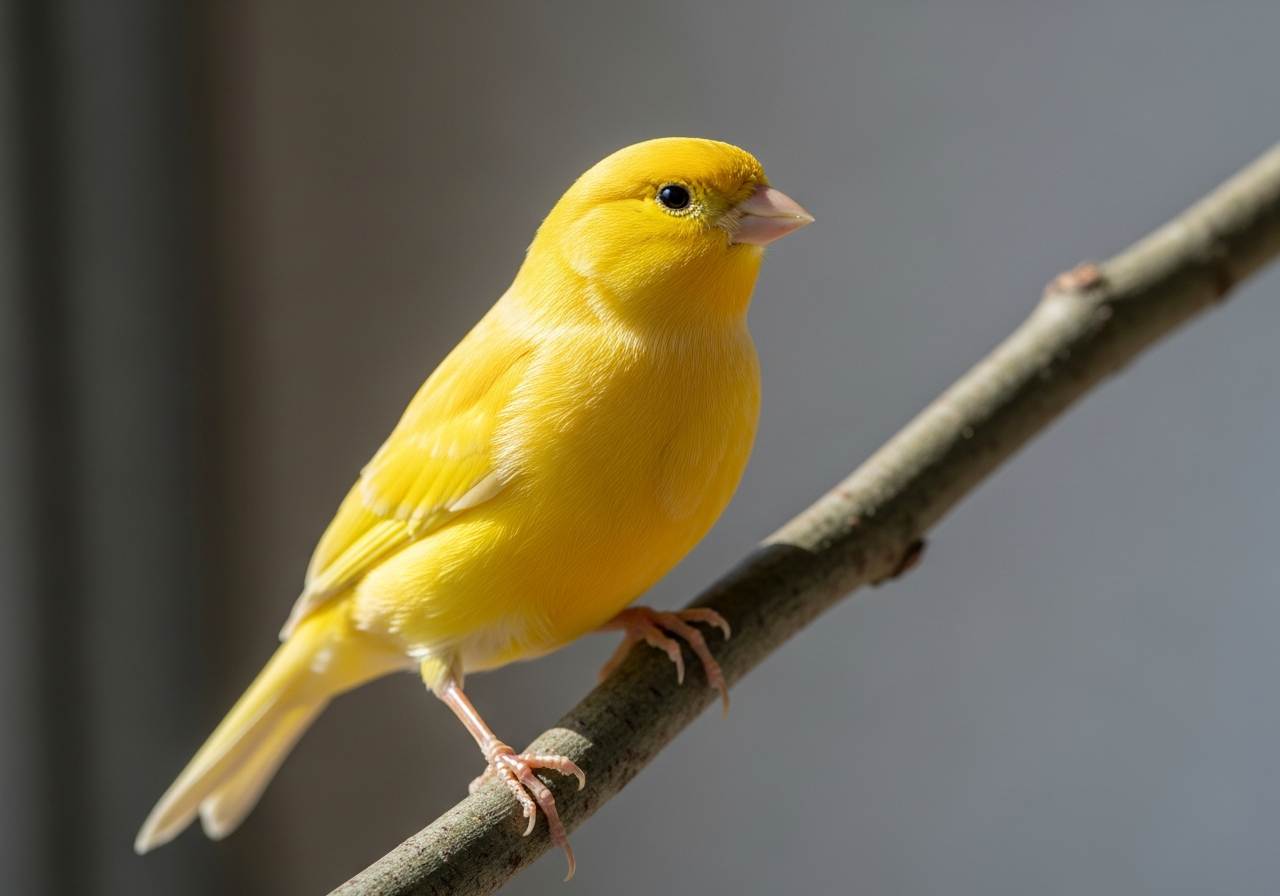
Canary
Quick answer
The canary is a small finch famous for its cheerful song, especially from males. It is a hardy, easygoing pet that prefers watching and listening to handling, making it ideal for owners who want a beautiful singer rather than a cuddly bird.
Canary at a glance
| Origin | Canary Islands |
|---|---|
| Size | Small (about 12–20 cm) |
| Weight | 15–25 g |
| Lifespan | 10–15 years |
| Plumage | Bright plumage bred in yellow, orange, red, and white shades, with some frilled and crested varieties; smooth and easy to keep with bathing access |
| Temperament | Active, melodic, independent |
| Good with | Beginners, quiet homes, owners who enjoy birdsong |
History of the Canary
The canary originates on the Canary Islands, Madeira, and the Azores off the coast of Africa, where the wild ancestor is a streaky green finch. Spanish sailors brought it to Europe in the 1500s, and selective breeding over centuries produced birds prized for song, color, and shape. Song canaries such as the Roller and Waterslager were bred for their voices, while color canaries were developed for vivid yellows, oranges, and reds. Today the canary remains a classic cage bird valued above all for its music.
Interesting facts about the Canary
- Only male canaries are strong singers, using song to mark territory.
- Canaries were once carried into coal mines to warn of dangerous gases.
- Centuries of breeding created song, color, and shape varieties.
- Their wild ancestor is a far plainer green-and-grey finch.
Common health issues in the Canary and how to help
Like all bird breeds, the Canary can be more prone to a few specific health conditions. Knowing the early signs helps you act quickly — always consult a qualified vet for diagnosis and treatment.
Air sac mites
What it is: Canaries can be affected by tiny mites in the airways, causing wheezing, clicking sounds, open-mouth breathing, and a loss of song.
How to help: An avian vet can diagnose the mites and prescribe safe treatment, and good ventilation supports recovery and prevention.
Feather cysts
What it is: Some canaries, especially certain breeds, develop feather cysts where a feather grows under the skin into a lump.
How to help: An avian vet should examine any lump and advise on treatment, as cysts may need professional care to resolve.
Molting stress
What it is: During the annual molt, canaries put energy into growing new feathers and may stop singing and seem run down if poorly nourished.
How to help: Provide a balanced diet and a calm environment during molt, and ask an avian vet for advice if the bird seems unwell or the molt drags on.
This is general information for owners, not veterinary advice. If you are worried about your bird's health, contact your vet.
Frequently asked questions about the Canary
Do female canaries sing?
Male canaries are the strong singers, using song to defend territory and attract mates. Females may make soft calls and chirps but rarely sing the full melodic song.
Can canaries be handled like parrots?
Canaries are generally not cuddly birds and prefer not to be handled. They are best enjoyed for their color and song in a roomy cage where they can fly and stay active.
Can canaries live with other birds?
Male canaries can be territorial and are often kept singly, though canaries may share a large aviary with care. Mixing them with budgies or other species is usually not recommended, as canaries are delicate.