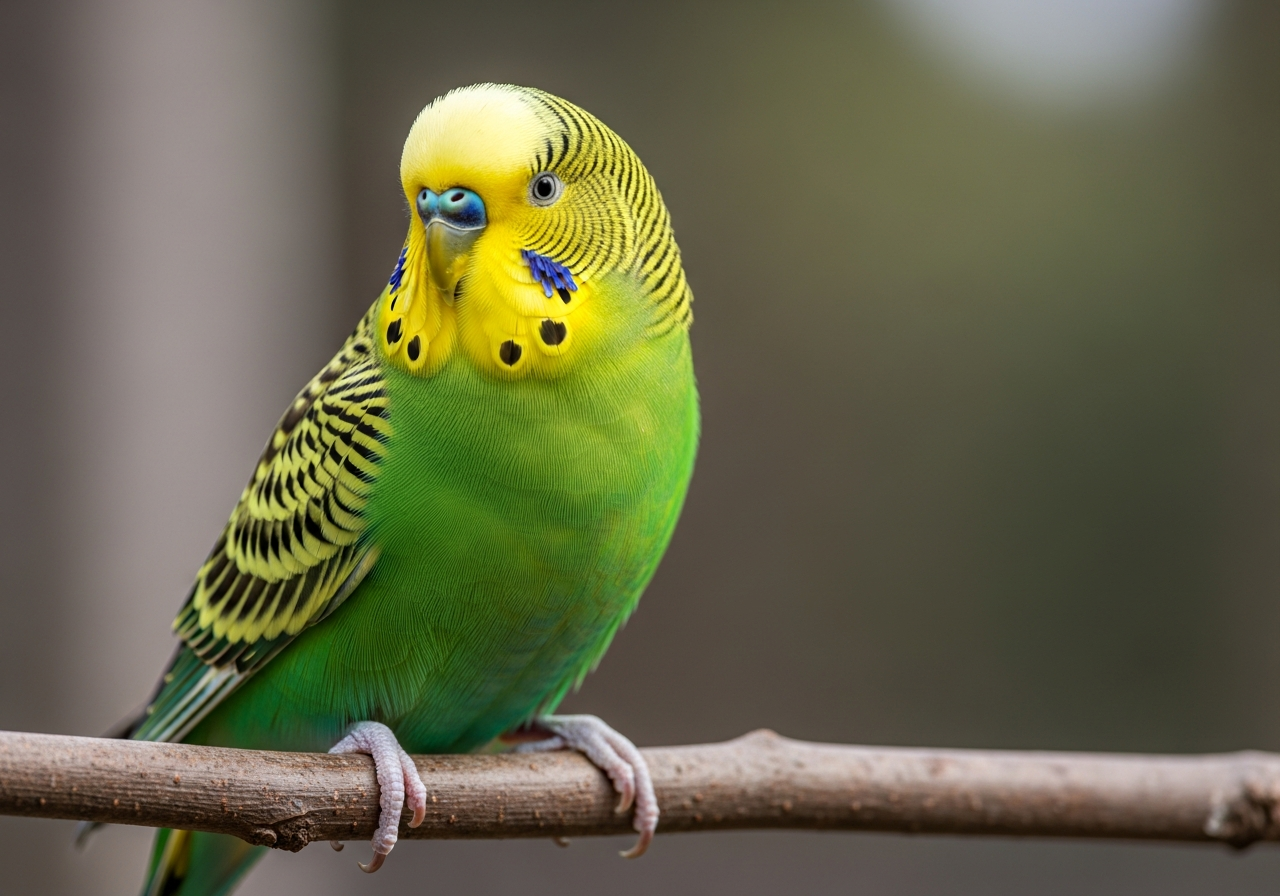
Budgerigar (Parakeet)
Quick answer
The budgerigar, also called the parakeet or budgie, is the most popular pet bird, known for being small, affordable, and easy to tame. It is highly social, can mimic words, and does best with daily interaction or a companion bird.
Budgerigar (Parakeet) at a glance
| Origin | Australia |
|---|---|
| Size | Small (about 18 cm) |
| Weight | 30–40 g |
| Lifespan | 5–10 years |
| Plumage | Sleek green-and-yellow plumage in the wild, with barring on the head and wings; pet budgies come in blue, white, yellow, and pied; needs only regular bathing chances |
| Temperament | Playful, social, vocal |
| Good with | Beginners, families, owners who can offer daily company |
History of the Budgerigar (Parakeet)
The budgerigar comes from the dry grasslands and scrublands of inland Australia, where huge flocks still roam in search of seed and water. It was brought to Europe in the 1800s and quickly became a favorite cage bird because of its hardiness and charm. Breeders developed a rainbow of color mutations from the original wild green, including blue, yellow, white, and pied varieties. Today the budgie is kept on every continent and remains the bird most often recommended to first-time owners.
Interesting facts about the Budgerigar (Parakeet)
- Wild budgerigars gather in flocks of thousands, wheeling across the Australian outback.
- Some budgies learn surprisingly large vocabularies of words and phrases.
- The original wild color is green, and all other colors are bred mutations.
- A healthy budgie's cere, the area above its beak, can hint at whether it is male or female.
Common health issues in the Budgerigar (Parakeet) and how to help
Like all bird breeds, the Budgerigar (Parakeet) can be more prone to a few specific health conditions. Knowing the early signs helps you act quickly — always consult a qualified vet for diagnosis and treatment.
Scaly face mites
What it is: Budgies can develop a mite that causes crusty, honeycomb-like growths around the beak, eyes, and legs, which can worsen if untreated.
How to help: An avian vet can confirm the mites and prescribe safe treatment, and keeping the cage clean helps prevent reinfestation.
Tumors
What it is: Budgerigars are prone to lumps and tumors, sometimes appearing as swellings on the body or changes in droppings and energy.
How to help: Any new lump or sudden change in behavior should be checked by an avian vet, who can advise on diagnosis and the best options for the bird.
Obesity and fatty diet problems
What it is: A seed-only diet can leave budgies overweight and lead to fatty deposits and liver trouble, often shown by weight gain and low energy.
How to help: Offer a balanced diet with pellets and fresh vegetables alongside seed, and ask an avian vet for guidance on portions and weight.
This is general information for owners, not veterinary advice. If you are worried about your bird's health, contact your vet.
Frequently asked questions about the Budgerigar (Parakeet)
Can budgerigars talk?
Yes, many budgerigars can learn to mimic words and short phrases, and some build large vocabularies. Males tend to be the more enthusiastic talkers, and patient daily practice helps them learn.
Should budgies be kept in pairs?
Budgies are very social and often happiest with a companion, but a single budgie can thrive if its owner offers lots of daily interaction. A lone bird left alone for long periods can become bored or stressed.
Are budgerigars good for beginners?
Yes, budgerigars are among the best birds for beginners because they are small, affordable, hardy, and gentle. With patient handling they tame readily and bond closely with their owners.