Zebra Finch
Quick answer
The zebra finch is a small, hardy Australian finch best kept in pairs or small groups rather than alone. It is an active, social bird enjoyed for its lively chatter and busy behavior, and it suits owners who prefer watching to handling.
Zebra Finch at a glance
| Origin | Australia |
|---|---|
| Size | Tiny (about 10 cm) |
| Weight | 10–15 g |
| Lifespan | 5–10 years |
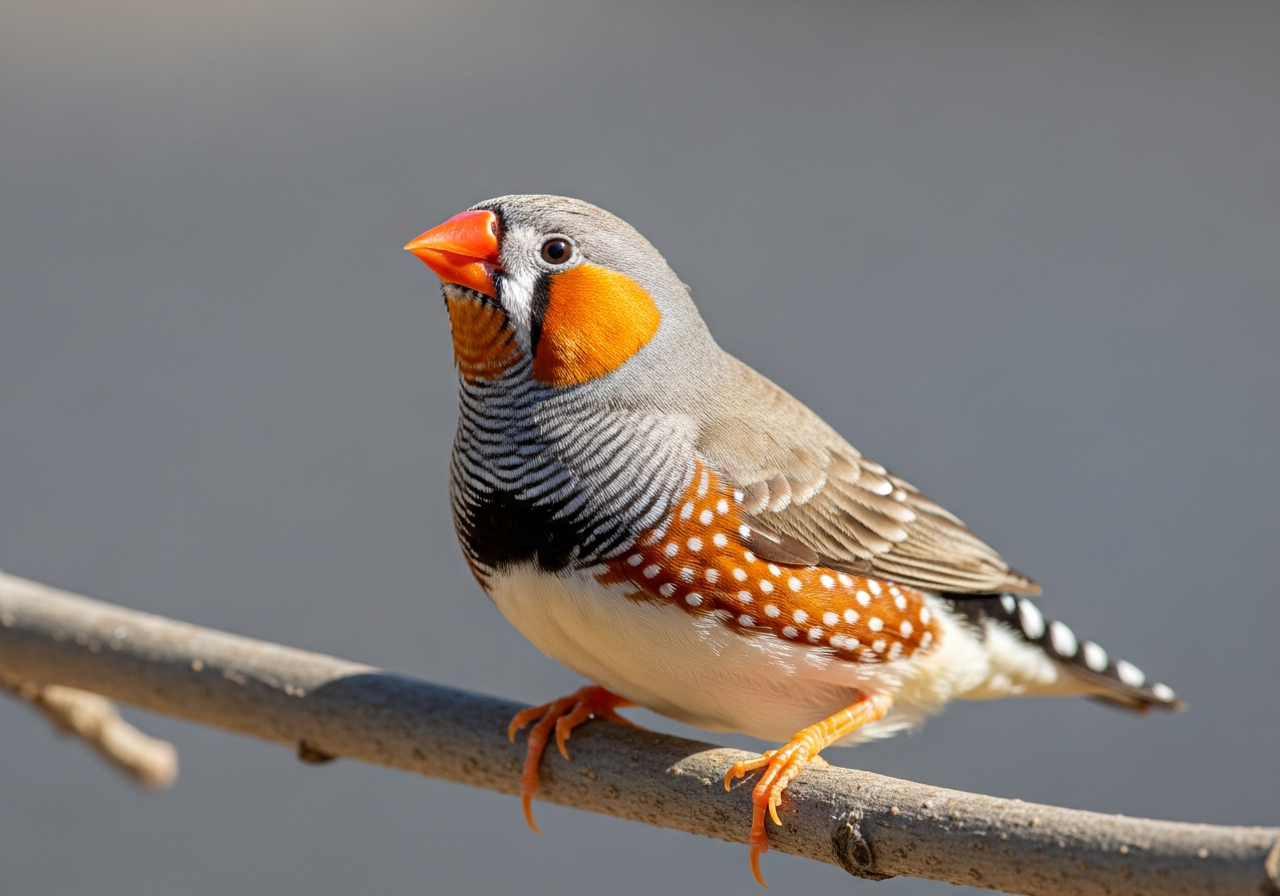
| Plumage | Grey plumage with black-and-white throat barring, orange cheeks in males, and a red-orange beak; bred varieties include fawn, pied, and white; needs no grooming beyond bathing |
| Temperament | Social, busy, flock-loving |
| Good with | Beginners, aviary keepers, owners who like watching flocks |
History of the Zebra Finch
The zebra finch is native to the grasslands and dry interior of Australia, where it lives in large, sociable flocks near water. Easy to keep and quick to breed, it became one of the most widely kept cage finches and an important bird in scientific research on song and behavior. The wild grey form, with its bold throat stripes and orange cheeks in males, has been joined by many bred color varieties. It remains a popular choice for aviaries and finch keepers around the world.
Interesting facts about the Zebra Finch
- Male zebra finches sing a unique song each learns from its father.
- They are named for the bold black-and-white barring on the male's throat.
- Zebra finches are a major study species for songbird research.
- They are most content living with at least one companion finch.
Common health issues in the Zebra Finch and how to help
Like all bird breeds, the Zebra Finch can be more prone to a few specific health conditions. Knowing the early signs helps you act quickly — always consult a qualified vet for diagnosis and treatment.
Air sac mites
What it is: Zebra finches can be affected by airway mites that cause clicking sounds, wheezing, tail bobbing, and difficulty breathing.
How to help: An avian vet can diagnose and prescribe safe treatment, and good airflow and a clean cage help prevent spread.
Egg binding
What it is: Females, which breed readily, can struggle to pass an egg, shown by straining, fluffed feathers, and weakness.
How to help: This is an emergency needing an avian vet promptly, and a balanced diet with enough calcium reduces the risk.
Overgrown beak and nails
What it is: Zebra finches sometimes develop overgrown beaks or nails, which can interfere with eating, perching, and movement.
How to help: Provide appropriate perches and surfaces for natural wear, and have an avian vet trim overgrowth and check for underlying causes.
This is general information for owners, not veterinary advice. If you are worried about your bird's health, contact your vet.
Frequently asked questions about the Zebra Finch
Can zebra finches live alone?
Zebra finches are highly social and should not be kept alone; they are happiest in pairs or small groups. A lone finch can become stressed and withdrawn.
Are zebra finches good for beginners?
Yes, zebra finches are hardy, low-maintenance, and a good first bird for those who enjoy watching rather than handling. They need a roomy cage and the company of their own kind.
Do zebra finches need a lot of handling?
Zebra finches generally do not enjoy being handled and are best appreciated for their busy, chattering behavior. Give them space to fly and interact with each other instead.