Metamorphosis Explained: How Animals Transform
Metamorphosis is a dramatic body change between life stages — caterpillar to butterfly, tadpole to frog. Complete vs incomplete metamorphosis explained.
Global Animal Guide · July 10, 2026
Quick answer
Metamorphosis is a biologically programmed transformation from larva (or nymph) to adult. Insects show complete metamorphosis (egg → larva → pupa → adult) or incomplete metamorphosis (egg → nymph → adult). Amphibians metamorphose from aquatic larvae to air-breathing adults. Hormones orchestrate the rebuild.
Last updated: July 2026.
Why any animal would rebuild itself
Metamorphosis looks wasteful — why demolish a working body? The answer is that it lets one species stop competing with itself. A caterpillar and a butterfly are, ecologically, two different animals: one is a chewing leaf-processor, the other a flying nectar-sipper with a drinking-straw mouth. They never touch the same food or the same predators. A dragonfly nymph stalks the sediment of a pond; the adult hunts midges on the wing. Parents and offspring of the same species simply do not eat each other’s dinner.
The second payoff is specialisation. A larva can be optimised for one job — eat, grow, do nothing else — with a simple body and no expensive reproductive or flight machinery. The adult can be optimised for the opposite: find mates, disperse, lay eggs. Many adult moths, including the luna moth, do not feed at all. They emerge without functional mouthparts, live on fat banked by the caterpillar, and spend their entire adult existence on reproduction before starving. The larva earned the money; the adult spends it.
Dispersal matters too, especially for sessile or slow animals. Sea stars and sea urchins spend their adult lives creeping over the seabed but begin as tiny swimming larvae drifting in the plankton, which is how a starfish population colonises a new reef. Corals do the same thing: the immobile adult exists because a mobile larva put it there.
Complete metamorphosis: the pupa does the demolition
Holometabolous insects — butterflies, moths, beetles, flies, ants, bees and wasps — pass through egg, larva, pupa and adult. The larva is a growth machine: a caterpillar, grub or maggot that eats and moults through several instars, getting larger but not more adult-like.
The rebuild happens inside the pupa, and it is more radical than most people expect. Much of the larval body is broken down by enzymes into a nutrient soup. Surviving that process are clusters of cells called imaginal discs — set-aside tissue, present since the egg, effectively holding blueprints for adult structures. Each disc grows into a wing, a leg, an eye, an antenna. The pupa is not resting; it is a construction site drawing on the larva’s own dissolved tissue for raw material.
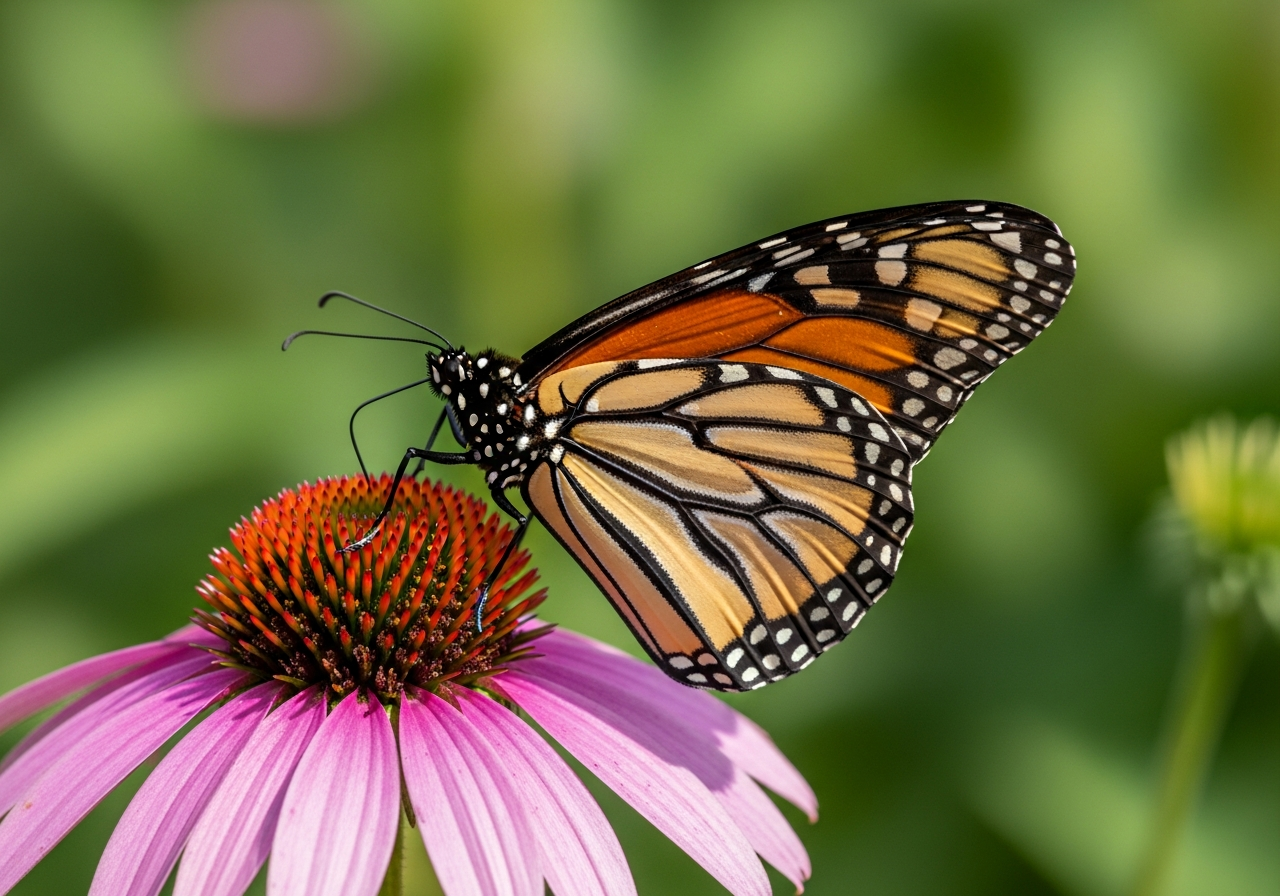
Not everything is destroyed. The nervous system is substantially remodelled rather than scrapped, and there is good experimental evidence that memory can survive metamorphosis — caterpillars trained to avoid an odour can carry that aversion into adulthood. The monarch butterfly makes the whole enterprise look effortless, but a chrysalis is one of the most dangerous phases of its life: immobile, unable to flee, dependent entirely on camouflage or concealment.
Complete metamorphosis is a spectacular evolutionary success. The great majority of insect species use it, including the honey bee, the dung beetle, the ladybug, the housefly, and the mosquito — whose wriggling aquatic larvae live in a world their blood-feeding adults abandon entirely.
Incomplete metamorphosis: growing up in instalments
Hemimetabolous insects — grasshoppers, cockroaches, praying mantises, true bugs, dragonflies and cicadas — skip the pupa. They hatch as nymphs that already resemble small, wingless adults, and they moult repeatedly, with wing pads enlarging at each step until a final moult produces a functional winged adult.
“Incomplete” undersells some of these transitions. A dragonfly nymph is an aquatic ambush predator with a hinged, extendable mouthpart it fires at prey; the adult is an aerial hunter with different gills, different eyes and different everything. The nymph crawls out of the water, splits its skin one last time, and emerges as an insect that will never swim again. A cicada nymph spends years underground sucking sap from roots before a single synchronised emergence. The rebuild is real — it is simply spread across many moults instead of concentrated into one sealed pupa.
The hormones that pull the trigger
The same two hormones run insect metamorphosis, and the logic is elegantly simple. Ecdysone triggers a moult — it says shed your cuticle now. Juvenile hormone determines what the moult produces. While juvenile hormone is high, each moult yields another larva or nymph. When its level falls, the same moult signal produces a pupa, and then an adult.
That switch explains a great deal, including why the timing is so precise and why disrupting it is so effective. Some insecticides are juvenile-hormone analogues: they do not poison the insect but lock it into a juvenile state so it can never mature and reproduce.
Amphibians run the same play with a different hormone
Amphibian metamorphosis is driven by thyroid hormone, and the surge is what reorganises the animal. A bullfrog tadpole is built for one job: a long coiled gut for grinding algae and detritus, internal gills, a swimming tail, no legs, and a lateral line for sensing water movement.
The transformation rewrites nearly all of it. Legs grow, the tail is reabsorbed by programmed cell death — recycled, not shed — the gills give way to lungs, the eyes migrate for binocular vision, the mouth widens for catching prey, and the long herbivore’s gut shortens dramatically into a carnivore’s. Even the blood changes, swapping tadpole haemoglobin for an adult form better suited to air.
The timing is flexible where it needs to be. Spadefoot toads racing a drying desert pool can accelerate development sharply; a wood frog tadpole in a temporary woodland pool faces the same clock. Crowding, temperature and predator chemical cues all shift the schedule, and the trade-off is blunt: metamorphose early and small, or stay longer, grow bigger, and risk the pond vanishing first.
The famous exceptions
The axolotl is the classic case of neoteny — it reaches sexual maturity while keeping its feathery external gills and aquatic larval body, never metamorphosing under normal conditions. Its thyroid machinery is largely intact; what fails is the signal to use it, and injecting thyroid hormone can force a metamorphosis that would never occur in the wild. The olm and the mudpuppy are permanently larval in form too, and the huge hellbender metamorphoses only partially, keeping a larval look into adulthood.
Direct developers go the other way. Many frogs skip the tadpole entirely, hatching from the egg as miniature froglets. The surinam toad carries its young embedded in the skin of its back until fully formed frogs emerge. Where standing water is scarce or dangerous, deleting the aquatic stage is simply the better bet — proof that metamorphosis persists because it pays, not because it is compulsory.
Related reading
Sources
Frequently asked questions
What is complete metamorphosis?
Four stages: egg, larva, pupa, adult — butterflies, beetles, flies, bees.
What is incomplete metamorphosis?
Three main stages: egg, nymph, adult — grasshoppers, dragonflies, true bugs. Nymphs often resemble small wingless adults.
Do humans metamorphose?
No — humans grow and mature without a larval body plan rebuild.
Why metamorphose at all?
Larvae and adults can eat different foods and avoid competing — and specialise for growth vs reproduction/dispersal.