What Is an Amphibian? Frogs, Salamanders & Caecilians
Amphibians are vertebrates with moist skin that typically start life in water. Frogs, toads, salamanders, newts, and caecilians — traits, metamorphosis, and decline.
Global Animal Guide · July 10, 2026
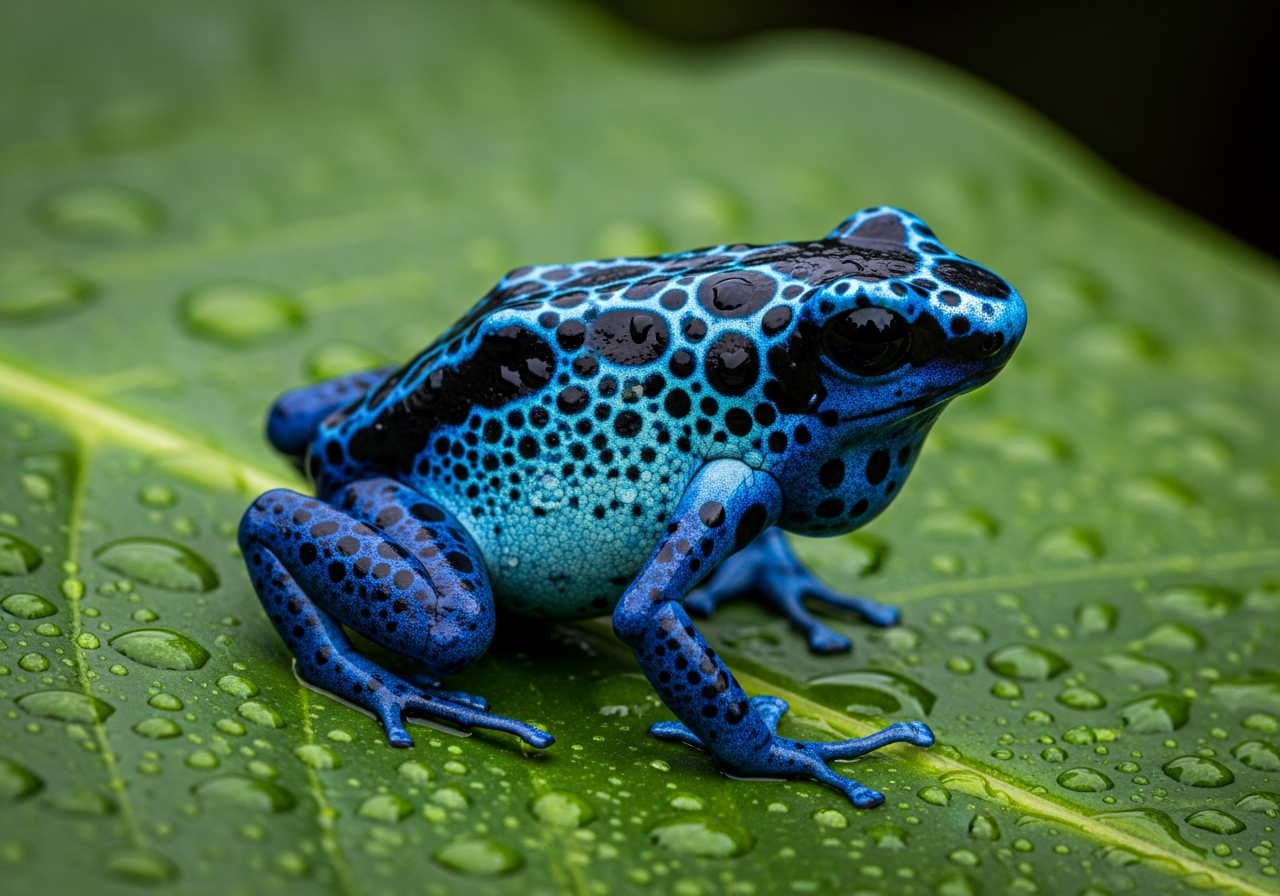
Image sourcing: see credits & licences
Quick answer
Amphibians are vertebrates with permeable, usually moist skin and a life cycle that often includes an aquatic larval stage. Living groups are frogs and toads (Anura), salamanders and newts (Urodela), and limbless caecilians (Gymnophiona). Many undergo metamorphosis. They are ecological indicators — sensitive to pollution, disease, and habitat loss.
Last updated: July 2026.
An amphibian is a vertebrate with moist, permeable skin that typically begins life as an aquatic larva and metamorphoses into a different-looking adult. The three living groups are frogs and toads, salamanders and newts, and the limbless burrowing caecilians. The defining feature is not really the double life implied by the name — it is the skin, which is thin enough to breathe and drink through, and which explains almost everything else about how these animals live and why they are in trouble.
Why “amphi”?
Greek amphi means “both sides” — historically, life in water and on land. Not every species fits the textbook pond-to-forest story, but the dual lifestyle is the classic pattern.
Skin as a superpower (and vulnerability)
Cutaneous respiration supplements lungs. The same permeable skin makes amphibians vulnerable to toxins, UV, and drying — one reason they signal ecosystem health.
Amphibian skin has no scales, no feathers, and no fur — just a thin, glandular surface kept damp by mucus. Because oxygen dissolves in that moisture and diffuses straight into blood vessels beneath, skin functions as a genuine respiratory organ. Lungless salamanders take this to its conclusion, having lost lungs entirely and breathing only through skin and mouth lining, which caps them at small, slender bodies with a high surface-to-volume ratio. The hellbender, a giant among salamanders, compensates with loose skin folds that greatly increase its exchange area in fast, oxygen-rich streams.
Amphibians also drink through their skin rather than their mouths. Many absorb water through a “drink patch” on the belly and thighs, pressing it against damp ground. Convenient — but the traffic runs both ways. Whatever is dissolved in the water passes in too: pesticides, fertiliser runoff, heavy metals, road salt. An amphibian cannot filter its environment at the boundary the way a scaled or furred animal can.
That same skin carries the group’s chemical defences. Glands secrete compounds ranging from mildly distasteful to lethal, and the poison dart frog is the celebrated case — though it does not manufacture its toxins, it sequesters them from a diet of mites and ants, which is why captive-raised individuals are harmless. The common toad uses parotoid glands behind the eyes, and the bright colours of the fire salamander and tomato frog advertise the fact rather than hiding it.
Metamorphosis: rebuilding an animal mid-life
A tadpole and a frog are so different that they occupy separate ecological worlds. The tadpole is a legless, gill-breathing herbivore with a long coiled gut for processing algae and a tail for swimming. The adult is a four-limbed, lung-breathing carnivore with a short gut and no tail. Thyroid hormone drives the conversion: the gut shortens and rewires, lungs develop, gills are absorbed, limbs emerge, and the tail is digested from within and recycled as building material rather than shed.
The evolutionary logic is niche partitioning. Larvae and adults eat different food in different places, so a species does not compete with its own offspring, and one pond can support far more individuals than it otherwise could. A bullfrog tadpole grazing algae is no rival to the adult ambushing insects at the water’s edge. The metamorphosis explained guide covers the mechanics in more detail.
The pattern has plenty of exceptions. Some frogs skip the tadpole entirely and hatch as tiny froglets from eggs laid on land — direct development, which frees them from ponds. The Surinam toad embeds eggs in the skin of the mother’s back, and fully formed toadlets erupt weeks later. The axolotl runs the process in reverse, staying permanently larval — retaining feathery external gills and an aquatic body while becoming sexually mature, a condition called neoteny that works when the water is reliable and the land is not.
Three groups, three body plans
Frogs and toads (Anura) are by far the largest group and the most anatomically extreme. They have no tail as adults, a shortened rigid spine, and enormously elongated hind limbs with extra leverage from fused ankle bones — a body specialised almost entirely around jumping. Their tongues are attached at the front of the mouth and flipped outward, and their sticky saliva changes viscosity on impact. Sizes span from frogs smaller than a fingernail to the goliath frog, which is the size of a domestic cat.
Salamanders and newts (Urodela) kept the tail and a sprawling, lizard-like gait, and look far more like the ancestral tetrapod. Their most striking trick is regeneration: they regrow limbs, tails, jaws, and portions of eye and heart tissue with a completeness no other tetrapod approaches. The Chinese giant salamander is the largest living amphibian, and the olm is a cave-dwelling species that is blind, unpigmented, and remarkably long-lived.
Caecilians (Gymnophiona) are the group almost nobody has seen — limbless, mostly subterranean, and easily mistaken for large earthworms or snakes. They burrow with reinforced skulls, have tiny or skin-covered eyes, and navigate with a pair of chemosensory tentacles between eye and nostril. Some species let their young scrape and eat the mother’s nutrient-rich outer skin layer, which she regrows repeatedly.
Why amphibians are declining faster than any other vertebrate class
Amphibians are the most threatened vertebrate group on Earth, and the reasons compound rather than merely add up. Habitat loss is the largest single driver, and amphibians are unusually exposed to it: a species needing both a breeding pond and terrestrial habitat requires the connection between them to survive. Drain the wetland or cut a road across the migration route and the population fails even if the forest remains intact.
The most distinctive threat is chytridiomycosis, a fungal disease that attacks keratin in amphibian skin. Because that skin handles respiration and electrolyte balance, infection disrupts sodium and potassium regulation and causes cardiac arrest. A pathogen that would be a superficial skin complaint in a mammal is fatal here — a direct consequence of the trait the group depends on. Spread through the global trade in animals such as the African clawed frog and the cane toad’s deliberate introductions, it has reached nearly every continent.
Layer on pollution absorbed straight through the skin, UV-B exposure on eggs laid in shallow open water, climate shifts that dry temporary breeding pools before larvae can metamorphose, and introduced fish that eat eggs and tadpoles in ponds that never held predators. Each interacts with the others. This sensitivity is exactly why amphibians work as indicator species: they register environmental degradation earlier and more sharply than the animals around them, which makes their decline a warning about ecosystems rather than a story about frogs alone.
Related reading
Sources
Frequently asked questions
Are frogs amphibians?
Yes — frogs and toads make up order Anura, the largest amphibian group.
Do all amphibians live in water?
No — many adults are terrestrial, but most still need moisture and often water for eggs or larvae.
What is metamorphosis in frogs?
The change from aquatic tadpole (gills, tail) to air-breathing frog with legs — see our metamorphosis guide.
Why are amphibians declining?
Habitat loss, chytrid fungus, pollution, climate change, and invasive species.