Arthropods Explained: Insects, Spiders, Crabs & More
Arthropods are animals with jointed legs and exoskeletons — the largest animal phylum. Characteristics, major groups, molting, and why they dominate Earth.
Global Animal Guide · July 10, 2026
Quick answer
Arthropods (phylum Arthropoda) have jointed appendages, segmented bodies, and a chitinous exoskeleton that they molt as they grow. They include insects, spiders, scorpions, crabs, lobsters, millipedes, and centipedes — an estimated 80% of described animal species. Success comes from modular body plans, waterproof cuticles, and extreme ecological versatility.
Last updated: July 2026.
An arthropod is an invertebrate built from repeated segments, wrapped in a hard external skeleton, and equipped with limbs that bend at hinged joints. That combination — armour plus articulation — describes insects, spiders, scorpions, crabs, lobsters, centipedes, millipedes, and a long tail of less familiar relatives. It also describes roughly four out of every five animal species biologists have named. No other phylum comes close, on land, in fresh water, or in the sea.
The five traits that define the phylum
The exoskeleton is the headline feature. It is a layered cuticle built mostly of chitin, a tough polysaccharide, bonded into a protein matrix. Many crustaceans stiffen theirs further with calcium carbonate, which is why a lobster shell feels like crockery while a dragonfly wing feels like cellophane. The outermost layer in terrestrial groups is a thin waxy epicuticle, and that wax is arguably the single most consequential innovation in the whole group: it seals water inside a small body that would otherwise dry out in hours.
Jointed appendages give the phylum its name (arthro = joint, pod = foot). A rigid tube cannot bend, so arthropod limbs are chains of rigid tubes separated by flexible membrane, worked by muscles anchored to the inside of the shell. The same modular design that makes a walking leg also makes a jaw, a claw, an antenna, a fang, or a copulatory organ — appendages are serially homologous, and evolution has repurposed them relentlessly. The mantis shrimp turned a feeding limb into a spring-loaded club that strikes hard enough to cavitate water.
Segmentation is the underlying grid. Ancestral arthropods were essentially trains of near-identical units. Modern groups fuse those segments into functional blocks called tagmata — head, thorax and abdomen in insects; a combined cephalothorax and abdomen in spiders. Tagmosis is what converts a repetitive body into a specialised one.
Moulting (ecdysis) is the price of the armour, and an open circulatory system — a heart pumping haemolymph into body cavities rather than a closed loop of vessels — is the plumbing that goes with it.
Why growing means shedding
A rigid box cannot stretch, so an arthropod grows in steps rather than continuously. Before a moult, the animal secretes a new, soft cuticle beneath the old one and enzymatically digests and reclaims much of the inner layers of the outgoing shell. It then swallows air or water, splits the old cuticle along preformed weak lines, and hauls itself out — legs, gut lining, and even the linings of the breathing tubes come away with it. The new cuticle is expanded while still pliable, then hardens by sclerotisation.
The vulnerability window is real and costly. A freshly moulted blue crab is a soft-shell crab: edible to almost anything, and briefly unable to defend itself. Many species hide for the duration. Moulting also caps body size in air, because the animal must temporarily support itself without a working skeleton — one reason the truly enormous arthropods, like the Japanese spider crab, live where water carries their weight.
The four great living groups
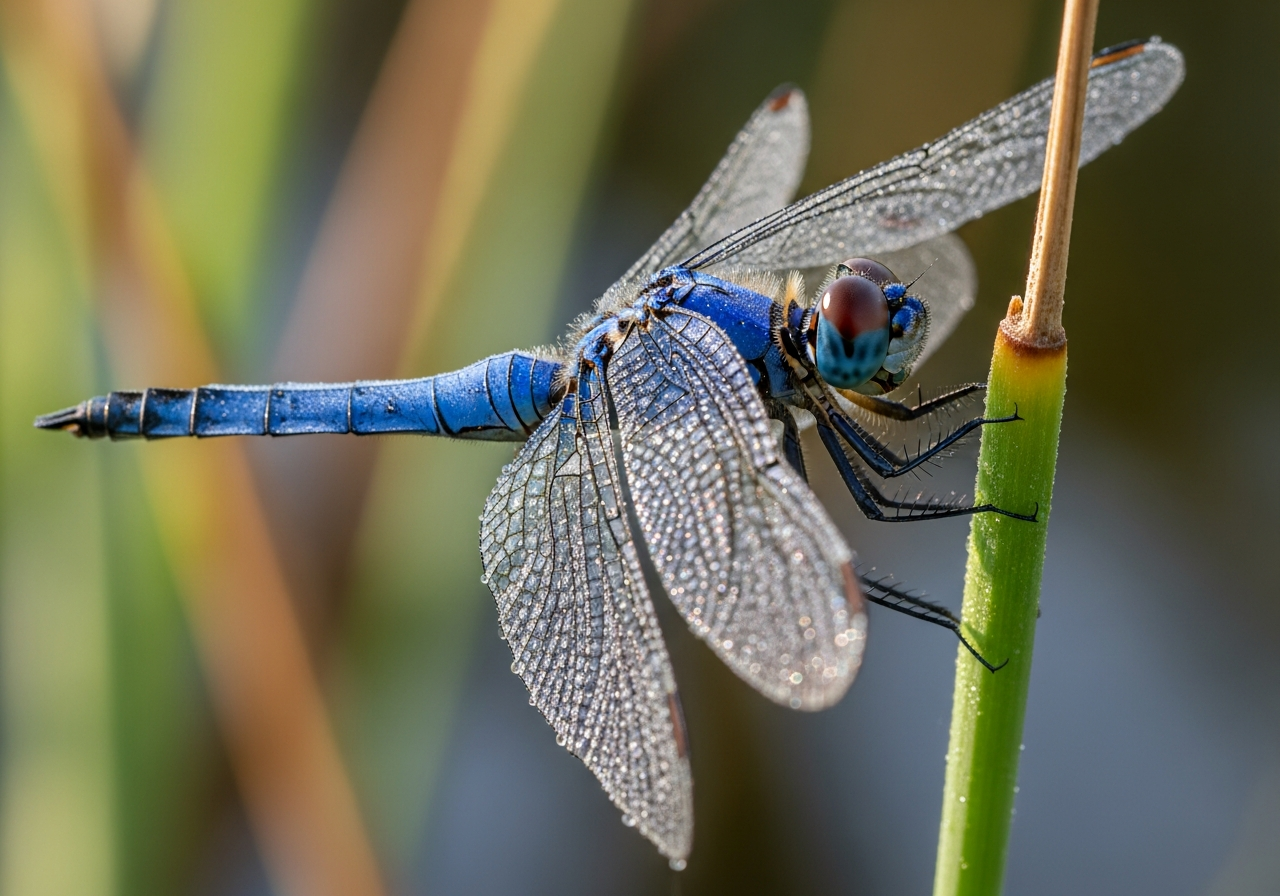
Insects (Hexapoda) carry six legs and, in most adults, wings. They include beetles, flies, ants, bees, moths and butterflies, and dragonflies. Insects are the only invertebrates that fly, and that alone accounts for much of their diversity.
Arachnids have eight legs, two tagmata, and no antennae — the quickest way to settle the perennial spiders-are-not-insects argument. Tarantulas, jumping spiders, scorpions, and ticks all sit here. Most are liquid feeders, pre-digesting prey externally.
Crustaceans are mainly aquatic, bear two pairs of antennae, and range from microscopic copepods to the coconut crab, the largest land arthropod. Barnacles are crustaceans too — sessile ones that kick food into their mouths with modified legs.
Myriapods — centipedes are fast, venomous predators with one leg pair per segment; millipedes are slow detritivores with two pairs per segment and chemical defences instead of speed.
Small bodies, big consequences
Being small is a strategy, not a limitation. A small animal can occupy a crevice, a leaf vein, or a single rotting log as its entire world, so a hectare of forest offers thousands of separate niches. Short generations let selection act fast, which is exactly why pesticide resistance appears within years.
Sociality multiplied the effect. Colonies of leafcutter ants, honey bees, and termites behave as superorganisms — a sterile worker caste, division of labour, and decision-making distributed across thousands of individuals. Leafcutters farm fungus on cut leaves; termites turn dead wood into soil at continental scale.
The limits arthropods cannot cross
Two constraints explain why no land arthropod approaches vertebrate size. Terrestrial insects breathe through tracheae — branching tubes carrying air directly to tissues, largely by diffusion. Diffusion works beautifully over millimetres and poorly over decimetres. Second, exoskeletal support scales badly: cross-sectional strength grows with the square of length while mass grows with the cube, so armour thick enough for a large body would leave no room for the animal. The giant Carboniferous dragonfly relatives that people cite as counterexamples lived under an oxygen-rich atmosphere that relaxed the first constraint, not the second.
What they do for us, and to us
Arthropods pollinate a large share of flowering crops, shred leaf litter into soil, and form the base of freshwater and marine food webs. They also carry disease: mosquitoes and ticks are among the most medically important animals alive. And they keep supplying ideas — spider silk to materials science, stick insects to robotics. Their closest relatives are instructive too: the water bear and the velvet worm sit just outside Arthropoda proper, moult like arthropods, but keep soft, unjointed legs — a glimpse of what the ancestral body plan may have looked like before the joints arrived. Protecting “bugs” is not sentimentality; it is protecting soil, pollination, and fisheries at once.
Related reading
- Invertebrates explained
- How do caterpillars become butterflies?
- Deadliest spider
- Dragonfly · Ant · Honey bee
Sources
Frequently asked questions
What is an arthropod?
An invertebrate with a segmented body, jointed legs, and a hard exoskeleton — insects, arachnids, and crustaceans are the best-known groups.
Are spiders insects?
No. Spiders are arachnids (eight legs, two body regions). Insects have six legs and usually three body regions.
Why do arthropods molt?
Their rigid exoskeleton cannot stretch. They shed (ecdysis) and expand before the new cuticle hardens.
How many arthropod species exist?
Over a million described; estimates of total living species run to several million, mostly insects.