Warm-Blooded vs Cold-Blooded Animals Explained
Endotherms generate body heat; ectotherms rely more on the environment. Clear definitions, exceptions (tuna, leatherback turtles), and why the labels are imperfect.
Global Animal Guide · July 10, 2026
Quick answer
“Warm-blooded” usually means endotherms (birds and mammals) that generate most body heat metabolically and keep a stable temperature. “Cold-blooded” usually means ectotherms (most fish, amphibians, reptiles, invertebrates) whose temperature tracks the environment more closely. Real biology is messier — some fish and reptiles are regional endotherms, and hibernating mammals can drop body temperature dramatically.
Last updated: July 2026.
Better terms: endotherm vs ectotherm
| Term | Meaning | Typical animals |
|---|---|---|
| Endotherm | Most heat from metabolism | Birds, mammals |
| Ectotherm | Most heat from surroundings | Fish, amphibians, reptiles, insects |
| Homeotherm | Stable body temperature | Many birds/mammals |
| Poikilotherm | Variable body temperature | Many ectotherms |
“Warm-blooded / cold-blooded” are schoolroom shortcuts. Scientists prefer the table above.
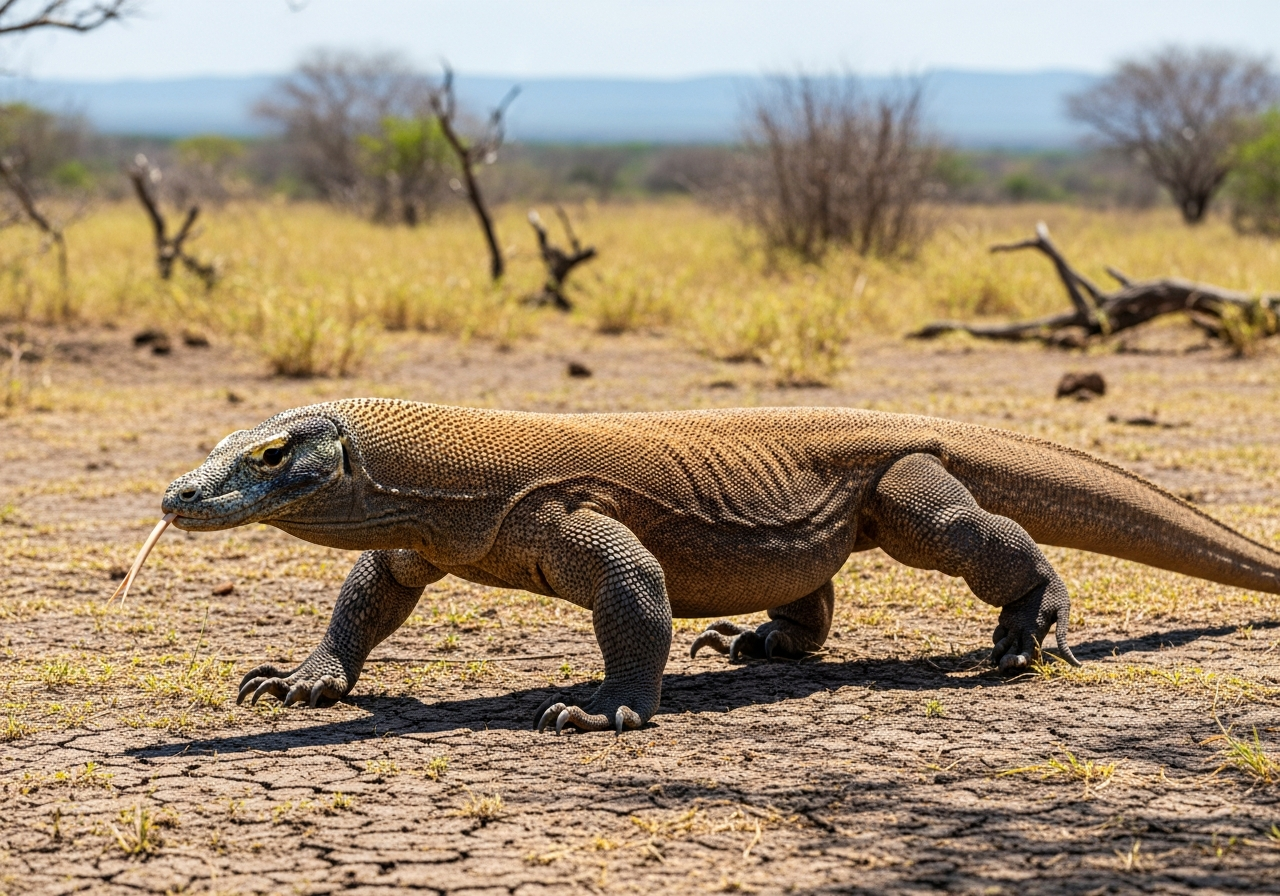
Notice that the table has two axes, not one, and they are independent. Endo- versus ecto- describes where the heat comes from; homeo- versus poikilo- describes whether the temperature stays steady. Most birds and mammals are endothermic homeotherms and most reptiles ectothermic poikilotherms, which is why the folk terms usually work — but the combinations come apart at the edges. A deep-ocean fish is an ectotherm living at a temperature so constant it is effectively a homeotherm; a hibernating groundhog is an endotherm behaving like a poikilotherm. The word “cold-blooded” is worst of all: a komodo dragon that has spent the morning in the sun has warmer blood than you do.
Where the heat actually comes from
Every animal produces some heat — the unavoidable waste product of burning food. The difference is scale. An endotherm at rest burns fuel roughly an order of magnitude faster than an ectotherm of the same size at the same temperature, and most of that extra expenditure exists purely to keep the body warm. The heat is generated in the organs and muscles, then trapped by insulation: fur, feathers, or blubber.
Mammals and birds also have dedicated heating equipment. Shivering contracts opposing muscles against each other so the work goes nowhere and emerges as heat. Non-shivering thermogenesis uses brown fat, a tissue packed with mitochondria deliberately made inefficient — the gradient that would normally drive energy production is short-circuited and released as warmth. This keeps a newborn mammal alive before it can shiver.
Ectotherms have no such furnace, so they use behaviour as their thermostat — and they are remarkably precise about it. A lizard shuttling between sun and shade, adjusting its angle, flattening against warm rock, or gaping to cool its head is running a control system that holds body temperature within a few degrees for much of the day. So “cold-blooded animals can’t regulate their temperature” is wrong. They regulate it well; they just do it with their legs rather than their metabolism.
Why temperature matters so much
Behind all of this sits basic chemistry. Enzyme reaction rates roughly double for every 10 °C rise, up to the point where the proteins start to fail. Every process an animal depends on — muscle power, digestion, nerve conduction, immune response — is temperature-dependent, and each has a range where it works best.
An endotherm fixes the internal environment and pays for it forever. Enzymes can then be tuned to one narrow temperature, and the animal performs identically at dawn, at midnight, and in winter. An ectotherm accepts a variable internal environment and pays nothing — but its performance rises and falls with the weather. A common garter snake at first light is genuinely slow, and no amount of motivation changes that; after an hour of basking it is a different animal.
Digestion shows the trade-off most clearly. A saltwater crocodile that cannot get warm cannot digest a large meal, and food may rot in its stomach before it is processed. Basking is not comfort-seeking. It is a prerequisite for eating.
Trade-offs
Endothermy enables night activity and cold climates — at a huge food cost.
That cost is the defining fact of an endotherm’s life. A shrew must eat close to its own body weight daily and starves within hours of stopping. The pay-off is independence from the weather: a polar bear hunts on Arctic ice, an emperor penguin incubates an egg through the Antarctic winter, and a barn owl hunts in the cold dark when a snake of the same size would be immobile. Endothermy also allows sustained aerobic effort — the pronghorn can run fast for many kilometres, whereas an ectotherm’s speed is brilliant but brief.
Ectothermy needs less food — but performance depends on weather. A snake in morning chill is slow; after basking it is fast.
The economics are genuinely superior in the right conditions. An ectotherm converts a far larger share of every meal into growth rather than heat, so a given amount of prey supports much more predator biomass. It can also simply wait: a large crocodile can go months between meals, and a ball python may refuse food for weeks with no harm done. In warm, unproductive places that patience wins outright — which is why deserts belong to reptiles and insects, and why an ambush predator like the gaboon viper can sit motionless for days.
Body size is where the trade-off bites hardest. Small bodies lose heat fast because surface area is large relative to volume, so tiny endotherms live on a knife-edge — no bird or mammal weighs much less than about two grams, a floor set by the impossibility of eating fast enough. Large ectotherms have the reverse problem: they retain heat so well they barely cool down, the principle behind gigantothermy.
Famous exceptions
- Tuna and some sharks — warm swimming muscles (regional endothermy)
- Leatherback turtles — gigantothermy helps retain heat
- Hibernating mammals — deliberately cool down to save energy
- Naked mole-rats — unusually variable mammal temperatures
These deserve unpacking, because they are not curiosities — they show the categories are a spectrum.
Regional endothermy is the most elegant. The Atlantic bluefin tuna, the great white shark, the shortfin mako shark, the porbeagle, and the thresher shark all use a countercurrent heat exchanger: a dense mesh of arteries and veins running side by side, in which outgoing warm venous blood hands its heat to incoming cold arterial blood before it reaches the gills and is lost to the sea. The result is warm swimming muscle in a cold-blooded body. That warmth buys sustained high-speed pursuit in cold seas, which is why these are the ocean’s long-distance hunters while most fish are sit-and-wait predators.
Gigantothermy needs no special hardware — only size. A leatherback turtle is big enough, and insulated enough with fatty tissue, that its metabolic heat cannot escape quickly, letting it forage in waters far colder than any other reptile tolerates. It is thermal inertia doing the work of a furnace, and a leading explanation for how very large dinosaurs may have stayed warm.
Endotherms going cold is the mirror image. Hibernation is not sleep but a controlled shutdown, with body temperature allowed to fall towards ambient and metabolism cut to a fraction of normal. A hummingbird does a nightly version — torpor — because its metabolism is so extreme it would starve overnight otherwise. Both abandon the strategy that defines them, precisely because it is unaffordable when food is scarce.
Ectotherms making heat completes the picture. A bumblebee shivers its flight muscles before take-off, warming its thorax enough to fly on cold mornings when honey bees are still grounded — a genuinely endothermic act by an insect. Some brooding pythons do the same to incubate their eggs.
So which is better?
Neither. Both strategies are ancient and enormously successful, and the planet is divided between them along climatic lines. Endothermy dominates where it is cold, dark, or seasonally harsh, and where sustained effort pays. Ectothermy dominates where it is warm and food unpredictable, and it wins on species count — the vast majority of animals are ectotherms.
So “warm-blooded” and “cold-blooded” are not two boxes but the ends of a continuum, with mesotherms, regional endotherms, gigantotherms, and hibernators strung out between. The question worth asking of any animal is not which box but where does its heat come from, how steady is it, and what does that cost?
Related reading
Sources
Frequently asked questions
Are reptiles cold-blooded?
Mostly yes in everyday language — they are ectotherms — but some large species can retain heat and some fish are partially warm-bodied.
Are dinosaurs warm-blooded?
Evidence suggests many were mesotherms or endotherm-like; birds (living dinosaurs) are fully endothermic.
Why do lizards bask?
To raise body temperature for digestion, speed, and immune function when the air is cool.
Do cold-blooded animals feel cold?
They experience temperature physiologically; they do not maintain a mammal-like constant internal thermostat.