Image sourcing: see credits & licences
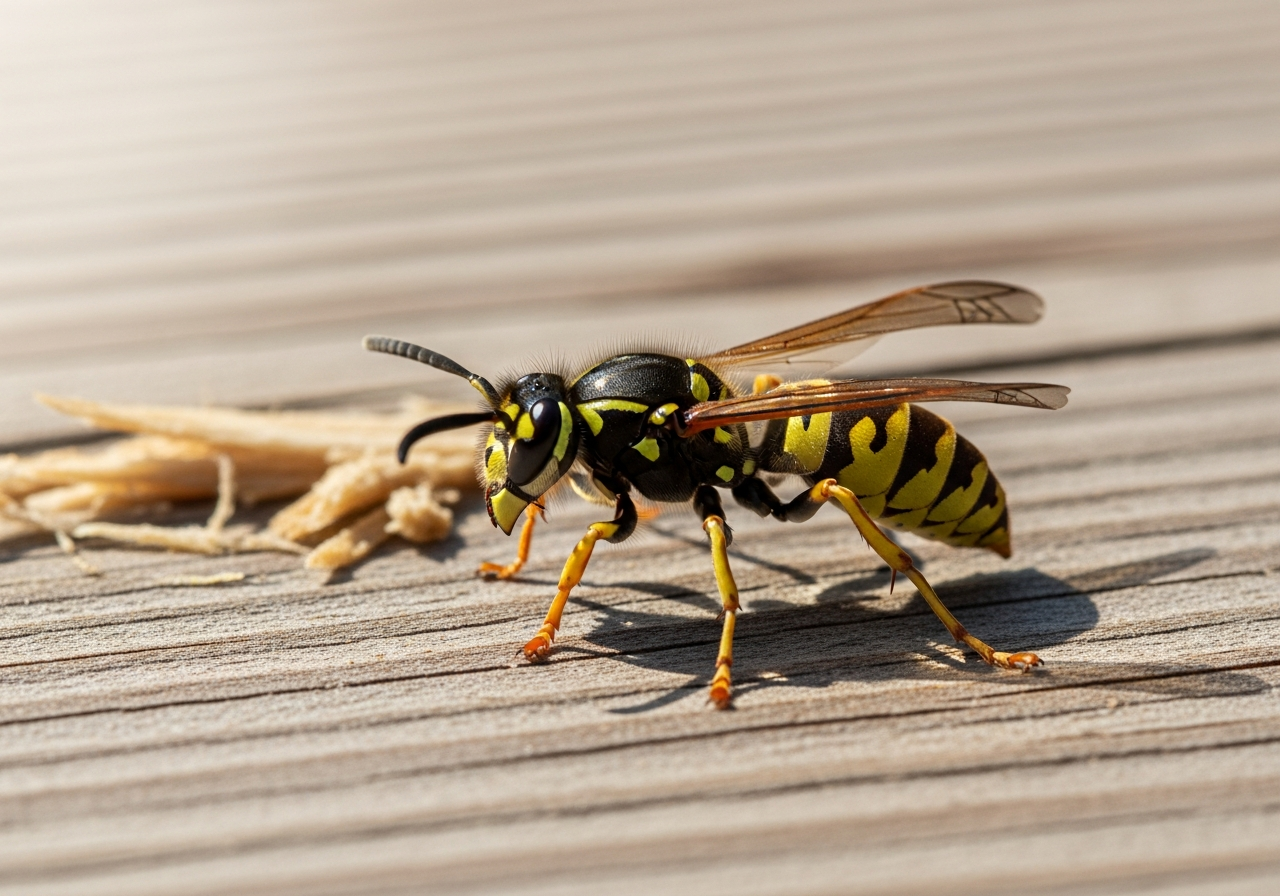
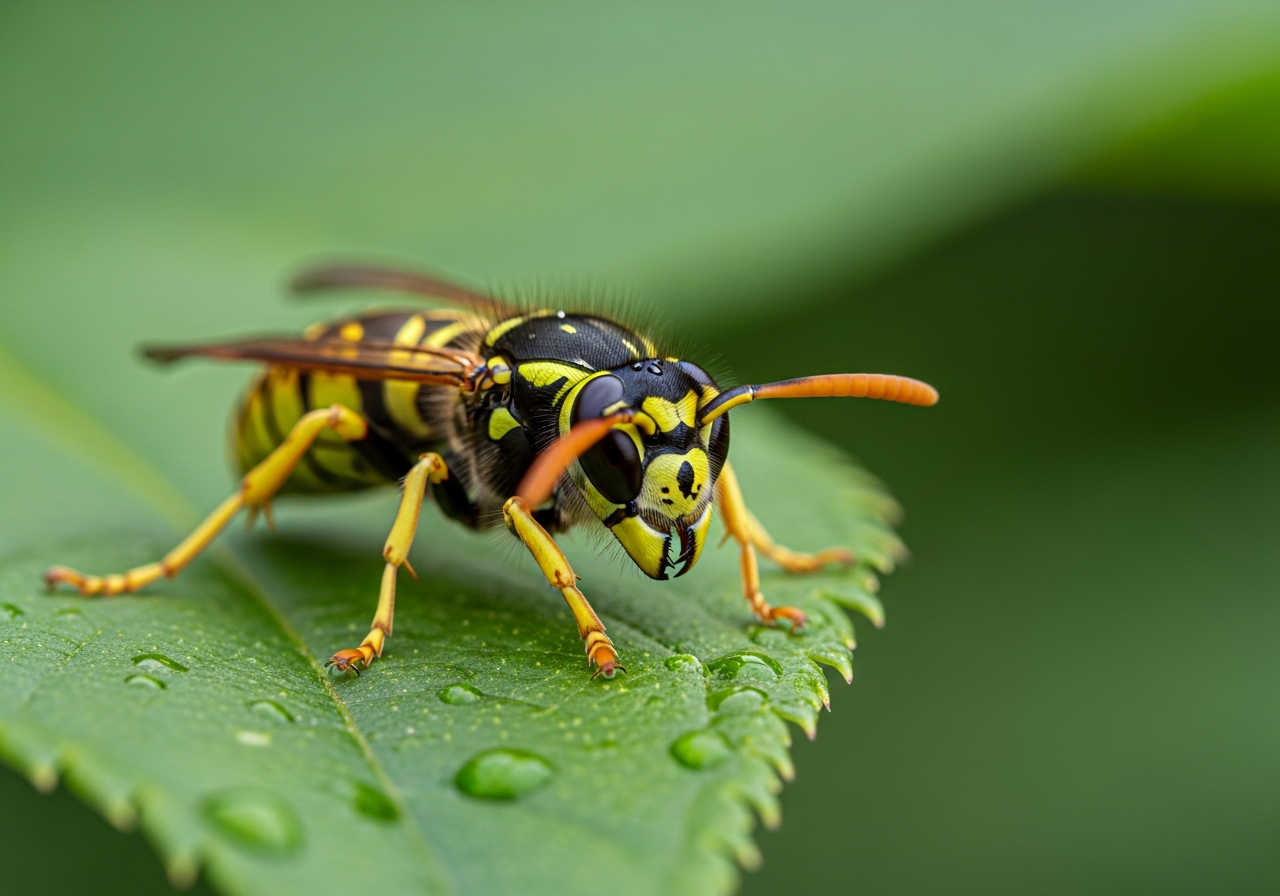
The yellowjacket (Vespula vulgaris) is an insect of the family Vespidae, in the order Hymenoptera.
Quick answer
A yellowjacket is a black-and-yellow social wasp that lives in large paper nests ruled by a queen. Unlike bees, it can sting repeatedly. Yellowjackets are useful predators of pest insects but become aggressive scavengers in late summer. Workers live only weeks; the queen survives to start a new colony.
Top questions about the Yellowjacket
Yellowjacket facts at a glance
- Weight 0 g
- Length 1 cm
- Top speed 30 km/h
- Lifespan 1 years
| Scientific name | Vespula spp. and Dolichovespula spp. |
|---|---|
| Diet | Omnivore (insects, nectar, human food) |
| Habitat | Woodlands, gardens, and urban areas |
| Lifespan | Workers a few weeks; queens about one year |
| Length | 10–16 mm (0.4–0.6 in) |
| Colony size | Hundreds to thousands of wasps |
| Conservation status | Least Concern (IUCN) |
| Kingdom | Animalia |
|---|---|
| Phylum | Arthropoda |
| Class | Insecta |
| Order | Hymenoptera |
| Family | Vespidae |
Where it lives
The yellowjacket (Vespula vulgaris) is native to Woodlands, gardens, and urban areas across the Northern Hemisphere; introduced to other regions. — recorded across North America, Europe, Asia in this guide’s range summary.
For occurrence records, see GBIF species search and sources below.
How big is a yellowjacket?
An adult yellowjacket measures 1 cm long — about 1% of the height of an average adult person (1.73 m) — and weighs around 0 g, a small fraction of an average adult’s body weight (70 kg).
Length vs an average adult’s height (to scale)
What is a group of yellowjackets called?
Group name (collective noun)
A group of Yellowjackets is called a nest. It is also known as a swarm.
Baby name
A baby Yellowjacket is called a larva.
Explore more animal collective nouns and baby animal names .
A society in a paper nest
Yellowjackets are social wasps that build nests from chewed wood pulp, creating papery combs often hidden underground, in wall cavities, or in bushes. A single queen starts the nest each spring, and the colony can grow to thousands of workers by late summer before dying off in autumn.
Sting and defense
Unlike a honey bee, a yellowjacket has a smooth stinger and can sting many times. They are highly defensive of their nest and will swarm to attack a perceived threat. Their stings are painful and, for people allergic to insect venom, can be dangerous.
Helpful, then a nuisance
For much of the year yellowjackets are valuable predators, hunting caterpillars, flies, and other pest insects to feed their larvae. In late summer, with fewer larvae to feed, adults switch to seeking sugars and protein, which is when they crowd around picnics, drinks, and trash.
Telling them apart
Yellowjackets are often mistaken for bees, but they are slimmer, nearly hairless, and more sharply marked in bright yellow and black. Bees are fuzzier and gather pollen, while yellowjackets are sleek hunters and scavengers.
Dig deeper into the Yellowjacket
- How Fast Is A Yellowjacket?
Yellowjacket top speed is about about 30 km/h. Sprint vs endurance and what limits pace.
- What Do Yellowjackets Eat?
What yellowjackets eat: Omnivore (insects, nectar, human food), foraging style, and seasonal shifts in Woodlands, gardens, and urban areas.
- Where Do Yellowjackets Live?
Where yellowjackets live: Woodlands, gardens, and urban areas, native range cues, and human overlap. Status Least Concern.
Explore the Yellowjacket
Close relatives
- Wasp Same family
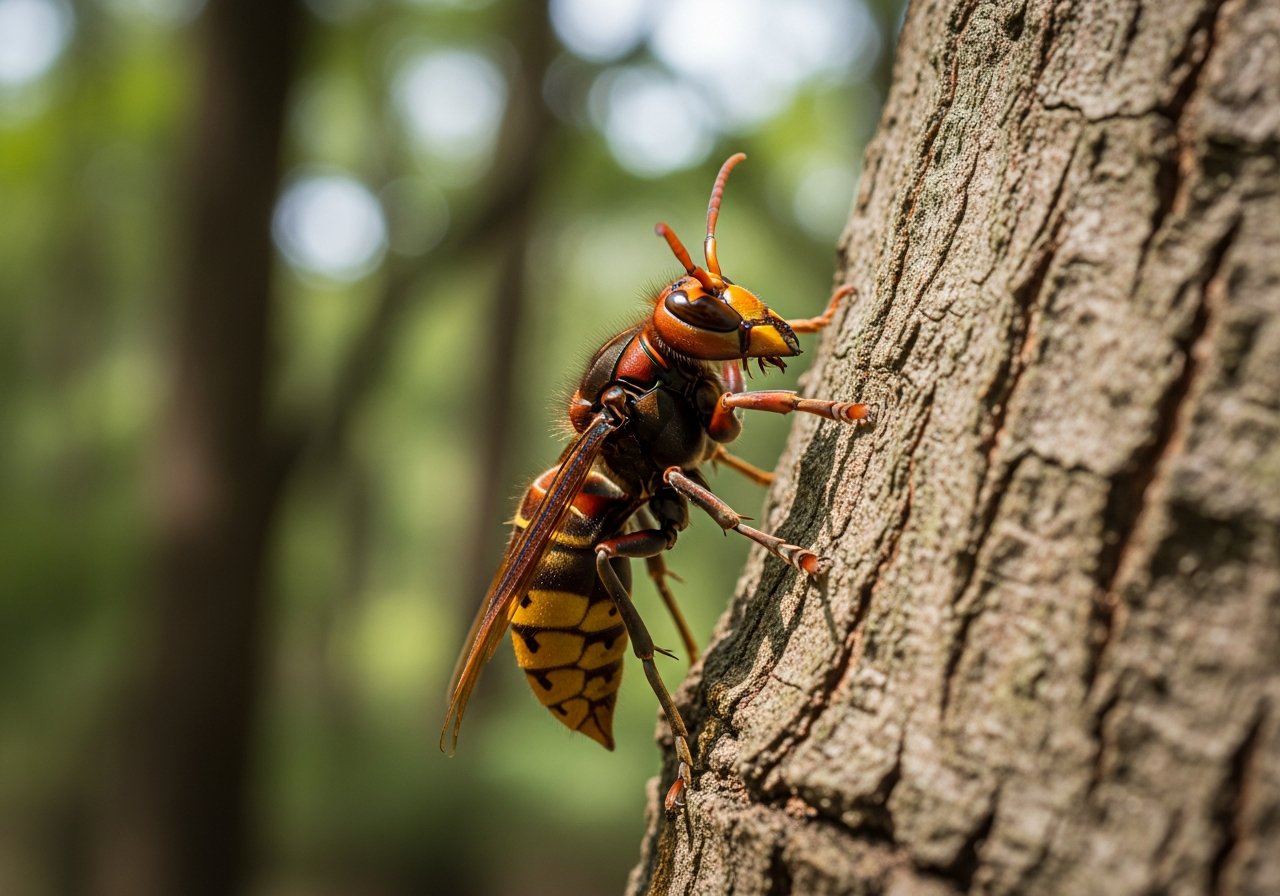
- Asian Giant Hornet Same family
- Leafcutter Ant Same order
- Army Ant Same order
Range & geography
Did you know? Yellowjacket facts
- A yellowjacket is a black-and-yellow social wasp that lives in large paper nests ruled by a queen.
- Yellowjackets are slim, shiny wasps that can sting repeatedly and scavenge meat and sugar, while bees are fuzzy, gather pollen, and usually sting only once.
- Yes. A yellowjacket has a smooth stinger, so unlike a honey bee it can sting repeatedly and will do so to defend its nest.
- By late summer the colony has few larvae left to feed, so adult yellowjackets seek out sugars and protein and crowd around food, drinks, and trash.
- Yes. For most of the year yellowjackets hunt caterpillars, flies, and other pest insects, making them helpful natural pest controllers.
- Conservation: Least Concern (IUCN).
Diet & feeding
Yellowjacket feeds primarily as a omnivore (insects, nectar, human food). Yellowjackets are social wasps that build nests from chewed wood pulp, creating papery combs often hidden underground, in wall cavities, or in bushes. A single queen starts the nest each spring, and the colony can grow to thousands of workers by
Adaptations
- Yellowjackets are social wasps that build nests from chewed wood pulp, creating papery combs often hidden underground, in wall cavities, or in bushes. A single queen starts the nest each spring, and the colony can grow to thousands of workers by late summer before dying off in autumn.
- Unlike a honey bee, a yellowjacket has a smooth stinger and can sting many times. They are highly defensive of their nest and will swarm to attack a perceived threat. Their stings are painful and, for people allergic to insect venom, can be dangerous.
Behaviour & ecology
- Yellowjackets are social wasps that build nests from chewed wood pulp, creating papery combs often hidden underground, in wall cavities, or in bushes. A single queen starts the nest each spring, and the colony can grow to thousands of workers by late summer before dying off in autumn.
- Unlike a honey bee, a yellowjacket has a smooth stinger and can sting many times. They are highly defensive of their nest and will swarm to attack a perceived threat. Their stings are painful and, for people allergic to insect venom, can be dangerous.
- For much of the year yellowjackets are valuable predators, hunting caterpillars, flies, and other pest insects to feed their larvae. In late summer, with fewer larvae to feed, adults switch to seeking sugars and protein, which is when they crowd around picnics, drinks, and trash.
Communication
- Yellowjacket uses scent, posture, and vocal signals to mark territory and coordinate social behaviour.
- Communication intensity often peaks during breeding seasons and territorial disputes.
Habitat & range
Woodlands, gardens, and urban areas
Ecological role
Yellowjacket participates in pollination, decomposition, or prey-base support for birds and other insectivores.
Conservation status of the Yellowjacket
The yellowjacket (Vespula vulgaris) is listed as Least Concern on the IUCN Red List. Least Concern (LC) is the IUCN's lowest-risk category, assigned to widespread, abundant species that have been evaluated and found not to be threatened. It does not mean a species faces no pressures — only that it is not currently at risk of extinction.
The yellowjacket (Vespula vulgaris) is assessed on the IUCN Red List. Look up on the IUCN Red List .
Frequently asked questions about the Yellowjacket
What is the difference between a yellowjacket and a bee?
Yellowjackets are slim, shiny wasps that can sting repeatedly and scavenge meat and sugar, while bees are fuzzy, gather pollen, and usually sting only once.
Can a yellowjacket sting more than once?
Yes. A yellowjacket has a smooth stinger, so unlike a honey bee it can sting repeatedly and will do so to defend its nest.
Why are yellowjackets aggressive in late summer?
By late summer the colony has few larvae left to feed, so adult yellowjackets seek out sugars and protein and crowd around food, drinks, and trash.
Are yellowjackets useful?
Yes. For most of the year yellowjackets hunt caterpillars, flies, and other pest insects, making them helpful natural pest controllers.
Where do yellowjackets build their nests?
Yellowjackets build papery nests from chewed wood pulp, often underground, in wall cavities, or hanging in bushes and structures.
What is a group of yellowjackets called?
A group of Yellowjackets is called a nest. It is also known as a swarm.
What is a baby yellowjacket called?
A baby Yellowjacket is called a larva.
Sources & references
This guide is compiled and reviewed against established zoological and conservation references. Key sources for the Yellowjacket:
-
IUCN Red List of Threatened Species
Conservation status (Least Concern) reflects the IUCN Red List category for Vespula vulgaris.
-
iNaturalist — observations & photos
Search citizen-science observations and community IDs for Vespula vulgaris. Useful for range checks and recent sightings — not a substitute for formal Red List status.
-
GBIF — occurrence data
Global Biodiversity Information Facility species search for Vespula vulgaris. Explore published occurrence records used in range research.
- IUCN Red List — Vespula vulgaris.
Conservation status (Least Concern) and population trends.
- Animal Diversity Web — Vespula vulgaris. University of Michigan Museum of Zoology.
Life history, morphology, and range.
- Wikipedia — Yellowjacket.
General taxonomy and overview (cross-check primary sources).
-
Global Animal Guide editorial standards
How we research, source, review, and update every guide for accuracy.