Image sourcing: see credits & licences
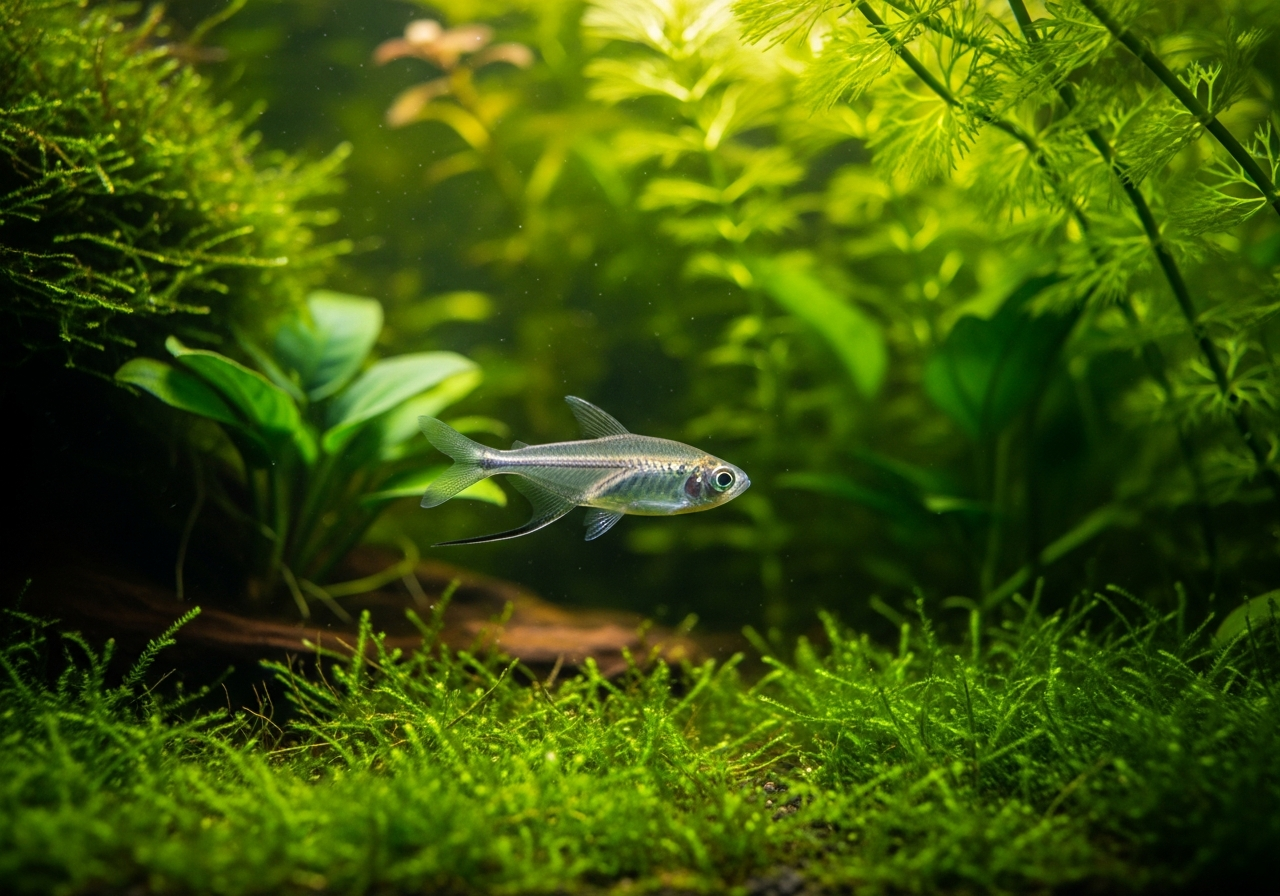
The x-ray tetra (Pristella maxillaris) is a ray-finned fish of the family Characidae, in the order Characiformes.
Quick answer
The X-ray tetra is a small, translucent freshwater fish from the Amazon basin whose see-through body reveals its backbone and a silvery swim-bladder capsule. Hardy and peaceful, it lives in large schools, eats small invertebrates and plant matter, and usually lives 3 to 5 years.
Top questions about the X-ray Tetra
X-ray Tetra facts at a glance
- Weight 1 g
- Length 5 cm
- Top speed 10 km/h
- Lifespan 4 years
| Scientific name | Pristella maxillaris |
|---|---|
| Diet | Omnivore (small invertebrates, plant matter) |
| Habitat | Coastal Amazon rivers and floodplains |
| Lifespan | 3–5 years |
| Weight | Under 1 g |
| Length | Up to about 5 cm (2 in) |
| Conservation status | Least Concern (IUCN) |
| Kingdom | Animalia |
|---|---|
| Phylum | Chordata |
| Class | Actinopterygii |
| Order | Characiformes |
| Family | Characidae |
| Genus | Pristella |
Where it lives
The x-ray tetra (Pristella maxillaris) is native to Clearwater and coastal rivers and floodplains of the Amazon and Orinoco basins in South America. — recorded across South America in this guide’s range summary.
For occurrence records, see GBIF species search and sources below.
How big is a x-ray tetra?
An adult x-ray tetra measures 5 cm long — about 3% of the height of an average adult person (1.73 m) — and weighs around 1 g, a small fraction of an average adult’s body weight (70 kg).
Length vs an average adult’s height (to scale)
What is a group of x-ray tetras called?
Group name (collective noun)
A group of X-ray Tetras is called a school. It is also known as a shoal.
Baby name
A baby X-ray Tetra is called a fry.
Explore more animal collective nouns and baby animal names .
A transparent body
The X-ray tetra gets its name from its almost transparent body, through which you can see the spine and a silvery, bullet-shaped capsule that protects its swim bladder. The transparency works as camouflage in sunlit, open water, making the fish hard for predators to pick out.
Safety in schools
X-ray tetras are shoaling fish that feel secure in groups, moving and turning together in loose schools. A school confuses predators and lets the fish spot danger sooner, which is why they are most comfortable and colorful when kept in numbers.
A hardy survivor
Unusually for an Amazon tetra, this species tolerates a wide range of water conditions, including the slightly brackish coastal floodplains where many fish cannot live. That toughness has made it both a successful wild fish and a long-time favorite in home aquariums.
Diet and range
X-ray tetras are omnivores that pick at tiny invertebrates, insect larvae, and bits of plant matter. They live in the rivers and seasonally flooded lowlands of the Amazon and Orinoco basins in northern South America and remain common in the wild.
Dig deeper into the X-ray Tetra
- How Long Do X-ray Tetras Live?
X-ray Tetra lifespan is typically 3–5 years. What shortens or extends life, life stages, and status (Least Concern).
- What Do X-ray Tetras Eat?
What x-ray tetras eat: Omnivore (small invertebrates, plant matter), foraging style, and seasonal shifts in Coastal Amazon rivers and floodplains.
- Where Do X-ray Tetras Live?
Where x-ray tetras live: Coastal Amazon rivers and floodplains, native range cues, and human overlap. Status Least Concern.
Explore the X-ray Tetra
Close relatives
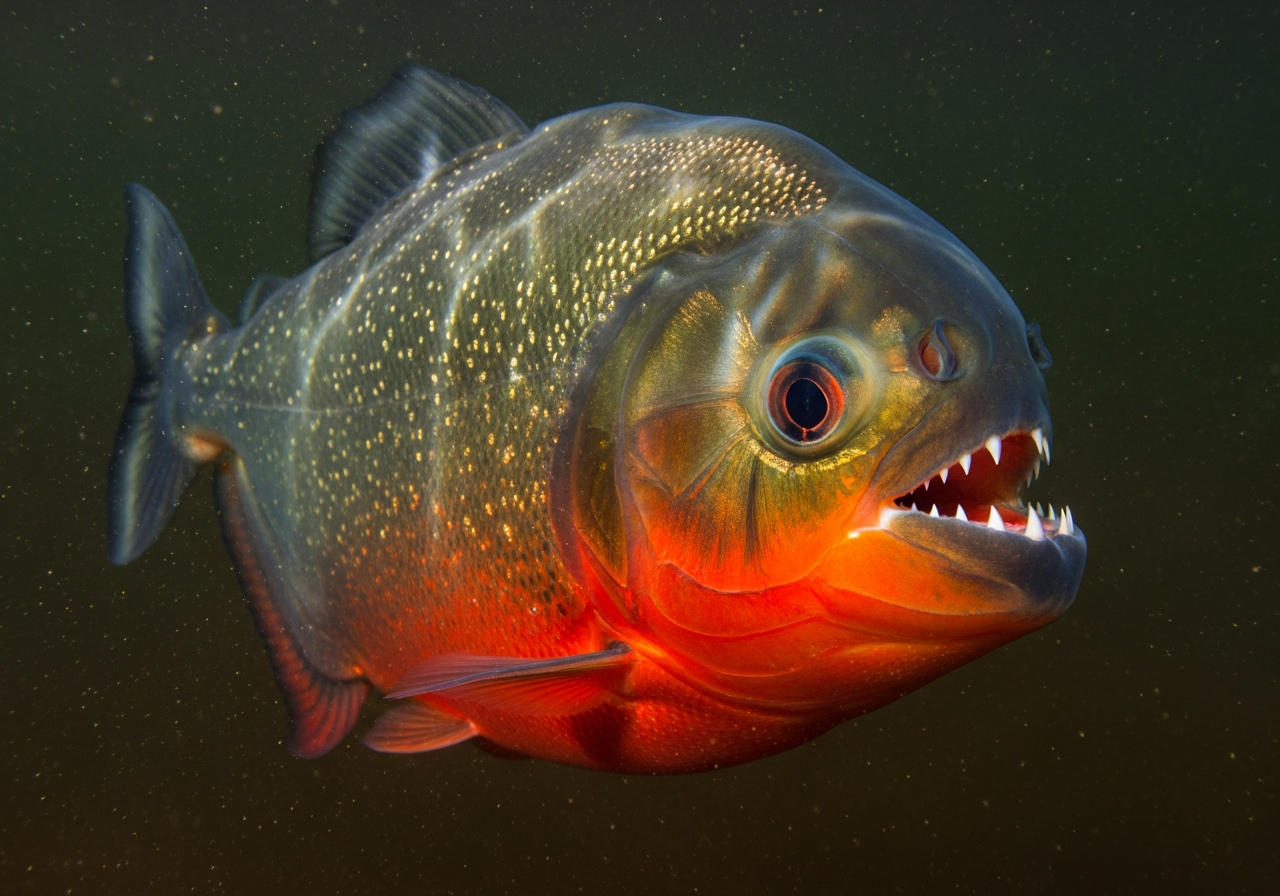
- Red-bellied Piranha Same order
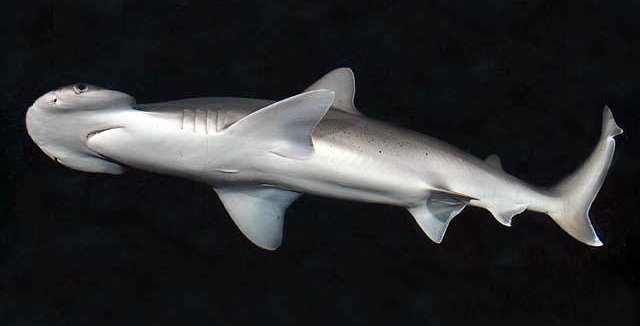
- Great White Shark Same class
- Ocean Sunfish Same class
- Rainbow Trout Same class
Range & geography
Did you know? X-ray Tetra facts
- The X-ray tetra is a small, translucent freshwater fish from the Amazon basin whose see-through body reveals its backbone and a silvery swim-bladder capsule.
- The X-ray tetra has a nearly transparent body, so you can see its backbone and a silvery swim-bladder capsule through its skin, as if looking at an X-ray.
- X-ray tetras are tiny, growing to only about 5 cm (2 in) in length.
- They are omnivores that eat small invertebrates, insect larvae, and plant matter, foraging in open water and near the bottom.
- X-ray tetras live in the Amazon and Orinoco river basins of South America, including slightly brackish coastal floodplains.
- Conservation: Least Concern (IUCN).
Diet & feeding
X-ray Tetra feeds primarily as a omnivore (small invertebrates, plant matter).
Adaptations
- The X-ray tetra gets its name from its almost transparent body, through which you can see the spine and a silvery, bullet-shaped capsule that protects its swim bladder. The transparency works as camouflage in sunlit, open water, making the fish hard for predators to pick out.
- X-ray tetras are shoaling fish that feel secure in groups, moving and turning together in loose schools. A school confuses predators and lets the fish spot danger sooner, which is why they are most comfortable and colorful when kept in numbers.
Behaviour & ecology
- The X-ray tetra gets its name from its almost transparent body, through which you can see the spine and a silvery, bullet-shaped capsule that protects its swim bladder. The transparency works as camouflage in sunlit, open water, making the fish hard for predators to pick out.
- X-ray tetras are shoaling fish that feel secure in groups, moving and turning together in loose schools. A school confuses predators and lets the fish spot danger sooner, which is why they are most comfortable and colorful when kept in numbers.
- Unusually for an Amazon tetra, this species tolerates a wide range of water conditions, including the slightly brackish coastal floodplains where many fish cannot live. That toughness has made it both a successful wild fish and a long-time favorite in home aquariums.
Communication
- Lateral-line and visual cues coordinate schooling, courtship, or territorial behaviour.
- Some species produce low-frequency sounds or drumming for spawning or defence.
Habitat & range
Coastal Amazon rivers and floodplains
Ecological role
X-ray Tetra occupies a defined trophic level in aquatic food webs, linking plankton or smaller fish to larger predators.
Conservation status of the X-ray Tetra
The x-ray tetra (Pristella maxillaris) is listed as Least Concern on the IUCN Red List. Least Concern (LC) is the IUCN's lowest-risk category, assigned to widespread, abundant species that have been evaluated and found not to be threatened. It does not mean a species faces no pressures — only that it is not currently at risk of extinction.
The x-ray tetra (Pristella maxillaris) is assessed on the IUCN Red List. Look up on the IUCN Red List .
Frequently asked questions about the X-ray Tetra
Why is it called an X-ray tetra?
The X-ray tetra has a nearly transparent body, so you can see its backbone and a silvery swim-bladder capsule through its skin, as if looking at an X-ray.
How big do X-ray tetras get?
X-ray tetras are tiny, growing to only about 5 cm (2 in) in length.
What do X-ray tetras eat?
They are omnivores that eat small invertebrates, insect larvae, and plant matter, foraging in open water and near the bottom.
Where do X-ray tetras live?
X-ray tetras live in the Amazon and Orinoco river basins of South America, including slightly brackish coastal floodplains.
Are X-ray tetras endangered?
No. X-ray tetras are hardy and widespread and are listed as Least Concern.
What is a group of x-ray tetras called?
A group of X-ray Tetras is called a school. It is also known as a shoal.
What is a baby x-ray tetra called?
A baby X-ray Tetra is called a fry.
Sources & references
This guide is compiled and reviewed against established zoological and conservation references. Key sources for the X-ray Tetra:
-
IUCN Red List of Threatened Species
Conservation status (Least Concern) reflects the IUCN Red List category for Pristella maxillaris.
-
iNaturalist — observations & photos
Search citizen-science observations and community IDs for Pristella maxillaris. Useful for range checks and recent sightings — not a substitute for formal Red List status.
-
GBIF — occurrence data
Global Biodiversity Information Facility species search for Pristella maxillaris. Explore published occurrence records used in range research.
- IUCN Red List — Pristella maxillaris.
Conservation status (Least Concern) and population trends.
- Animal Diversity Web — Pristella maxillaris. University of Michigan Museum of Zoology.
Life history, morphology, and range.
- Wikipedia — X-ray Tetra.
General taxonomy and overview (cross-check primary sources).
-
Global Animal Guide editorial standards
How we research, source, review, and update every guide for accuracy.