Image sourcing: see credits & licences
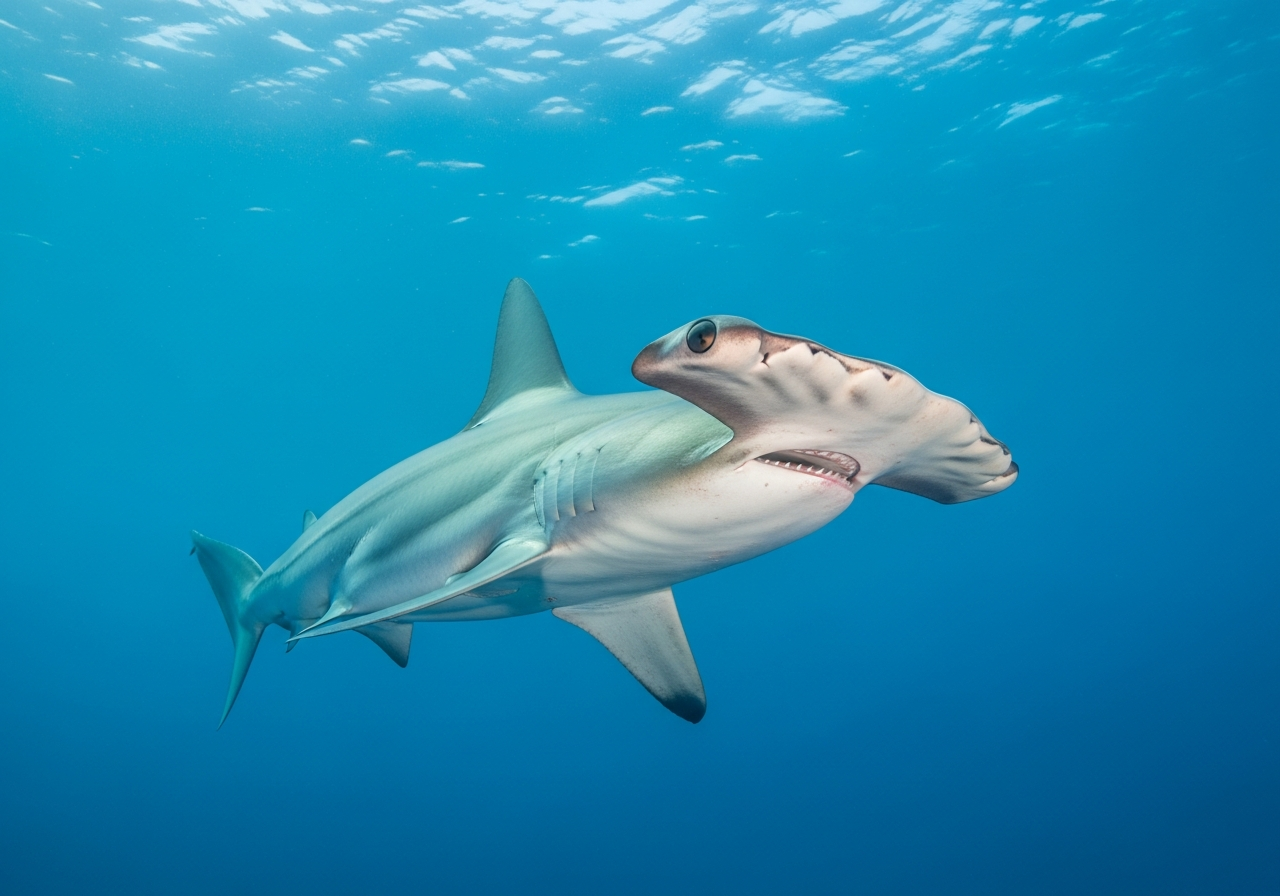
The bonnethead (Sphyrna tiburo) is a cartilaginous fish of the family Sphyrnidae, in the order Carcharhiniformes.
Quick answer
The bonnethead (Sphyrna tiburo) is the smallest hammerhead shark and the only shark known to eat substantial seagrass. Adults reach 1.5 m, inhabit warm shallows, and are listed Endangered.
Top questions about the Bonnethead
Bonnethead facts at a glance
- Weight 10 kg
- Length 1.5 m
- Top speed 30 km/h
- Lifespan 18 years
| Scientific name | Sphyrna tiburo |
|---|---|
| Diet | Omnivore (crustaceans and seagrass) |
| Habitat | Seagrass beds and estuaries |
| Lifespan | 15–20 years |
| Weight | 8–15 kg |
| Top speed | up to 30 km/h |
| Conservation status | Endangered (IUCN) |
| Kingdom | Animalia |
|---|---|
| Phylum | Chordata |
| Class | Chondrichthyes |
| Order | Carcharhiniformes |
| Family | Sphyrnidae |
| Genus | Sphyrna |
Where it lives
The bonnethead (Sphyrna tiburo) is native to Shallow coastal waters of the western Atlantic and eastern Pacific. — recorded across North America, South America in this guide’s range summary.
For occurrence records, see GBIF species search and sources below.
How big is a bonnethead?
An adult bonnethead measures 1.5 m long — about 87% of the height of an average adult person (1.73 m) — and weighs around 10 kg, about 14% of an average adult’s body weight (70 kg).
Length vs an average adult’s height (to scale)
What is a group of bonnetheads called?
Group name (collective noun)
A group of Bonnetheads is called a shiver.
Baby name
A baby Bonnethead is called a pup.
Explore more animal collective nouns and baby animal names .
Shovel-headed omnivore
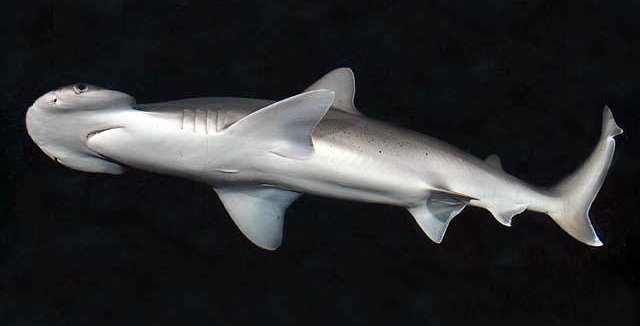
A rounded cephalofoil — not the classic T-hammer — houses electroreceptors for finding prey buried in sand. Digestive enzymes process both crustaceans and seagrass.
Crabs, shrimp, and seagrass
Blue crabs and shrimp dominate carnivorous meals, but gut studies show significant seagrass digestion — rare plant-eating among sharks.
Western Atlantic and eastern Pacific shallows
Estuaries, mangroves, and seagrass beds from New England to Brazil and in the Gulf of California. Warm, coastal nursery fidelity defines ecology.
Endangered in bycatch nets
IUCN lists bonnethead Endangered. Gillnets and shrimp trawls kill large numbers; seagrass loss removes feeding habitat.
Explore the Bonnethead
Close relatives
- Hammerhead Shark Same genus
- Tiger Shark Same order
- Lemon Shark Same order
- Oceanic Whitetip Shark Same order
Collections
Range & geography
Conservation status of the Bonnethead
The bonnethead (Sphyrna tiburo) is listed as Endangered on the IUCN Red List. Endangered (EN) means a species faces a very high risk of extinction in the wild. Populations are usually declining sharply due to habitat loss, hunting, disease, or climate pressure. It sits one level below Critically Endangered on the IUCN Red List.
Main threats to the bonnethead
- Bycatch in shrimp trawls and gillnets
- Targeted take in coastal fisheries
- Mangrove nursery habitat loss
- Rapid reproduction but high fishing pressure
Bonnethead (Sphyrna tiburo) was most recently assessed for the IUCN Red List in 2019. Look up on the IUCN Red List .
Frequently asked questions about the Bonnethead
Do bonnethead sharks eat plants?
Yes — they digest seagrass with enzymes, making them the only known omnivorous shark.
How is a bonnethead head shaped?
A smooth, rounded hammer — narrower than great hammerheads — like a shovel.
Where do bonnetheads live?
Warm shallow coastal waters of the western Atlantic and eastern Pacific.
Why is the bonnethead Endangered?
Heavy bycatch in coastal fisheries and seagrass habitat degradation.
Are bonnetheads dangerous?
Bites are very rare; they are small coastal sharks focused on crabs and seagrass.
What is a group of bonnetheads called?
A group of Bonnetheads is called a shiver.
What is a baby bonnethead called?
A baby Bonnethead is called a pup.
Sources & references
This guide is compiled and reviewed against established zoological and conservation references. Key sources for the Bonnethead:
-
IUCN Red List of Threatened Species
Conservation status (Endangered) reflects the IUCN Red List category for Sphyrna tiburo, most recently assessed in 2019.
-
iNaturalist — observations & photos
Search citizen-science observations and community IDs for Sphyrna tiburo. Useful for range checks and recent sightings — not a substitute for formal Red List status.
-
GBIF — occurrence data
Global Biodiversity Information Facility species search for Sphyrna tiburo. Explore published occurrence records used in range research.
-
Global Animal Guide editorial standards
How we research, source, review, and update every guide for accuracy.