Image sourcing: see credits & licences
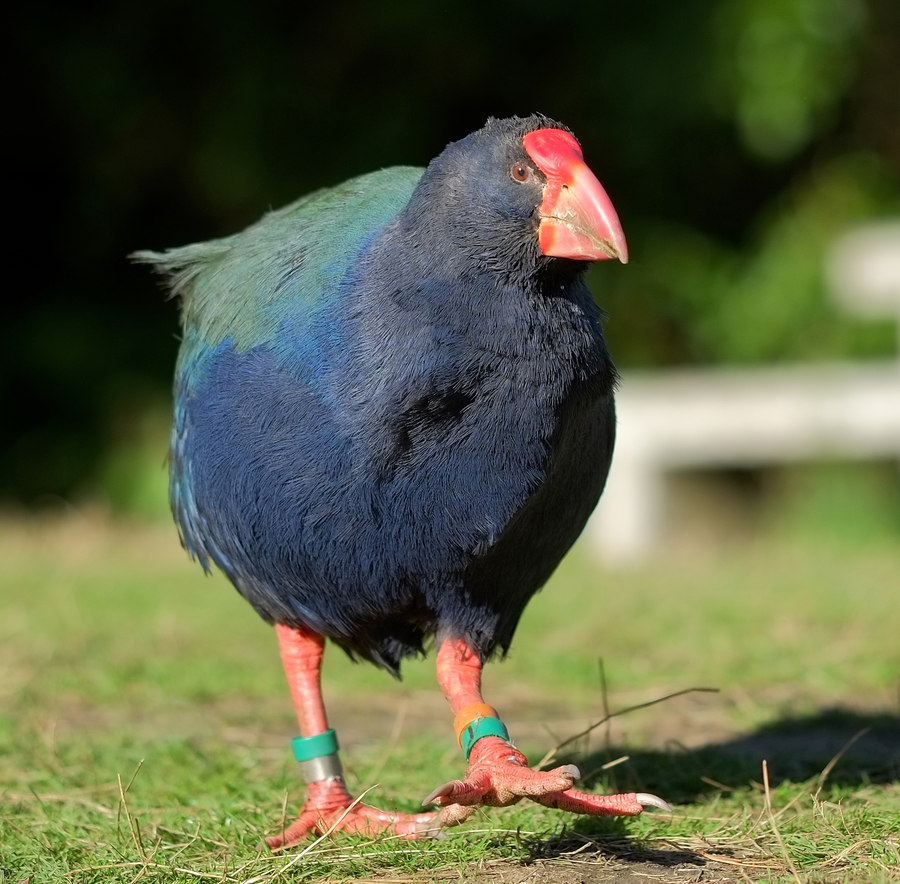
The South island takahe (Porphyrio hochstetteri) is a bird of the family Rallidae, in the order Gruiformes.
Quick answer
The South Island takahē (Porphyrio hochstetteri) is a flightless purple swamphen of New Zealand alpine tussock, once thought extinct until rediscovered in Fiordland in 1948. Adults weigh about 3 kg, graze tussock stems, and are Endangered under intensive translocation to sanctuaries and islands.
Top questions about the South Island Takahe
South Island Takahe facts at a glance
- Weight 3 kg
- Length 50 cm
- Top speed 10 km/h
- Lifespan 20 years
| Scientific name | Porphyrio hochstetteri |
|---|---|
| Diet | Herbivore |
| Habitat | Alpine tussock grasslands |
| Lifespan | Around 20 years in the wild (varies by population and captivity). |
| Weight | About 3 kg typical adult mass (sex and region vary). |
| Top speed | Up to roughly 10 km/h when moving at speed. |
| Conservation status | Endangered (IUCN) |
| Kingdom | Animalia |
|---|---|
| Phylum | Chordata |
| Class | Aves |
| Order | Gruiformes |
| Family | Rallidae |
| Genus | Porphyrio |
Where it lives
The south island takahe (Porphyrio hochstetteri) is native to Alpine grasslands of New Zealand's South Island; also sanctuary islands. — recorded across Oceania in this guide’s range summary.
For occurrence records, see GBIF species search and sources below.
How big is a south island takahe?
An adult south island takahe measures 50 cm long — about 29% of the height of an average adult person (1.73 m) — and weighs around 3.0 kg, about 4% of an average adult’s body weight (70 kg).
Length vs an average adult’s height (to scale)
What is a group of south island takahes called?
Group name (collective noun)
A group of South Island Takahes is called a flock.
Baby name
A baby South Island Takahe is called a chick.
Explore more animal collective nouns and baby animal names .
Flightless swamphen giant
Stockier than pukeko, with a massive red bill for shearing tussock. Wings are reduced; birds walk and run through alpine grassland. Thought extinct for decades before the 1948 Murchison Mountains rediscovery.
Tussock stem grazer
Diet centres on the soft bases of snow tussock and other alpine grasses and herbs. Supplementary feeding supports some managed populations. Across its range it is tied to alpine tussock grasslands, and field accounts emphasise this species’ distinctive ecology rather than generic habitat labels.
Fiordland and sanctuary islands
Native alpine grasslands of New Zealand's South Island; birds also live on predator-free sanctuary islands and fenced mainland sites after translocation.
Endangered conservation dependent
Stoats and deer devastated Fiordland birds. Captive breeding, stoat control, and island releases keep takahē Endangered but increasing under the Takahē Recovery programme.
Explore the South Island Takahe
Close relatives
- Whooping Crane Same order
- Sandhill Crane Same order
- Chicken Same class
- Wandering Albatross Same class
Collections
Range & geography
Conservation status of the South Island Takahe
The south island takahe (Porphyrio hochstetteri) is listed as Endangered on the IUCN Red List. Endangered (EN) means a species faces a very high risk of extinction in the wild. Populations are usually declining sharply due to habitat loss, hunting, disease, or climate pressure. It sits one level below Critically Endangered on the IUCN Red List.
Main threats to the south island takahe
- Predation by introduced stoats
- Habitat loss from tussock grassland modification
- Inbreeding in small managed populations
- Dependence on predator control and translocations
South Island Takahe (Porphyrio hochstetteri) was most recently assessed for the IUCN Red List in 2016. Look up on the IUCN Red List .
Frequently asked questions about the South Island Takahe
Was the takahē extinct?
It was widely thought extinct until a Fiordland population was rediscovered in 1948.
Can takahē fly?
No — they are flightless rails adapted to walking in alpine grassland.
What do takahē eat?
Mainly the bases of tussock grasses and other alpine plants.
How is the takahē being saved?
Stoat control, captive breeding, and moves to predator-free islands and sanctuaries.
Where do takahē live now?
Managed sites on the South Island and several sanctuary islands in New Zealand.
What is a group of south island takahes called?
A group of South Island Takahes is called a flock.
What is a baby south island takahe called?
A baby South Island Takahe is called a chick.
Sources & references
This guide is compiled and reviewed against established zoological and conservation references. Key sources for the South Island Takahe:
-
IUCN Red List of Threatened Species
Conservation status (Endangered) reflects the IUCN Red List category for Porphyrio hochstetteri, most recently assessed in 2016.
-
iNaturalist — observations & photos
Search citizen-science observations and community IDs for Porphyrio hochstetteri. Useful for range checks and recent sightings — not a substitute for formal Red List status.
-
GBIF — occurrence data
Global Biodiversity Information Facility species search for Porphyrio hochstetteri. Explore published occurrence records used in range research.
-
eBird — bird observations
Cornell Lab eBird target search for South Island Takahe. Check recent checklists and seasonal abundance where birders report this species.
-
Global Animal Guide editorial standards
How we research, source, review, and update every guide for accuracy.