Weasel
Mustela nivalis
Quick answer
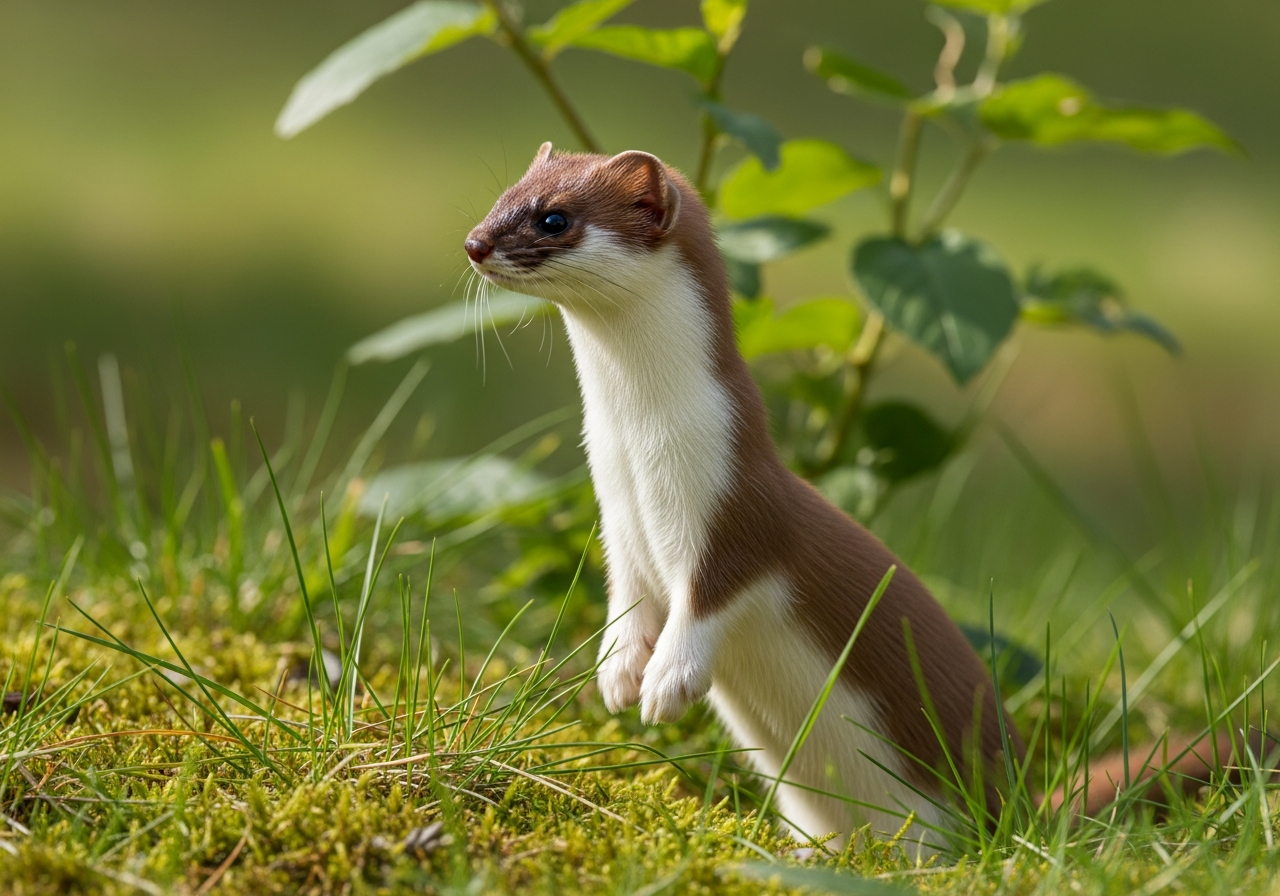
The weasel (Mustela nivalis) is the smallest carnivore in Britain and one of the smallest worldwide, with a body length of just 16–23 cm. Its slender, flexible body is built for pursuing mice and voles directly into their burrows. To tell it from the similar stoat: the weasel is smaller and its short tail is plain brown all the way to the tip, while the stoat is bigger with a distinctive black-tipped tail.
Weasel facts at a glance
| Scientific name | Mustela nivalis |
|---|---|
| Diet | Carnivore (mainly mice and voles) |
| Habitat | Farmland, hedgerows, grassland, woodland |
| Lifespan | 1–3 years in the wild |
| Length | 16–23 cm (6–9 in); Britain's smallest carnivore |
| Weight | 30–150 g (about 1–5 oz) |
| Conservation status | Least Concern (IUCN) |
| Kingdom | Animalia |
|---|---|
| Phylum | Chordata |
| Class | Mammalia |
| Order | Carnivora |
| Family | Mustelidae |
| Genus | Mustela |
Where it lives
Found across the Northern Hemisphere, from Britain and Ireland through Europe and Asia to North America; prefers farmland, hedgerows, and woodland with good rodent populations.
What is a group of weasels called?
Group name (collective noun)
A group of Weasels is called a pack. It is also known as a confusion.
Baby name
A baby Weasel is called a kit.
Explore more animal collective nouns and baby animal names .
Britain's smallest carnivore
The weasel holds the title of Britain's smallest carnivore and is one of the tiniest predatory mammals anywhere. Its long, slender body can be only 16–23 cm from nose to tail root and the smallest individuals weigh under 50 g. That tiny frame is an evolutionary trade-off: slenderness lets the weasel chase mice, voles, and shrews directly into their burrows — a pursuit no other British predator can follow. They can kill prey almost as large as themselves by biting repeatedly at the base of the skull.
Weasel vs stoat: the key differences
The weasel and stoat are closely related and frequently confused, but several features separate them reliably. The weasel is smaller and more compact, with a short tail that is plain brown all the way to the tip. The stoat is noticeably larger with a longer tail that always ends in a black tip — even in the white ermine winter coat that stoats in colder regions develop. In flight, stoats often bound with an arched back; weasels move in a lower, more continuous scurry. In Britain, weasels typically remain brown year-round.
Diet and hunting strategy
Weasels are specialist rodent hunters, eating mainly mice, voles, shrews, and small rats. Their high surface-area-to-volume ratio means they lose body heat rapidly and need to eat around a third of their own weight daily. When prey is abundant they cache food. They are also capable of killing rabbits much larger than themselves. In lean periods they take birds, eggs, and invertebrates. Weasels are active in short, intense bouts of hunting at any time of day or night.
Habitat and range
Weasels are found across Britain and Ireland and throughout much of the Northern Hemisphere — Europe, Asia, and North America (where the closely related least weasel and long-tailed weasel occur). In Britain they favour farmland with hedgerows and rough grassland where rodent populations are dense, using existing burrows, dry-stone walls, wood piles, and dense vegetation for shelter. Weasel populations fluctuate with rodent prey cycles.
Frequently asked questions about the Weasel
How do you tell a weasel from a stoat?
The key tell is the tail tip: a weasel's tail is short and plain brown all the way to the tip, while a stoat's tail always ends in a black tip. The stoat is also noticeably larger. If size is hard to judge, check the tail tip — it is the most reliable single field mark.
Are weasels dangerous to people?
No. Weasels are tiny and extremely unlikely to bite a person unless cornered and handled. They are not aggressive toward humans and will flee given any chance. They are formidable hunters relative to their size, but pose no danger to people.
Do weasels turn white in winter?
In Britain, weasels generally remain brown year-round, though some develop small white patches. The white ermine winter coat is mainly associated with stoats, and even then only occurs reliably in populations in colder, snowier northern regions where camouflage on snow has a strong benefit.
What is a group of weasels called?
A group of weasels is called a pack or, more rarely, a confusion. However, weasels are primarily solitary; the main grouping is a mother with her young.
How long do weasels live?
Wild weasels typically live one to three years. High predation pressure from owls, hawks, foxes, and cats, combined with the intense energy demands of their lifestyle, keeps their lifespan short even when food is plentiful.
What is a baby weasel called?
A baby Weasel is called a kit.
Sources & references
This guide is compiled and reviewed against established zoological and conservation references. Key sources for the Weasel:
-
IUCN Red List of Threatened Species
Conservation status (Least Concern) reflects the IUCN Red List category for Mustela nivalis.
-
Global Animal Guide editorial standards
How we research, source, review, and update every guide for accuracy.