Image sourcing: see credits & licences
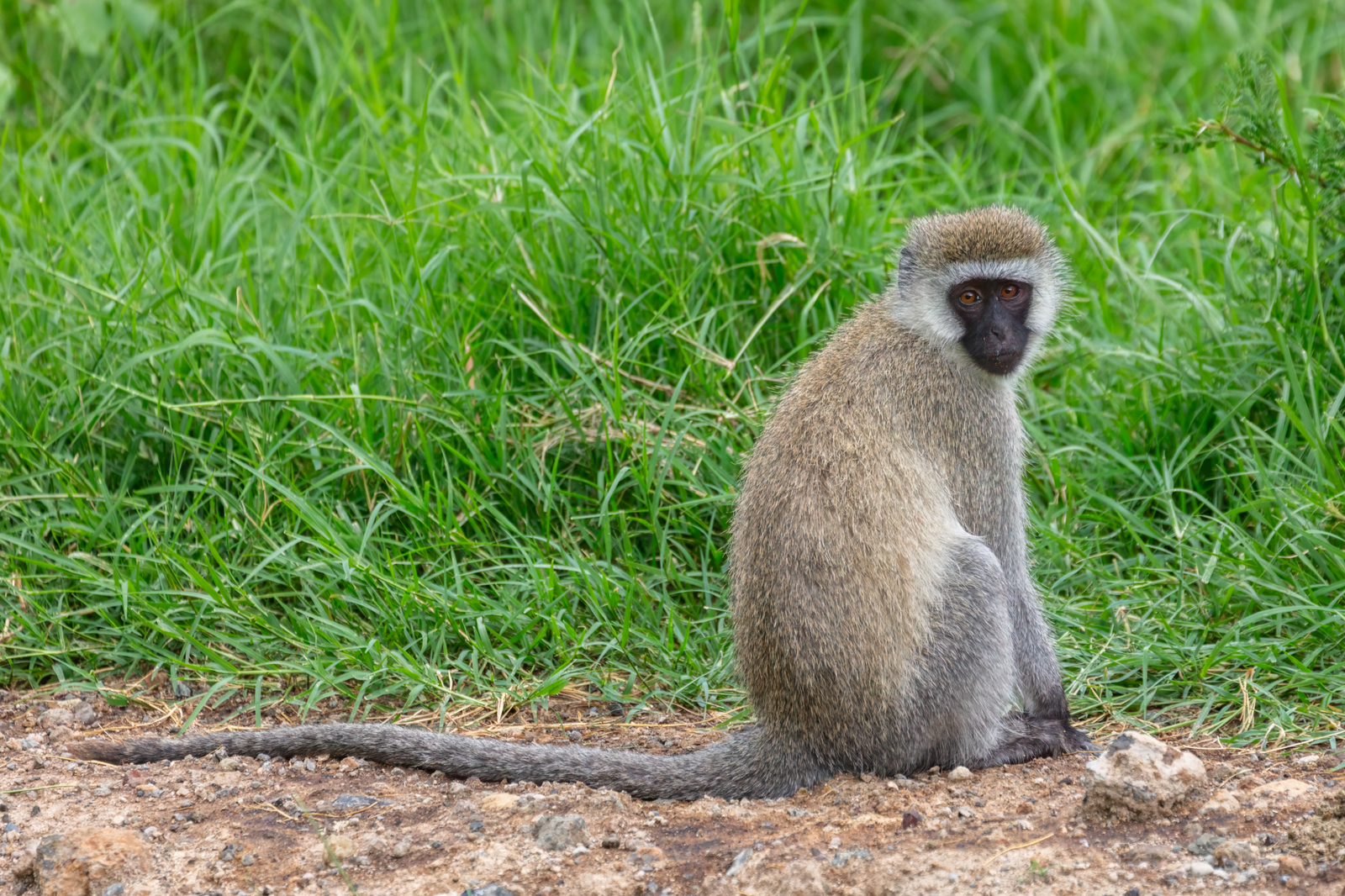
The vervet monkey (Chlorocebus pygerythrus) is a mammal of the family Cercopithecidae, in the order Primates.
Quick answer
The vervet monkey (Chlorocebus pygerythrus) is a greenish-grey savanna primate of East and southern Africa known for predator-specific alarm calls. Adults weigh about 5 kg and are listed Least Concern.
Top questions about the Vervet Monkey
Vervet Monkey facts at a glance
- Weight 5 kg
- Length 50 cm
- Top speed 35 km/h
- Lifespan 17 years
| Scientific name | Chlorocebus pygerythrus |
|---|---|
| Diet | Omnivore |
| Habitat | Savanna and woodland |
| Lifespan | 15–20 years |
| Weight | 4–6 kg |
| Top speed | up to 35 km/h |
| Conservation status | Least Concern (IUCN) |
| Kingdom | Animalia |
|---|---|
| Phylum | Chordata |
| Class | Mammalia |
| Order | Primates |
| Family | Cercopithecidae |
| Genus | Chlorocebus |
Where it lives
The vervet monkey (Chlorocebus pygerythrus) is native to Savannas and riverine woodland of East and southern Africa. — recorded across Africa in this guide’s range summary.
For occurrence records, see GBIF species search and sources below.
How big is a vervet monkey?
An adult vervet monkey measures 50 cm long — about 29% of the height of an average adult person (1.73 m) — and weighs around 5.0 kg, about 7% of an average adult’s body weight (70 kg).
Length vs an average adult’s height (to scale)
What is a group of vervet monkeys called?
Group name (collective noun)
A group of Vervet Monkeys is called a troop.
Baby name
A baby Vervet Monkey is called an infant.
Explore more animal collective nouns and baby animal names .
Alarm calls with meaning
Vervets give distinct calls for leopards, eagles, and snakes, prompting different escape responses. Black faces with white brow bands and blue scrotal patches mark adult males.
Omnivorous edge species
Fruit, flowers, gum, insects, bird eggs, and human crops all feature in the diet. Boldness near lodges and farms creates frequent human conflict.
Savanna and riverine woodland
From Ethiopia and East Africa south to South Africa. Riverine trees and tourist camps offer reliable water and food.
Common but persecuted
Least Concern with adaptable habits. Farmers shoot or trap raiders; research colonies nonetheless made vervets a classic model of primate communication.
Explore the Vervet Monkey
Close relatives
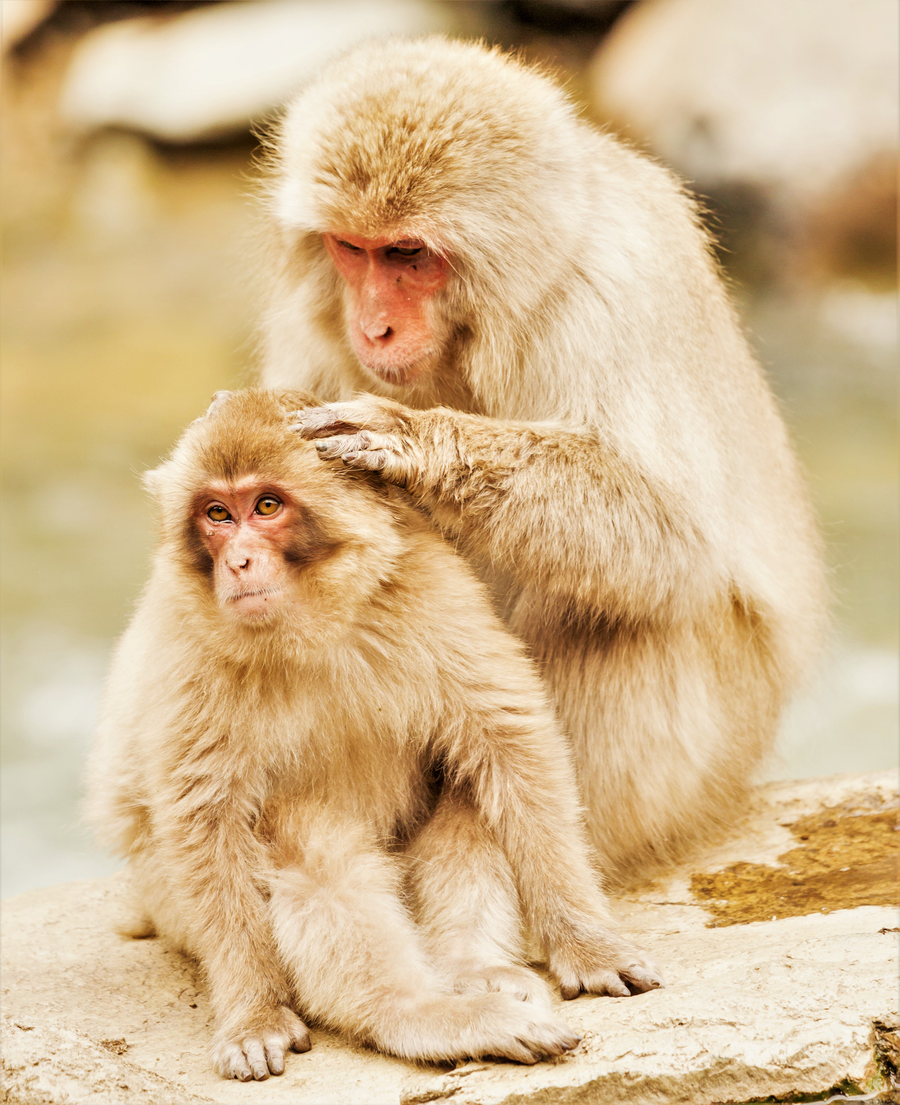
- Japanese Macaque Same family
- Mandrill Same family
- Proboscis Monkey Same family
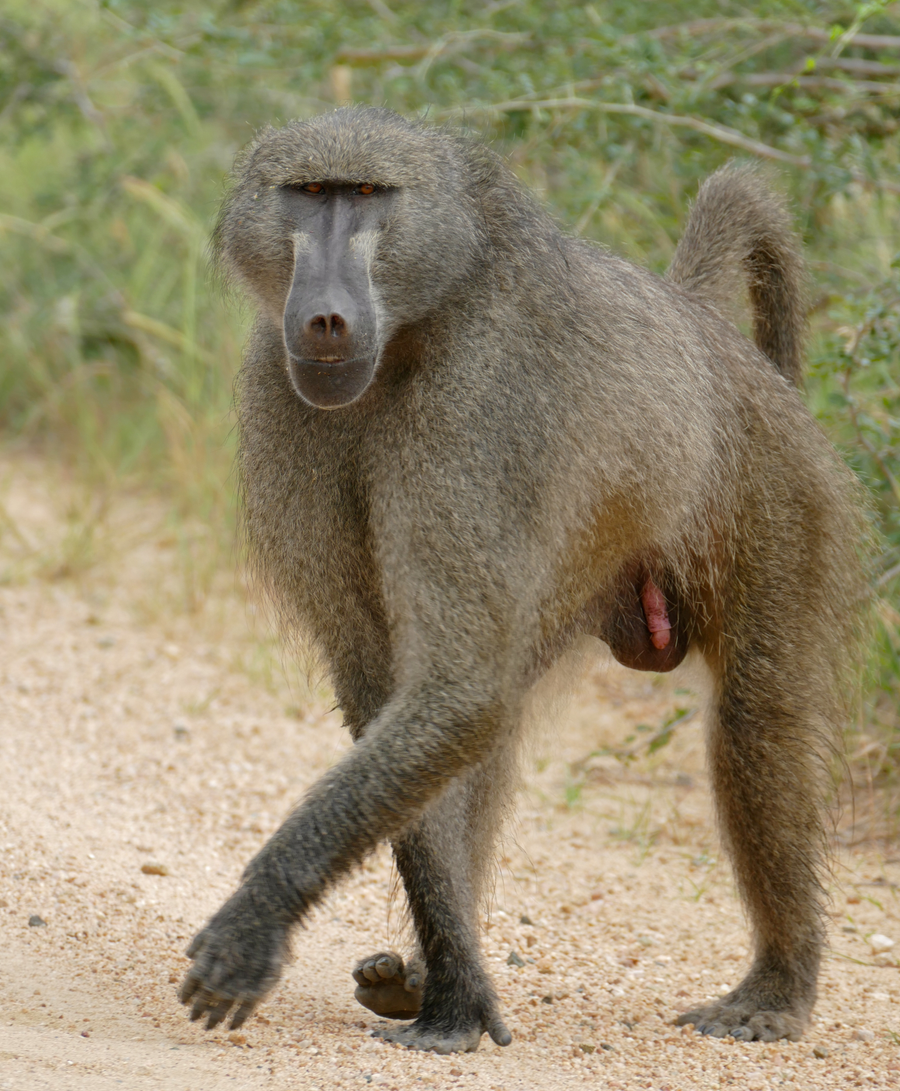
- Olive Baboon Same family
Range & geography
Conservation status of the Vervet Monkey
The vervet monkey (Chlorocebus pygerythrus) is listed as Least Concern on the IUCN Red List. Least Concern (LC) is the IUCN's lowest-risk category, assigned to widespread, abundant species that have been evaluated and found not to be threatened. It does not mean a species faces no pressures — only that it is not currently at risk of extinction.
The vervet monkey (Chlorocebus pygerythrus) is assessed on the IUCN Red List. Look up on the IUCN Red List .
Frequently asked questions about the Vervet Monkey
Do vervet monkeys have different alarm calls?
Yes — distinct calls for leopards, raptors, and snakes trigger appropriate escape behaviour in the troop.
Why do male vervets have blue behinds?
Bright blue scrotal skin signals social status and attracts females in some contexts.
Do vervets steal human food?
They readily raid kitchens, picnic areas, and crops near tourist lodges and farms.
Where do vervet monkeys live?
Savannas and woodland across East and southern Africa, often near rivers.
Are vervet monkeys used in research?
Yes — their vocal communication has been studied for decades as a model of primate alarm systems.
What is a group of vervet monkeys called?
A group of Vervet Monkeys is called a troop.
What is a baby vervet monkey called?
A baby Vervet Monkey is called an infant.
Sources & references
This guide is compiled and reviewed against established zoological and conservation references. Key sources for the Vervet Monkey:
-
IUCN Red List of Threatened Species
Conservation status (Least Concern) reflects the IUCN Red List category for Chlorocebus pygerythrus.
-
iNaturalist — observations & photos
Search citizen-science observations and community IDs for Chlorocebus pygerythrus. Useful for range checks and recent sightings — not a substitute for formal Red List status.
-
GBIF — occurrence data
Global Biodiversity Information Facility species search for Chlorocebus pygerythrus. Explore published occurrence records used in range research.
-
Global Animal Guide editorial standards
How we research, source, review, and update every guide for accuracy.