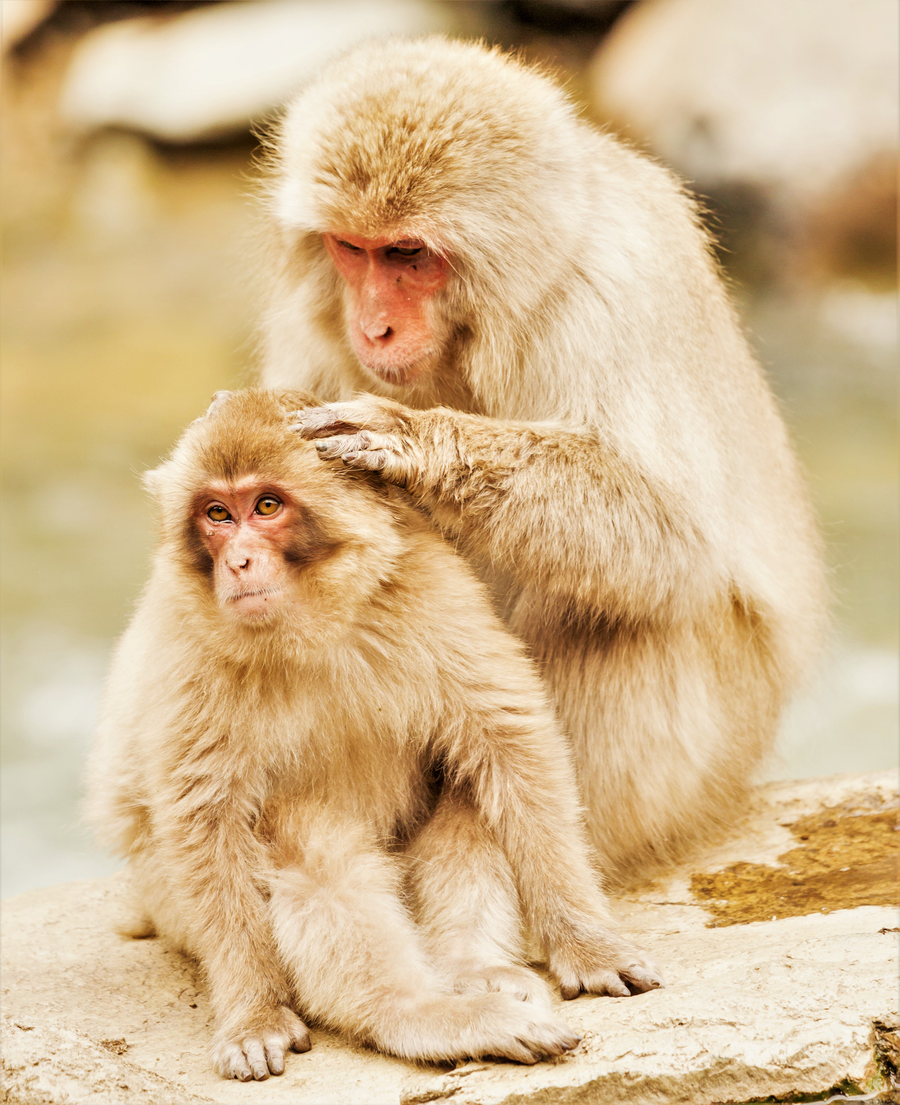
The Japanese macaque (Macaca fuscata) is a mammal of the family Cercopithecidae, in the order Primates.
Quick answer
The Japanese macaque (Macaca fuscata), or snow monkey, is the world's northernmost wild monkey, famous for bathing in volcanic hot springs in winter. It weighs 8–11 kg (18–24 lb), lives in strict matrilineal troops that can exceed 100 members, and can survive 25–30 years.
Top questions about the Japanese Macaque
Also available in Español (Macaco japonés)
Japanese Macaque facts at a glance
- Weight 10 kg
- Length 60 cm
- Top speed 24 km/h
- Lifespan 28 years
| Scientific name | Macaca fuscata |
|---|---|
| Diet | Omnivore — fruit, seeds, leaves, bark, insects, and small vertebrates |
| Habitat | Subtropical to subalpine forest on Japan's main islands, enduring snowy winters |
| Lifespan | 25–30 years in the wild |
| Weight | 8–11 kg (18–24 lb); males heavier than females |
| Top speed | Agile quadruped on the ground and in trees, and a strong swimmer |
| Conservation status | Least Concern (IUCN) |
| Kingdom | Animalia |
|---|---|
| Phylum | Chordata |
| Class | Mammalia |
| Order | Primates |
| Family | Cercopithecidae |
| Genus | Macaca |
Where it lives
The japanese macaque (Macaca fuscata) is native to Forests of Japan's main islands — Honshu, Shikoku, and Kyushu — from snowy mountains to subtropical Yakushima. — recorded across Asia in this guide’s range summary.
For occurrence records, see GBIF species search and sources below.
How big is a japanese macaque?
An adult japanese macaque measures 60 cm long — about 35% of the height of an average adult person (1.73 m) — and weighs around 10 kg, about 14% of an average adult’s body weight (70 kg).
Length vs an average adult’s height (to scale)
The original snow monkey
No non-human primate lives further north: Japanese macaques range to the Shimokita Peninsula at 41°N, where winter temperatures drop below −20 °C. Adults have a bare red face, thick brown-grey winter fur, and a short stump of a tail. Males average about 11 kg, females about 8 kg.
Hot-spring culture
At Jigokudani Monkey Park in Nagano, macaques have soaked in natural hot springs since the 1960s — a learned behaviour passed down through generations that has become an icon of Japanese wildlife. Bathing is most popular in freezing weather and appears to reduce stress as well as conserve heat.
Famous inventors
On the island of Koshima in 1953, researchers watched a young female named Imo begin washing sweet potatoes in the sea — a novel behaviour that spread through her troop and is a classic textbook example of animal culture. The same troop went on to invent wheat-sluicing and other food-handling traditions.
Diet and habitat
Japanese macaques eat a highly seasonal menu — fruit and seeds in autumn, buds and young leaves in spring, bark and winter buds when snow is deep. They live across Honshu, Shikoku, and Kyushu, from subtropical Yakushima forest to snowy beech and conifer woodland, usually staying within a few kilometres of trees.
Conservation
The species is listed as Least Concern and remains widespread, but recovery from historical hunting has brought it into conflict with farmers. Thousands are legally culled each year for raiding fruit orchards and vegetable fields, and hybridisation with introduced rhesus macaques is a local concern in parts of Japan.
Explore the Japanese Macaque
Close relatives
- Mandrill Same family
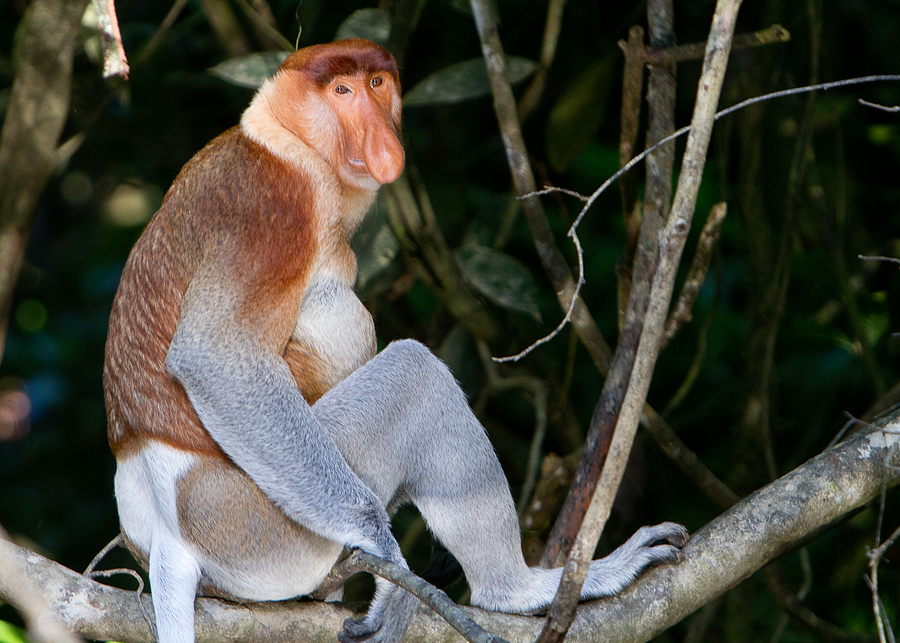
- Proboscis Monkey Same family
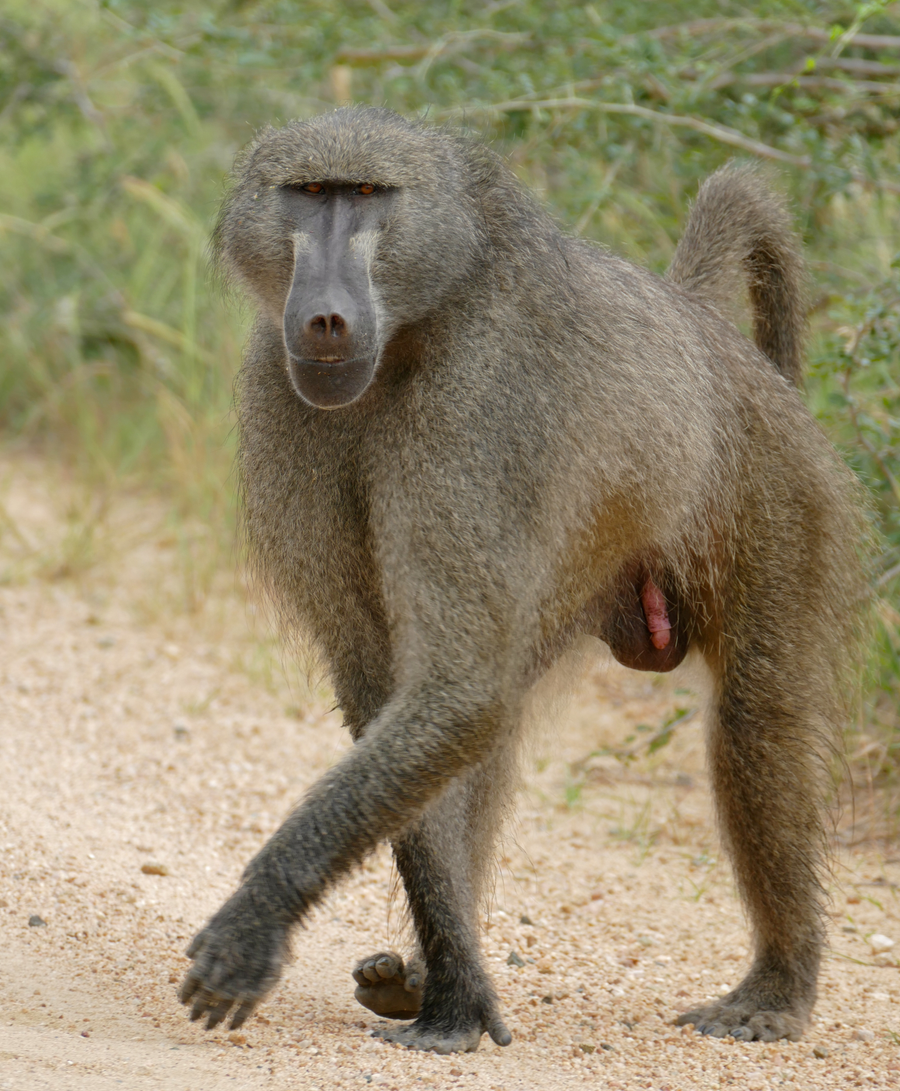
- Olive Baboon Same family
- Guereza Colobus Same family
Range & geography
Conservation status of the Japanese Macaque
The japanese macaque (Macaca fuscata) is listed as Least Concern on the IUCN Red List. Least Concern (LC) is the IUCN's lowest-risk category, assigned to widespread, abundant species that have been evaluated and found not to be threatened. It does not mean a species faces no pressures — only that it is not currently at risk of extinction.
The japanese macaque (Macaca fuscata) is assessed on the IUCN Red List. Look up on the IUCN Red List .
Frequently asked questions about the Japanese Macaque
Why do snow monkeys bathe in hot springs?
To keep warm and relax during harsh winters. The habit began at Jigokudani in the 1960s when monkeys copied people using a spa pool, and it has been passed down culturally ever since.
Where do Japanese macaques live?
Only in Japan — on the islands of Honshu, Shikoku, and Kyushu, plus smaller islands such as Yakushima. They are the northernmost wild monkeys on Earth.
Do Japanese macaques really have culture?
Yes — the Koshima troop famously invented sweet-potato washing in 1953, and behaviours such as bathing, wheat-sluicing, and stone play spread socially, which biologists recognise as culture.
How big is a snow monkey troop?
Typically 20 to 100 animals organised around related females, with a clear dominance hierarchy. Some provisioned troops exceed 150 members.
Are Japanese macaques endangered?
No — they are listed as Least Concern. The main issues are conflict with agriculture and local hybridisation with introduced rhesus macaques.
Sources & references
This guide is compiled and reviewed against established zoological and conservation references. Key sources for the Japanese Macaque:
-
IUCN Red List of Threatened Species
Conservation status (Least Concern) reflects the IUCN Red List category for Macaca fuscata.
-
iNaturalist — observations & photos
Search citizen-science observations and community IDs for Macaca fuscata. Useful for range checks and recent sightings — not a substitute for formal Red List status.
-
GBIF — occurrence data
Global Biodiversity Information Facility species search for Macaca fuscata. Explore published occurrence records used in range research.
-
Global Animal Guide editorial standards
How we research, source, review, and update every guide for accuracy.
Social structure
Troops of 20 to 100 or more are organised around strict female lines: daughters inherit their mother's rank, while males leave at maturity and transfer between troops. Grooming cements alliances, and infants are doted on by the whole group. Macaques communicate with dozens of distinct calls, facial expressions, and body postures.