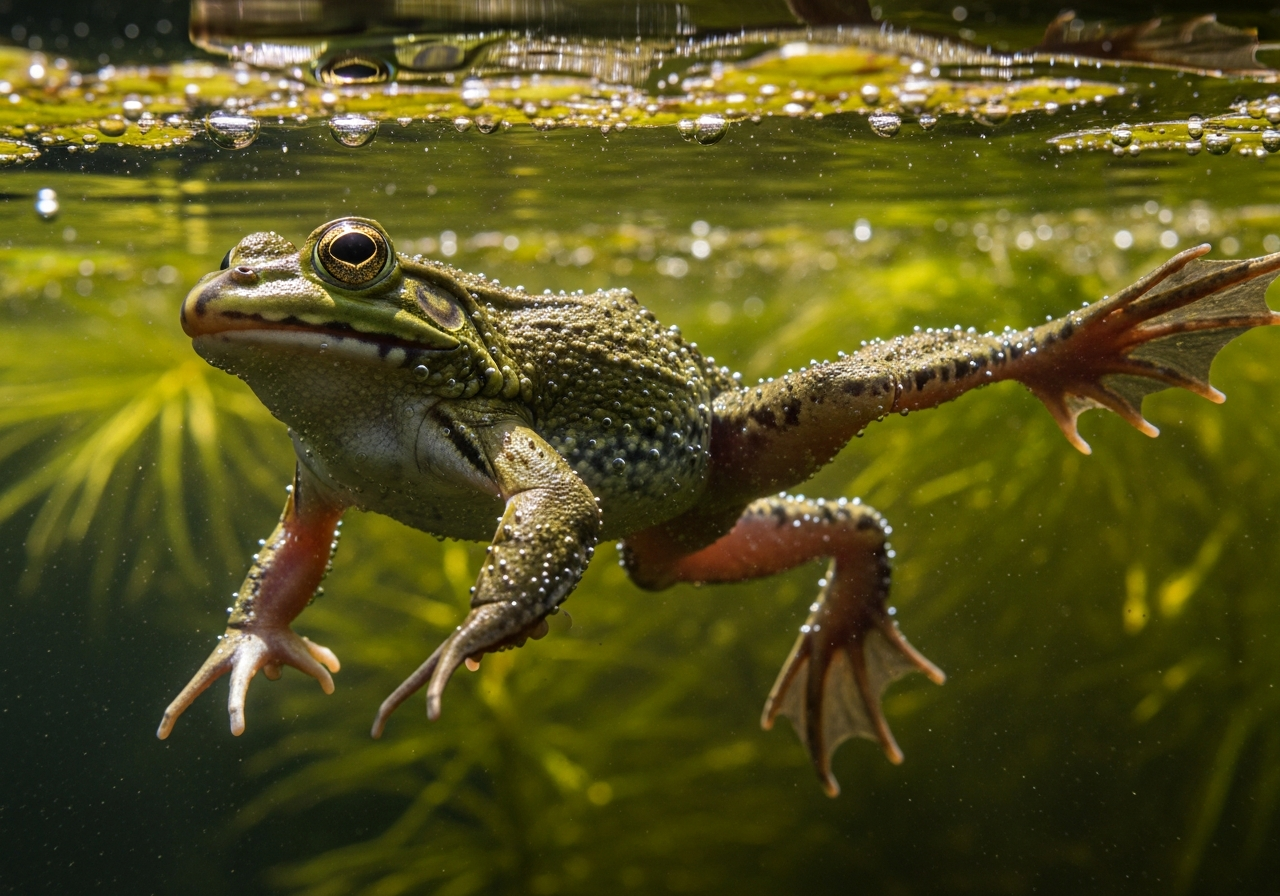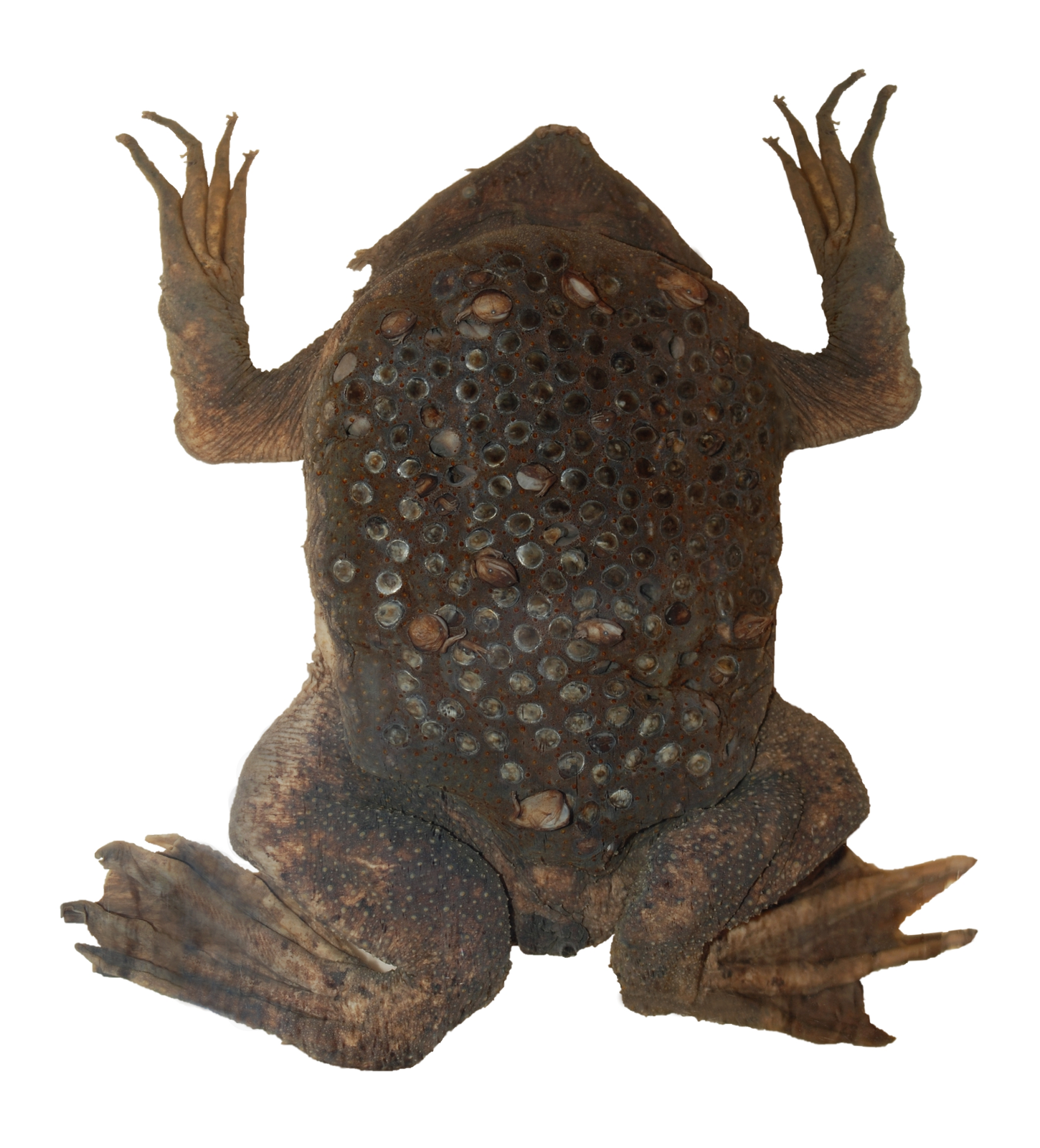
Image sourcing: see credits & licences
The surinam toad (Pipa pipa) is an amphibian of the family Pipidae, in the order Anura.
Quick answer
The Surinam toad (Pipa pipa) is a flat, aquatic frog of the Amazon that embeds fertilised eggs in its back skin. Adults reach about 15 cm, eat small fish and invertebrates, and are listed Least Concern.
Top questions about the Surinam Toad
Surinam Toad facts at a glance
- Weight 150 g
- Length 15 cm
- Top speed 5 km/h
- Lifespan 10 years
| Scientific name | Pipa pipa |
|---|---|
| Diet | Carnivore |
| Habitat | Murky rivers and ponds |
| Lifespan | 8–12 years |
| Weight | 0.1–0.2 kg |
| Top speed | up to 5 km/h |
| Conservation status | Least Concern (IUCN) |
| Kingdom | Animalia |
|---|---|
| Phylum | Chordata |
| Class | Amphibia |
| Order | Anura |
| Family | Pipidae |
| Genus | Pipa |
Where it lives
The surinam toad (Pipa pipa) is native to Amazon basin freshwater. — recorded across South America in this guide’s range summary.
For occurrence records, see GBIF species search and sources below.
How big is a surinam toad?
An adult surinam toad measures 15 cm long — about 9% of the height of an average adult person (1.73 m) — and weighs around 150 g, a small fraction of an average adult’s body weight (70 kg).
Length vs an average adult’s height (to scale)
What is a group of surinam toads called?
Group name (collective noun)
A group of Surinam Toads is called a knot.
Baby name
A baby Surinam Toad is called a tadpole.
Explore more animal collective nouns and baby animal names .
Living leaf on the riverbed
Extremely flattened bodies and mottled brown skin mimic dead leaves on muddy bottoms. Star-shaped sensory tubercles cover the surface; eyes are tiny and upward-facing.
Back-brooded tadpoles
Males press fertilised eggs into the female's dorsal skin, where pockets form and tadpoles develop to froglets before emerging. No free-swimming tadpole stage leaves the parent.
Amazon basin murk
Slow, tannin-stained rivers and ponds from the Amazon through the Guianas. Nocturnal hunting uses lateral-line sense to detect prey vibrations.
Oddity of stable rivers
Least Concern across a huge range. Deforestation and sedimentation alter breeding pools locally, but the species remains widespread.
Explore the Surinam Toad
Close relatives
- African Clawed Frog Same family
- Poison Dart Frog Same order
- Golden Mantella Same order
- Spring Peeper Same order
Range & geography
Conservation status of the Surinam Toad
The surinam toad (Pipa pipa) is listed as Least Concern on the IUCN Red List. Least Concern (LC) is the IUCN's lowest-risk category, assigned to widespread, abundant species that have been evaluated and found not to be threatened. It does not mean a species faces no pressures — only that it is not currently at risk of extinction.
The surinam toad (Pipa pipa) is assessed on the IUCN Red List. Look up on the IUCN Red List .
Frequently asked questions about the Surinam Toad
How do Surinam toads raise young?
Eggs sink into the mother's back skin and develop there until froglets emerge.
Do Surinam toads have tongues?
They lack a protrusible tongue and suck prey into the mouth with forelimb scoops.
Why is the Surinam toad so flat?
Flattening hides the frog against leaf litter and mud on river bottoms.
Are Surinam toads good pets?
Specialist aquatic setups are required; they are uncommon in trade compared with pond frogs.
Where does the Surinam toad live?
Slow freshwater across the Amazon basin and Guiana region of South America.
What is a group of surinam toads called?
A group of Surinam Toads is called a knot.
What is a baby surinam toad called?
A baby Surinam Toad is called a tadpole.
Sources & references
This guide is compiled and reviewed against established zoological and conservation references. Key sources for the Surinam Toad:
-
IUCN Red List of Threatened Species
Conservation status (Least Concern) reflects the IUCN Red List category for Pipa pipa.
-
iNaturalist — observations & photos
Search citizen-science observations and community IDs for Pipa pipa. Useful for range checks and recent sightings — not a substitute for formal Red List status.
-
GBIF — occurrence data
Global Biodiversity Information Facility species search for Pipa pipa. Explore published occurrence records used in range research.
-
Global Animal Guide editorial standards
How we research, source, review, and update every guide for accuracy.