Image sourcing: see credits & licences
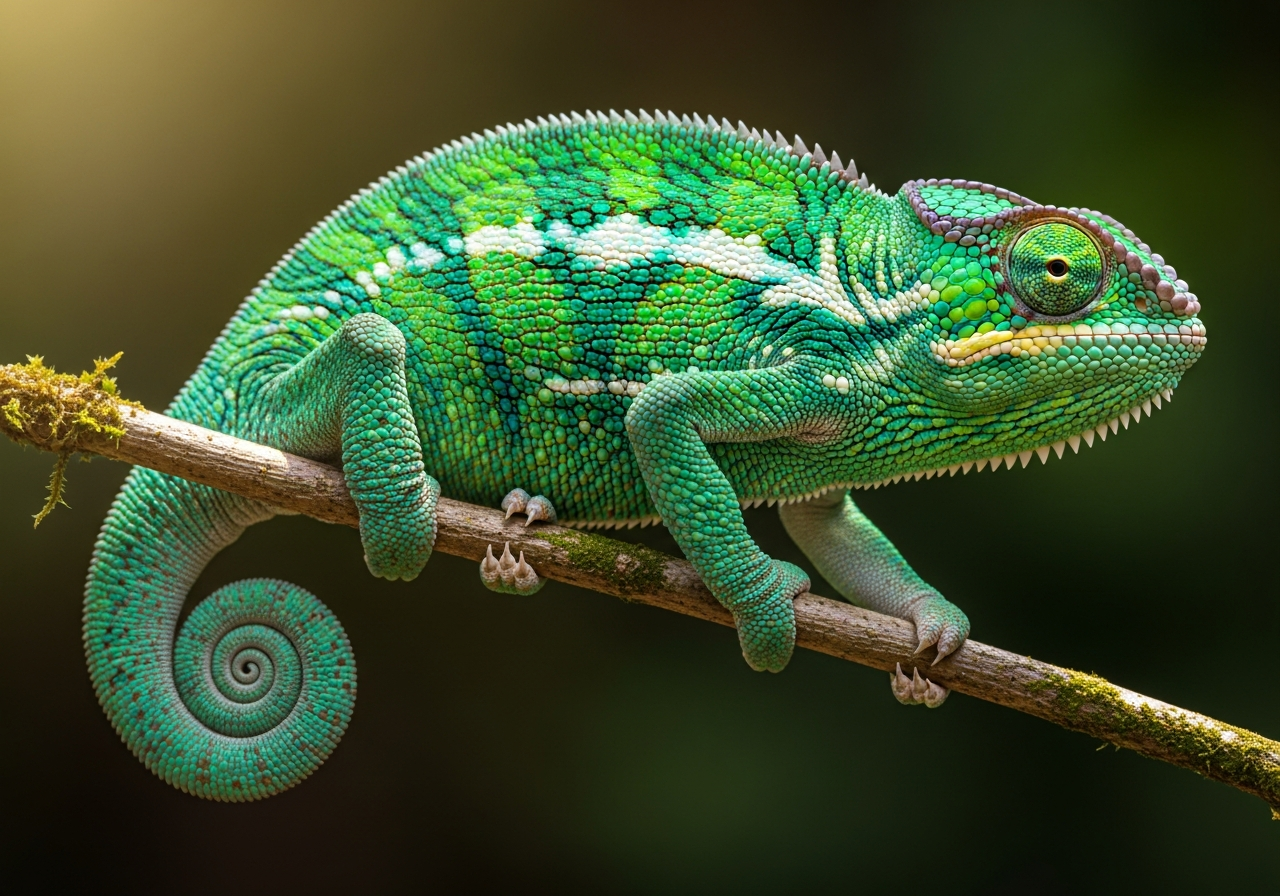
The panther chameleon (Furcifer pardalis) is a reptile of the family Chamaeleonidae, in the order Squamata.
Quick answer
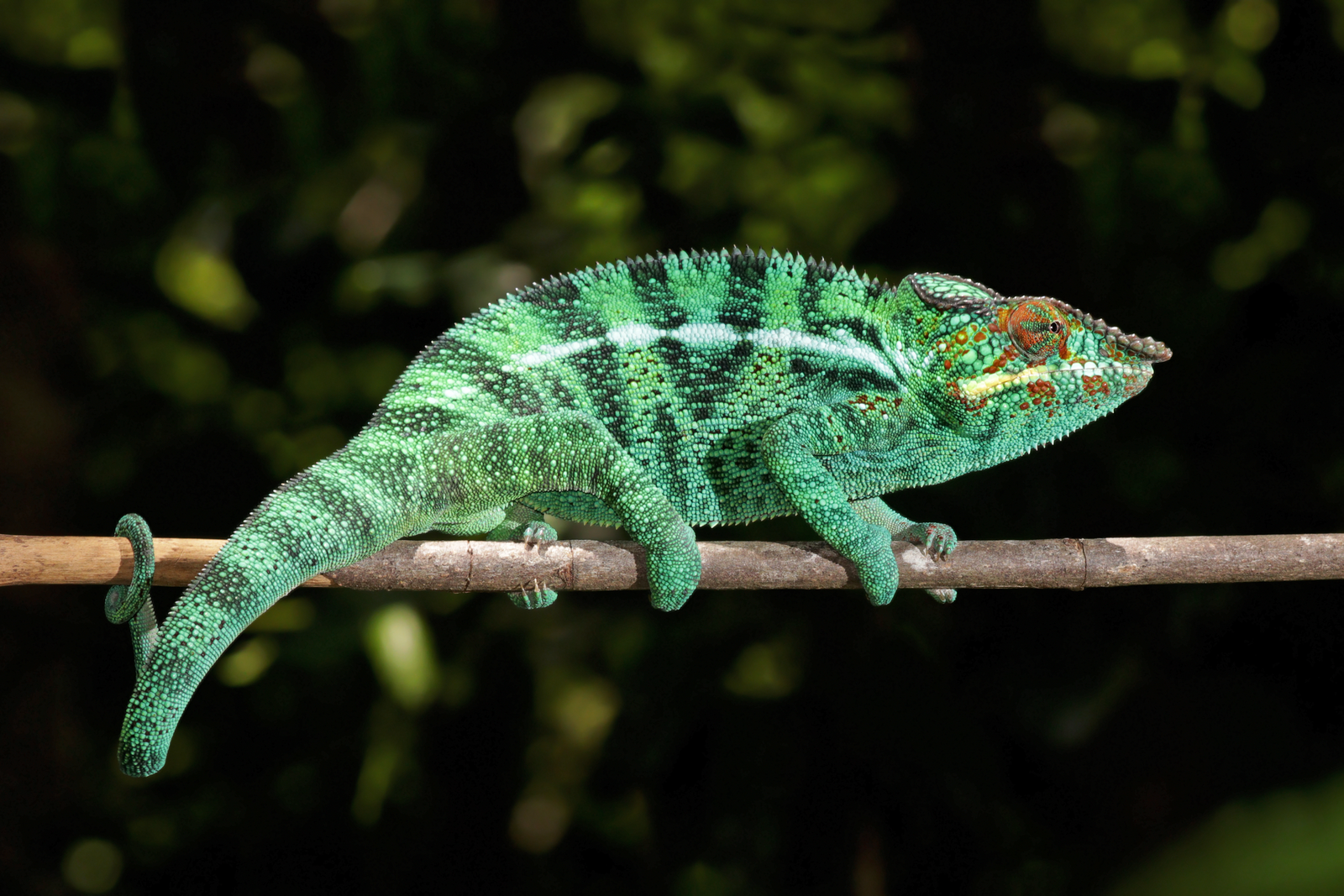
The panther chameleon (Furcifer pardalis) is a large Madagascan chameleon whose males flash locale-specific colours from Nosy Be blue to Ambilobe orange. Adults reach about 0.5 m, eat insects, and are listed Least Concern.
Top questions about the Panther Chameleon
Panther Chameleon facts at a glance
- Weight 180 g
- Length 50 cm
- Top speed 5 km/h
- Lifespan 6 years
| Scientific name | Furcifer pardalis |
|---|---|
| Diet | Insectivore |
| Habitat | Forest edge and plantations |
| Lifespan | 5–8 years |
| Weight | 0.14–0.22 kg |
| Top speed | up to 5 km/h |
| Conservation status | Least Concern (IUCN) |
| Kingdom | Animalia |
|---|---|
| Phylum | Chordata |
| Class | Reptilia |
| Order | Squamata |
| Family | Chamaeleonidae |
| Genus | Furcifer |
Where it lives
The panther chameleon (Furcifer pardalis) is native to Coastal forests of northern and eastern Madagascar. — recorded across Africa in this guide’s range summary.
For occurrence records, see GBIF species search and sources below.
How big is a panther chameleon?
An adult panther chameleon measures 50 cm long — about 29% of the height of an average adult person (1.73 m) — and weighs around 180 g, a small fraction of an average adult’s body weight (70 kg).
Length vs an average adult’s height (to scale)
What is a group of panther chameleons called?
Group name (collective noun)
A group of Panther Chameleons is called a clowder.
Baby name
A baby Panther Chameleon is called a hatchling.
Explore more animal collective nouns and baby animal names .
Locale colour morphs
Males show island- and region-specific palettes — blues, reds, greens — while females stay tan with orange accents. Eyes swivel independently; a ballistic tongue snatches prey.
Crickets, butterflies, and geckos
Large insects and small vertebrates are taken with sticky tongues that extend in milliseconds. Colour shifts signal mood, rivals, and breeding readiness.
Northern and eastern Madagascar
Humid coastal forest, plantations, and garden edges on Nosy Be, mainland coasts, and eastern forests. They are arboreal and rarely descend.
Pet trade pressure
Least Concern but heavily collected for the international pet trade. Captive breeding programs reduce wild harvest in some export chains.
Explore the Panther Chameleon
Close relatives
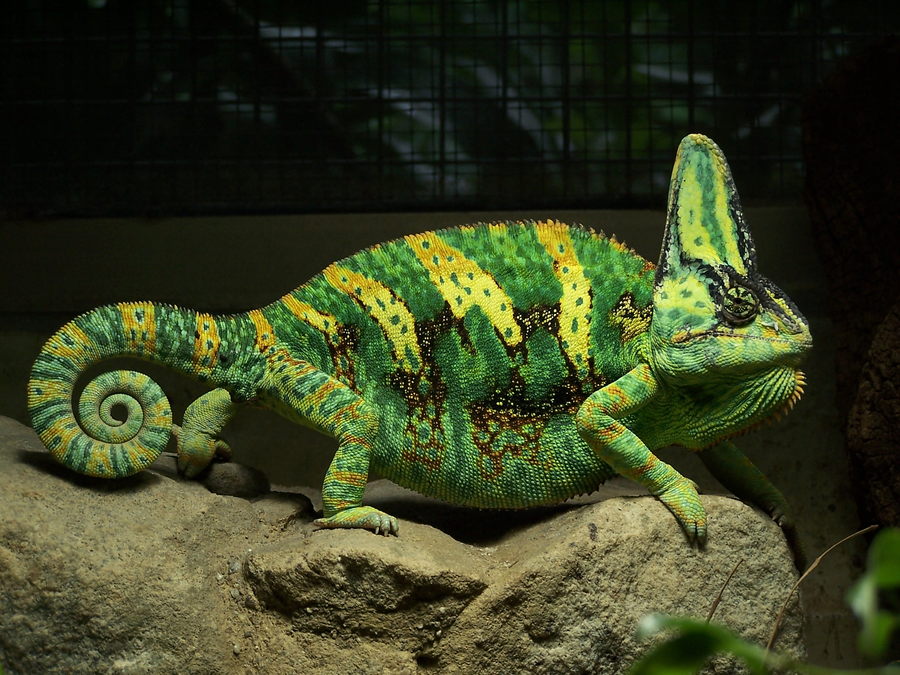
- Chameleon Same family
- Veiled Chameleon Same family
- Black Mamba Same order
- Inland Taipan Same order
Range & geography
Conservation status of the Panther Chameleon
The panther chameleon (Furcifer pardalis) is listed as Least Concern on the IUCN Red List. Least Concern (LC) is the IUCN's lowest-risk category, assigned to widespread, abundant species that have been evaluated and found not to be threatened. It does not mean a species faces no pressures — only that it is not currently at risk of extinction.
The panther chameleon (Furcifer pardalis) is assessed on the IUCN Red List. Look up on the IUCN Red List .
Frequently asked questions about the Panther Chameleon
Do panther chameleons change colour to match backgrounds?
Colour mainly reflects mood, temperature, and social signals — not perfect background matching.
Why are panther chameleon males so colourful?
Bright locale-specific colours advertise health and territory to females and rivals.
Where is Nosy Be blue chameleon from?
Nosy Be island off northwest Madagascar — one famous blue locale morph.
How fast is a chameleon's tongue?
Extension can complete in about 0.03 seconds — faster than human reaction.
Are panther chameleons endangered?
IUCN lists them Least Concern, though collection and habitat loss affect some coastal forests.
What is a group of panther chameleons called?
A group of Panther Chameleons is called a clowder.
What is a baby panther chameleon called?
A baby Panther Chameleon is called a hatchling.
Sources & references
This guide is compiled and reviewed against established zoological and conservation references. Key sources for the Panther Chameleon:
-
IUCN Red List of Threatened Species
Conservation status (Least Concern) reflects the IUCN Red List category for Furcifer pardalis.
-
iNaturalist — observations & photos
Search citizen-science observations and community IDs for Furcifer pardalis. Useful for range checks and recent sightings — not a substitute for formal Red List status.
-
GBIF — occurrence data
Global Biodiversity Information Facility species search for Furcifer pardalis. Explore published occurrence records used in range research.
-
Global Animal Guide editorial standards
How we research, source, review, and update every guide for accuracy.