Image sourcing: see credits & licences
Quick answer
The common snapping turtle (Chelydra serpentina) is a large freshwater turtle native to ponds, lakes, and slow rivers across North America. It has a rugged shell up to about 0.5 m (20 in) long, powerful hooked jaws, and can weigh 4.5 to 16 kg (10 to 35 lb). An opportunistic omnivore, it often lives 30 to 50 years in the wild and is listed as Least Concern.
Top questions about the Snapping Turtle
Snapping Turtle facts at a glance
- Weight 14 kg
- Length 50 cm
- Top speed 5 km/h
- Lifespan 40 years
| Scientific name | Chelydra serpentina |
|---|---|
| Diet | Omnivore |
| Habitat | Freshwater ponds, lakes, and rivers |
| Lifespan | 30–50 years |
| Length | Shell up to 0.5 m (20 in) |
| Weight | 4.5–16 kg (10–35 lb) |
| Conservation status | Least Concern (IUCN) |
| Kingdom | Animalia |
|---|---|
| Phylum | Chordata |
| Class | Reptilia |
| Order | Testudines |
| Family | Chelydridae |
| Genus | Chelydra |
Where it lives
The snapping turtle (Chelydra serpentina) is native to Freshwater ponds, lakes, and rivers across central and eastern North America. — recorded across North America in this guide’s range summary.
For occurrence records, see GBIF species search and sources below.
How big is a snapping turtle?
An adult snapping turtle measures 50 cm long — about 29% of the height of an average adult person (1.73 m) — and weighs around 14 kg, about 20% of an average adult’s body weight (70 kg).
Length vs an average adult’s height (to scale)
What is a group of snapping turtles called?
Group name (collective noun)
A group of Snapping Turtles is called a bale.
Baby name
A baby Snapping Turtle is called a hatchling.
Explore more animal collective nouns and baby animal names .
Appearance and anatomy
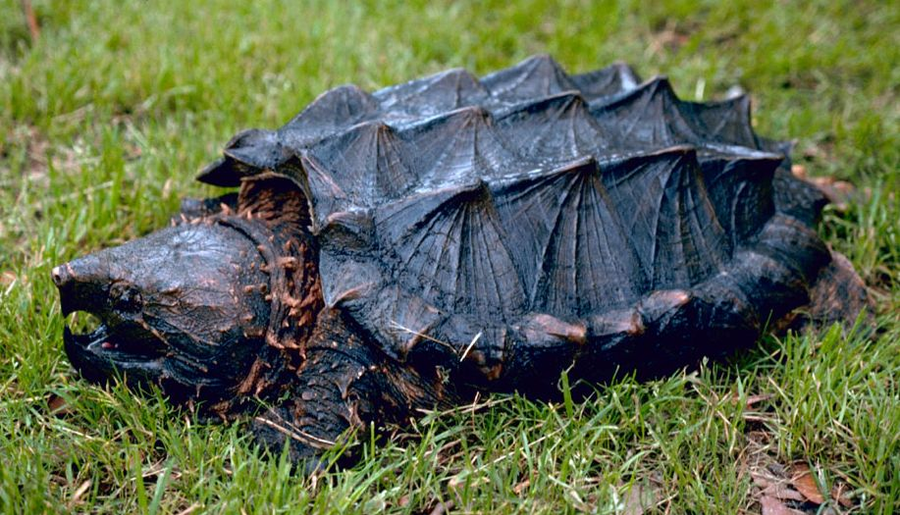
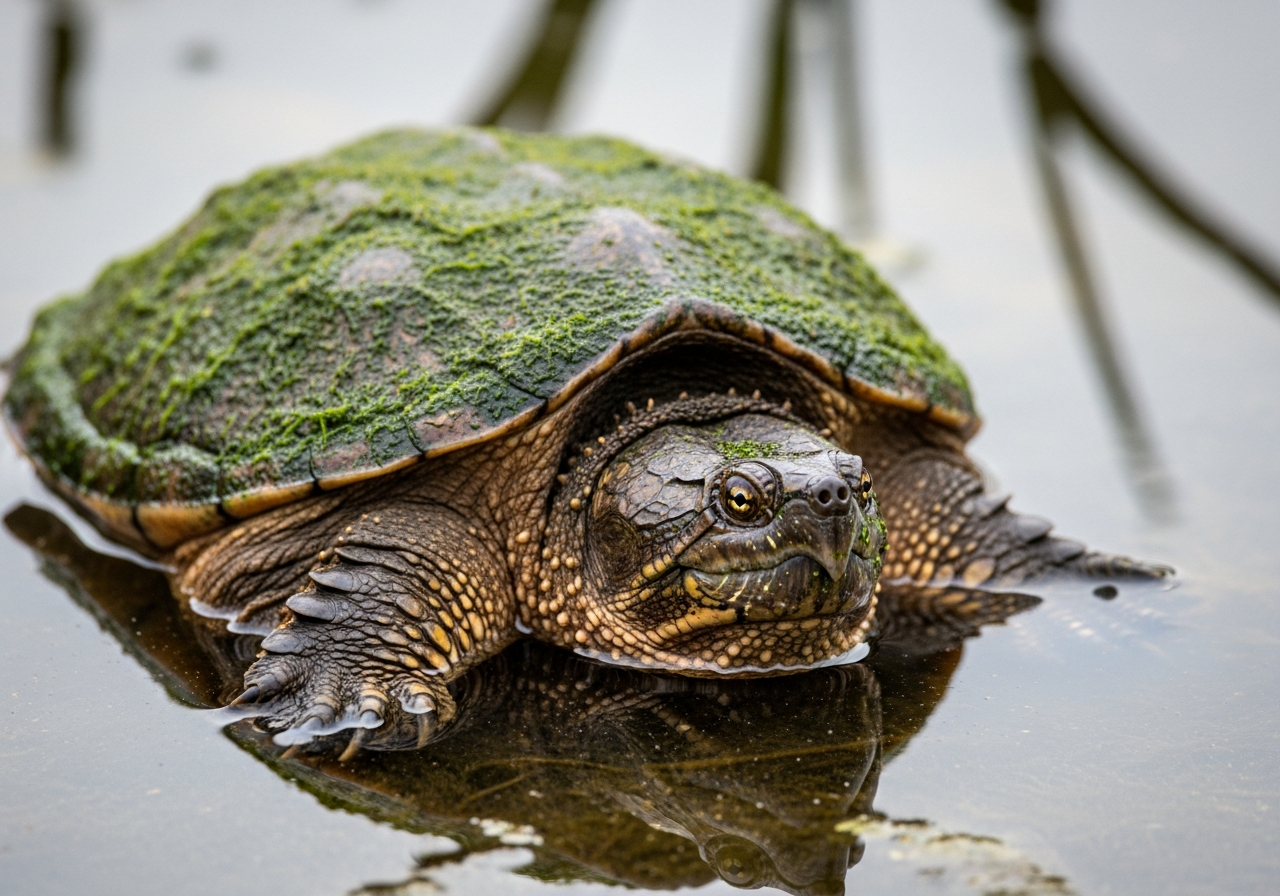
Snapping turtles have a rough, ridged carapace that reaches up to about 0.5 m (20 in) in length, a long muscular tail, and a large head with a sharp, beak-like jaw. Unlike many turtles, they cannot fully withdraw into their shell, which leaves their limbs and neck exposed and helps explain their defensive temperament. Their skin is often coated in algae or mud, giving them excellent camouflage on the bottom of a pond. Adults typically weigh between 4.5 and 16 kg (10 to 35 lb).
Habitat and range
The species is widespread across eastern and central North America, from southern Canada down to the Gulf of Mexico. It favours freshwater habitats with soft, muddy bottoms, including ponds, lakes, marshes, and slow-moving rivers where it can bury itself and wait. Snapping turtles tolerate a wide range of conditions and are sometimes found in brackish water near the coast. They spend most of their time submerged, surfacing mainly to breathe.
Diet and hunting
Snapping turtles are opportunistic omnivores that eat fish, frogs, invertebrates, small mammals, birds, carrion, and a surprising amount of aquatic plants. They hunt largely by ambush, lying still on the bottom and lunging with a fast strike of the neck when prey passes within reach. In water they are far less aggressive than on land and will usually swim away from a swimmer rather than attack. Their strong jaws let them tackle prey that many other freshwater turtles cannot.
Behaviour and temperament
In their aquatic home snapping turtles are generally shy and prefer to slip quietly away from disturbance. On land, however, they become notably defensive because they cannot retreat into their shell, and will lunge, hiss, and snap to protect themselves. They are strong swimmers but move slowly and awkwardly on land, with a top speed of only around 5 km/h. Females may travel considerable distances overland during the nesting season.
Reproduction and lifespan
Females nest in late spring and early summer, often travelling well away from water to dig a hole in sandy or loose soil. A typical clutch contains around 20 to 40 round, leathery eggs, which incubate for two to three months, and nest temperature helps determine the sex of the hatchlings. Many nests are lost to raccoons, foxes, and other predators, so survival to adulthood is low. Those that reach maturity are long-lived, commonly reaching 30 to 50 years in the wild.
Dig deeper into the Snapping Turtle
- How Long Do Snapping Turtles Live?
Snapping Turtle lifespan is typically 30–50 years. What shortens or extends life, life stages, and status (Least Concern).
- Snapping Turtle: Key Facts
Snapping Turtles (Chelydra serpentina) are reptiles found across North America. The powerful-jawed freshwater turtle of North America.
- What Do Snapping Turtles Eat?
What snapping turtles eat: Omnivore, foraging style, and seasonal shifts in Freshwater ponds, lakes, and rivers.
- Where Do Snapping Turtles Live?
Where snapping turtles live: Freshwater ponds, lakes, and rivers, native range cues, and human overlap. Status Least Concern.
Explore the Snapping Turtle
Related Reptiles
Range & geography
Did you know? Snapping Turtle facts
- The common snapping turtle is a large freshwater turtle of central and eastern North America, known for its powerful beak-like jaws and aggressive defense on land.
- On land they can deliver a fast, powerful bite when they feel cornered, so they should not be handled carelessly. In the water, however, they are shy and almost always avoid people.
- Snapping turtles are omnivores that eat aquatic plants, fish, frogs, invertebrates, small mammals, birds, and carrion. They both hunt live prey and scavenge.
- Common snapping turtles often live 30 to 50 years in the wild, and some individuals live even longer, growing slowly throughout their lives.
- Common snapping turtles typically have shells up to about 0.5 m (20 in) long and weigh 4.5 to 16 kg (10 to 35 lb), with large individuals being quite heavy.
- Conservation: Least Concern (IUCN).
Diet & feeding
Snapping Turtle feeds primarily as a omnivore. Snapping turtles have very different temperaments depending on where they are. In the water they are shy and usually swim or walk away from people, but on land, where they cannot retreat fully into their small shell, they defend themselves with fast, powerful bites. They o
Adaptations
- Snapping turtles have very different temperaments depending on where they are. In the water they are shy and usually swim or walk away from people, but on land, where they cannot retreat fully into their small shell, they defend themselves with fast, powerful bites. They often lie buried in mud with only their eyes and nostrils showing, waiting for prey.
- These turtles are omnivores with a broad diet of aquatic plants, fish, frogs, invertebrates, small mammals, birds, and carrion. They are important scavengers that help keep waterways clean. They catch live prey with a quick strike of the head and their sharp, hooked jaws.
Behaviour & ecology
- Snapping turtles have very different temperaments depending on where they are. In the water they are shy and usually swim or walk away from people, but on land, where they cannot retreat fully into their small shell, they defend themselves with fast, powerful bites. They often lie buried in mud with only their eyes and nostrils showing, waiting for prey.
- These turtles are omnivores with a broad diet of aquatic plants, fish, frogs, invertebrates, small mammals, birds, and carrion. They are important scavengers that help keep waterways clean. They catch live prey with a quick strike of the head and their sharp, hooked jaws.
- The common snapping turtle ranges across central and eastern North America, from southern Canada to the Gulf of Mexico. It lives in almost any permanent fresh water, including ponds, lakes, marshes, and slow rivers, preferring soft mud bottoms and plenty of vegetation. It can tolerate brackish water and even survive in polluted habitats.
Communication
- Scent marking, body posture, and head-bobbing or tail signals communicate threat and dominance.
- Vocalisations are limited in many reptiles but hissing or bellowing occurs in some groups.
Habitat & range
Freshwater ponds, lakes, and rivers
Ecological role
Snapping Turtle plays a recognised ecological role in freshwater ponds, lakes, and rivers.
Conservation status of the Snapping Turtle
The snapping turtle (Chelydra serpentina) is listed as Least Concern on the IUCN Red List. Least Concern (LC) is the IUCN's lowest-risk category, assigned to widespread, abundant species that have been evaluated and found not to be threatened. It does not mean a species faces no pressures — only that it is not currently at risk of extinction.
The snapping turtle (Chelydra serpentina) is assessed on the IUCN Red List. Look up on the IUCN Red List .
Frequently asked questions about the Snapping Turtle
How big do snapping turtles get?
Common snapping turtles reach a shell length of about 0.5 m (20 in) and typically weigh between 4.5 and 16 kg (10 to 35 lb). Their long tail can add substantially to their overall length.
Are snapping turtles dangerous to humans?
Snapping turtles have powerful jaws and can deliver a painful bite if handled or cornered on land, where they cannot hide in their shell. In the water they are shy and almost always swim away from people rather than confront them.
What do snapping turtles eat?
They are omnivores that eat fish, frogs, insects, crayfish, small mammals, birds, carrion, and aquatic plants. Much of their hunting is done by ambush, waiting motionless on the bottom and striking quickly when prey comes near.
How long do snapping turtles live?
In the wild snapping turtles commonly live 30 to 50 years. They grow slowly and mature late, so long individual lifespans are important for keeping populations stable.
Where do snapping turtles live?
They live in freshwater habitats across eastern and central North America, including ponds, lakes, marshes, and slow rivers with muddy bottoms. They spend most of their time submerged and can occasionally tolerate brackish coastal water.
Are snapping turtles endangered?
The common snapping turtle is listed as Least Concern by the IUCN and remains widespread. Local populations can still be affected by road deaths, habitat loss, and collection, but the species overall is not threatened.
What is a group of snapping turtles called?
A group of Snapping Turtles is called a bale.
What is a baby snapping turtle called?
A baby Snapping Turtle is called a hatchling.
Sources & references
This guide is compiled and reviewed against established zoological and conservation references. Key sources for the Snapping Turtle:
-
IUCN Red List of Threatened Species
Conservation status (Least Concern) reflects the IUCN Red List category for Chelydra serpentina.
-
iNaturalist — observations & photos
Search citizen-science observations and community IDs for Chelydra serpentina. Useful for range checks and recent sightings — not a substitute for formal Red List status.
-
GBIF — occurrence data
Global Biodiversity Information Facility species search for Chelydra serpentina. Explore published occurrence records used in range research.
- IUCN Red List — Chelydra serpentina.
Conservation status (Least Concern) and population trends.
- Animal Diversity Web — Chelydra serpentina. University of Michigan Museum of Zoology.
Life history, morphology, and range.
- Wikipedia — Snapping Turtle.
General taxonomy and overview (cross-check primary sources).
-
Global Animal Guide editorial standards
How we research, source, review, and update every guide for accuracy.