Black Mamba
Dendroaspis polylepis
Quick answer
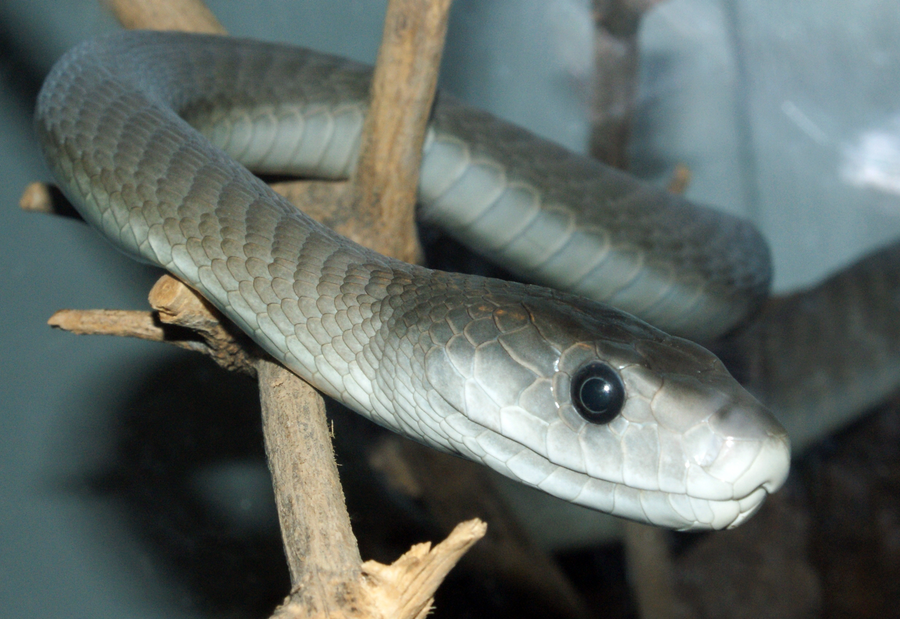
The black mamba is a long, slender African snake named for the dark interior of its mouth, not its grey-brown skin. It can reach 4.3 m (14 ft), move at speeds around 16 km/h (10 mph), and delivers potent neurotoxic venom. Despite its fearsome reputation, it usually flees from humans.
Black Mamba facts at a glance
| Scientific name | Dendroaspis polylepis |
|---|---|
| Diet | Carnivore — small mammals, birds, and occasionally bats |
| Habitat | Savannas, rocky hills, and woodland in sub-Saharan Africa |
| Lifespan | 11–12 years in the wild (longer in captivity) |
| Weight | Up to 1.6 kg (3.5 lb) |
| Top speed | Up to 16 km/h (10 mph) on open ground |
| Conservation status | Least Concern (IUCN) |
| Kingdom | Animalia |
|---|---|
| Phylum | Chordata |
| Class | Reptilia |
| Order | Squamata |
| Family | Elapidae |
| Genus | Dendroaspis |
Where it lives
Savannas, rocky hills, and open woodland from Eritrea and Somalia south through East and southern Africa to Namibia and South Africa.
What is a group of black mambas called?
Group name (collective noun)
A group of Black Mambas is called a bed. It is also known as a nest.
Baby name
A baby Black Mamba is called a snakelet.
Explore more animal collective nouns and baby animal names .
Speed and venom
Black mambas are among the fastest snakes in Africa, capable of raising a third of the body off the ground while moving. Their venom is primarily neurotoxic, affecting breathing and nervous function. Without antivenom, bites can be fatal, which contributes to their deadly reputation.
Behaviour and temperament
Contrary to myth, black mambas are shy and retreat when possible. They strike when cornered or threatened, often delivering multiple bites. The name comes from the inky black mouth lining displayed as a warning.
Habitat and range
Black mambas inhabit savannas, rocky outcrops, and woodland from Eritrea and Somalia south through East Africa to South Africa and Namibia. They shelter in termite mounds, rock crevices, and tree hollows.
Conservation and human conflict
Listed Least Concern, black mambas are not endangered but are killed out of fear in many areas. Education on snake behaviour, proper footwear, and antivenom access reduce unnecessary deaths on both sides.
Dig deeper into the Black Mamba
- Are Black Mamba Dangerous
Dig deeper into black mamba — are black mamba dangerous.
- Black Mamba Facts 5
Dig deeper into black mamba — black mamba facts 5.
- How Long do Black Mamba Live?
Dig deeper into black mamba — how long do black mamba live.
- What do Black Mamba Eat
Dig deeper into black mamba — what do black mamba eat.
- Where do Black Mamba Live?
Dig deeper into black mamba — where do black mamba live.
Explore the Black Mamba
Compare
Related Reptiles
Collections
Range & geography
Did you know? Black Mamba facts
- The black mamba is a long, slender African snake named for the dark interior of its mouth, not its grey-brown skin.
- No. The skin is grey, olive, or brown. The name refers to the black colour inside the mouth.
- They can move about 16 km/h (10 mph) over short distances — faster than most people expect for a snake, though not as fast as exaggerated myths claim.
- Not with modern antivenom and hospital care, but bites are medical emergencies. Untreated bites have high fatality rates.
- Sub-Saharan Africa, favouring savanna, rocky hills, and sparse woodland — not true desert or rainforest interiors.
- Conservation: Least Concern (IUCN).
Diet & feeding
Black Mamba feeds primarily as a carnivore — small mammals, birds, and occasionally bats. Black mambas are among the fastest snakes in Africa, capable of raising a third of the body off the ground while moving. Their venom is primarily neurotoxic, affecting breathing and nervous function. Without antivenom, bites can b
Adaptations
- Black mambas are among the fastest snakes in Africa, capable of raising a third of the body off the ground while moving. Their venom is primarily neurotoxic, affecting breathing and nervous function. Without antivenom, bites can be fatal, which contributes to their deadly reputation.
- Contrary to myth, black mambas are shy and retreat when possible. They strike when cornered or threatened, often delivering multiple bites. The name comes from the inky black mouth lining displayed as a warning.
Behaviour & ecology
- Black mambas are among the fastest snakes in Africa, capable of raising a third of the body off the ground while moving. Their venom is primarily neurotoxic, affecting breathing and nervous function. Without antivenom, bites can be fatal, which contributes to their deadly reputation.
- Contrary to myth, black mambas are shy and retreat when possible. They strike when cornered or threatened, often delivering multiple bites. The name comes from the inky black mouth lining displayed as a warning.
- Black mambas inhabit savannas, rocky outcrops, and woodland from Eritrea and Somalia south through East Africa to South Africa and Namibia. They shelter in termite mounds, rock crevices, and tree hollows.
Communication
- Scent marking, body posture, and head-bobbing or tail signals communicate threat and dominance.
- Vocalisations are limited in many reptiles but hissing or bellowing occurs in some groups.
Habitat & range
Savannas, rocky hills, and woodland in sub-Saharan Africa
Ecological role
Black Mamba acts as a predator that helps regulate prey populations and maintain balance in savannas, rocky hills, and woodland in sub-saharan africa.
Frequently asked questions about the Black Mamba
Is the black mamba black?
No. The skin is grey, olive, or brown. The name refers to the black colour inside the mouth.
How fast is a black mamba?
They can move about 16 km/h (10 mph) over short distances — faster than most people expect for a snake, though not as fast as exaggerated myths claim.
Are black mamba bites always fatal?
Not with modern antivenom and hospital care, but bites are medical emergencies. Untreated bites have high fatality rates.
Where do black mambas live?
Sub-Saharan Africa, favouring savanna, rocky hills, and sparse woodland — not true desert or rainforest interiors.
What should you do if you see a black mamba?
Back away slowly and leave it an escape route. Do not attempt to kill or capture it — most bites occur during such attempts.
What is a group of black mambas called?
A group of Black Mambas is called a bed. It is also known as a nest.
What is a baby black mamba called?
A baby Black Mamba is called a snakelet.
Sources & references
This guide is compiled and reviewed against established zoological and conservation references. Key sources for the Black Mamba:
-
IUCN Red List of Threatened Species
Conservation status (Least Concern) reflects the IUCN Red List category for Dendroaspis polylepis.
- IUCN Red List — Dendroaspis polylepis.
Conservation status (Least Concern) and population trends.
- Animal Diversity Web — Dendroaspis polylepis. University of Michigan Museum of Zoology.
Life history, morphology, and range.
- Wikipedia — Black Mamba.
General taxonomy and overview (cross-check primary sources).
-
Global Animal Guide editorial standards
How we research, source, review, and update every guide for accuracy.