Image sourcing: see credits & licences
Quick answer
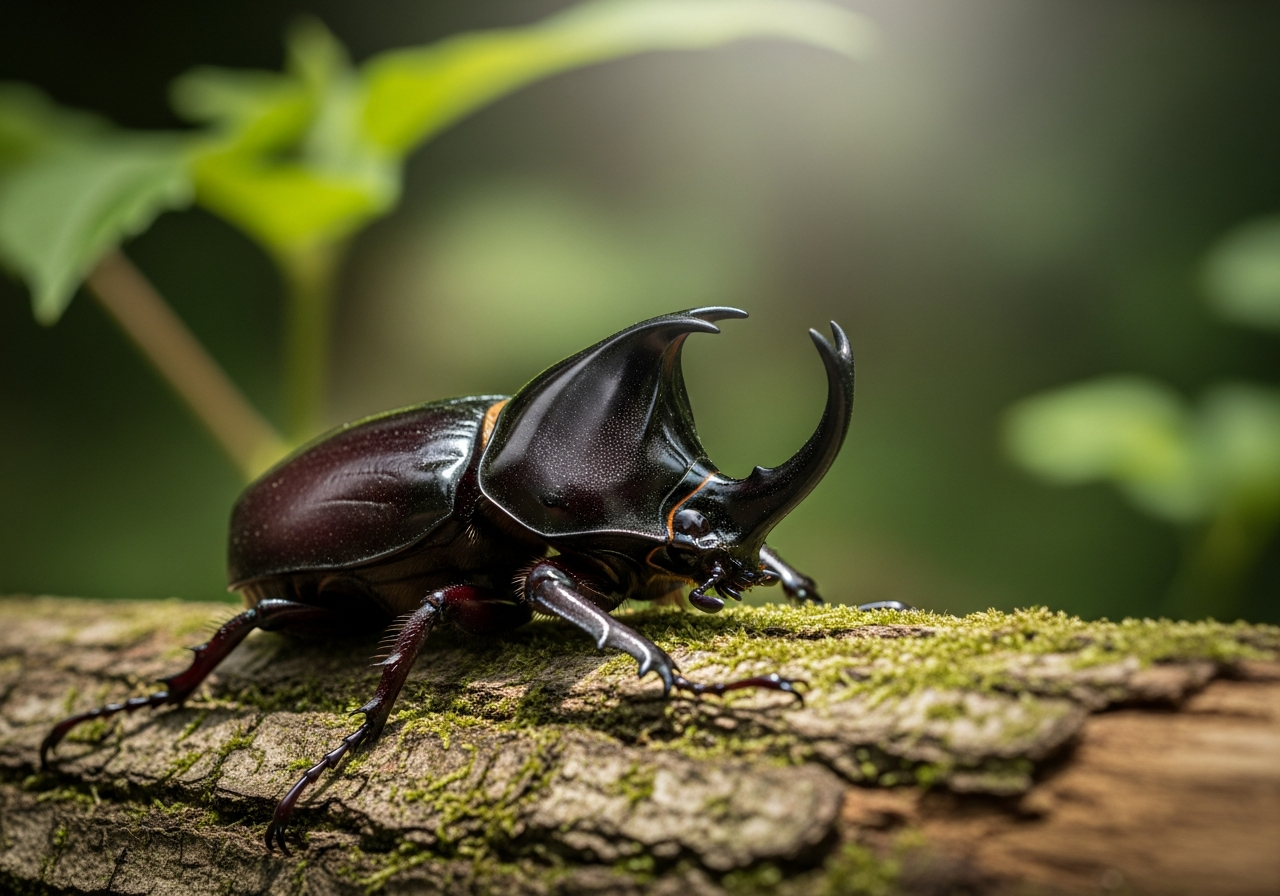
Rhinoceros beetles are large beetles named for the horn-like structures on the heads of the males, which they use to fight rivals and dig. They are among the strongest animals relative to their body size, able to push or lift many times their own weight. They are harmless to people and feed mainly on plant material.
Top questions about the Rhinoceros Beetle
Rhinoceros Beetle facts at a glance
- Weight 30 g
- Length 6 cm
- Top speed 2 km/h
- Lifespan 1 years
| Scientific name | Subfamily Dynastinae |
|---|---|
| Diet | Herbivore (sap, fruit, decaying wood) |
| Habitat | Tropical and temperate forests |
| Lifespan | Adults a few months; larvae up to a few years |
| Size | Up to about 15 cm (6 in) in large species |
| Strength | Can move many times its body weight |
| Conservation status | Least Concern (IUCN) |
| Kingdom | Animalia |
|---|---|
| Phylum | Arthropoda |
| Class | Insecta |
| Order | Coleoptera |
| Family | Scarabaeidae |
Where it lives
The rhinoceros beetle (Dynastinae) is native to Forests across tropical and temperate regions worldwide, with the largest species in the Americas and Southeast Asia. — recorded across Africa, Asia, Europe, North America, South America, Oceania in this guide’s range summary.
For occurrence records, see GBIF species search and sources below.
How big is a rhinoceros beetle?
An adult rhinoceros beetle measures 6 cm long — about 3% of the height of an average adult person (1.73 m) — and weighs around 30 g, a small fraction of an average adult’s body weight (70 kg).
Length vs an average adult’s height (to scale)
What is a group of rhinoceros beetles called?
Group name (collective noun)
A group of Rhinoceros Beetles is called a swarm. It is also known as a colony.
Baby name
A baby Rhinoceros Beetle is called a grub. It may also be called a larva.
Explore more animal collective nouns and baby animal names .
Horns and fighting
Male rhinoceros beetles have prominent horns on the head and thorax, while females usually lack them. Males use their horns to wrestle and pry rivals away from feeding sites and mates, rarely causing injury. The horns also help some species dig through soil and leaf litter.
Incredible strength
Rhinoceros beetles are often cited as among the strongest animals for their size. Tests have shown that some can support or move loads many times heavier than their own bodies. This strength comes from the efficient way muscle power scales down at insect size.
Diet and life cycle
Adults feed on plant sap, nectar, and fruit, while the large larvae, sometimes called grubs, live in rotting wood and decaying plant matter that they help break down. The larval stage can last a year or more, after which the beetle pupates and emerges as a horned adult.
Habitat and culture
Rhinoceros beetles live in forests across tropical and temperate regions worldwide. They are popular with insect enthusiasts, and in parts of East Asia they are kept as pets and even entered in friendly strength or wrestling contests because of their size and power.
Dig deeper into the Rhinoceros Beetle
- Rhinoceros Beetle: Key Facts
Rhinoceros beetles are large beetles named for the horn-like structures on the heads of the males, which they use to fight rivals and dig.
- What Do Rhinoceros Beetles Eat?
What rhinoceros beetles eat: Herbivore (sap, fruit, decaying wood), foraging style, and seasonal shifts in Tropical and temperate forests.
- Where Do Rhinoceros Beetles Live?
Where rhinoceros beetles live: Tropical and temperate forests, native range cues, and human overlap. Status Least Concern.
Explore the Rhinoceros Beetle
Did you know? Rhinoceros Beetle facts
- Rhinoceros beetles are large beetles named for the horn-like structures on the heads of the males, which they use to fight rivals and dig.
- Rhinoceros beetles are among the strongest animals for their size and can move loads many times their own body weight. Their strength comes from how muscle power scales at small body sizes.
- Adult rhinoceros beetles feed on plant sap, nectar, and fruit. Their larvae live in rotting wood and decaying plant matter, which they help break down.
- No. Rhinoceros beetles are harmless to people. They have no sting or venom, and their horns are used against rivals, not as weapons against humans.
- Only the males have large horns, which they use to wrestle rival males away from food and mates. The horns can also help with digging through soil and leaf litter.
- Conservation: Least Concern (IUCN).
Diet & feeding
Rhinoceros Beetle feeds primarily as a herbivore (sap, fruit, decaying wood). Male rhinoceros beetles have prominent horns on the head and thorax, while females usually lack them. Males use their horns to wrestle and pry rivals away from feeding sites and mates, rarely causing injury. The horns also help some species d
Adaptations
- Male rhinoceros beetles have prominent horns on the head and thorax, while females usually lack them. Males use their horns to wrestle and pry rivals away from feeding sites and mates, rarely causing injury. The horns also help some species dig through soil and leaf litter.
- Rhinoceros beetles are often cited as among the strongest animals for their size. Tests have shown that some can support or move loads many times heavier than their own bodies. This strength comes from the efficient way muscle power scales down at insect size.
Behaviour & ecology
- Male rhinoceros beetles have prominent horns on the head and thorax, while females usually lack them. Males use their horns to wrestle and pry rivals away from feeding sites and mates, rarely causing injury. The horns also help some species dig through soil and leaf litter.
- Rhinoceros beetles are often cited as among the strongest animals for their size. Tests have shown that some can support or move loads many times heavier than their own bodies. This strength comes from the efficient way muscle power scales down at insect size.
- Adults feed on plant sap, nectar, and fruit, while the large larvae, sometimes called grubs, live in rotting wood and decaying plant matter that they help break down. The larval stage can last a year or more, after which the beetle pupates and emerges as a horned adult.
Communication
- Rhinoceros Beetle uses scent, posture, and vocal signals to mark territory and coordinate social behaviour.
- Communication intensity often peaks during breeding seasons and territorial disputes.
Habitat & range
Tropical and temperate forests
Ecological role
Rhinoceros Beetle shapes vegetation through grazing or browsing and serves as prey for larger predators where ranges overlap.
Conservation status of the Rhinoceros Beetle
The rhinoceros beetle (Dynastinae) is listed as Least Concern on the IUCN Red List. Least Concern (LC) is the IUCN's lowest-risk category, assigned to widespread, abundant species that have been evaluated and found not to be threatened. It does not mean a species faces no pressures — only that it is not currently at risk of extinction.
The rhinoceros beetle (Dynastinae) is assessed on the IUCN Red List. Look up on the IUCN Red List .
Frequently asked questions about the Rhinoceros Beetle
How strong is a rhinoceros beetle?
Rhinoceros beetles are among the strongest animals for their size and can move loads many times their own body weight. Their strength comes from how muscle power scales at small body sizes.
What do rhinoceros beetles eat?
Adult rhinoceros beetles feed on plant sap, nectar, and fruit. Their larvae live in rotting wood and decaying plant matter, which they help break down.
Are rhinoceros beetles dangerous?
No. Rhinoceros beetles are harmless to people. They have no sting or venom, and their horns are used against rivals, not as weapons against humans.
Why do rhinoceros beetles have horns?
Only the males have large horns, which they use to wrestle rival males away from food and mates. The horns can also help with digging through soil and leaf litter.
How long do rhinoceros beetles live?
The adult stage usually lasts a few months, but the full life cycle is longer. The larvae can develop for a year or more inside rotting wood before becoming adults.
Can you keep a rhinoceros beetle as a pet?
Yes. Rhinoceros beetles are kept as pets in many places, especially in parts of East Asia, where their large size and strength make them popular among insect enthusiasts.
What is a group of rhinoceros beetles called?
A group of Rhinoceros Beetles is called a swarm. It is also known as a colony.
What is a baby rhinoceros beetle called?
A baby Rhinoceros Beetle is called a grub. It may also be called a larva.
Sources & references
This guide is compiled and reviewed against established zoological and conservation references. Key sources for the Rhinoceros Beetle:
-
IUCN Red List of Threatened Species
Conservation status (Least Concern) reflects the IUCN Red List category for Dynastinae.
-
iNaturalist — observations & photos
Search citizen-science observations and community IDs for Dynastinae. Useful for range checks and recent sightings — not a substitute for formal Red List status.
-
GBIF — occurrence data
Global Biodiversity Information Facility species search for Dynastinae. Explore published occurrence records used in range research.
- IUCN Red List — Dynastinae.
Conservation status (Least Concern) and population trends.
- Wikipedia — Rhinoceros Beetle.
General taxonomy and overview (cross-check primary sources).
-
Global Animal Guide editorial standards
How we research, source, review, and update every guide for accuracy.