Image sourcing: see credits & licences
The porbeagle (Lamna nasus) is a cartilaginous fish of the family Lamnidae, in the order Lamniformes.
Quick answer
The porbeagle (Lamna nasus) is a stocky mackerel shark of cool temperate seas, warm-blooded like its great white relatives. Adults reach 2.5 m and 135 kg, and are listed Vulnerable.
Top questions about the Porbeagle
Porbeagle facts at a glance
- Weight 100 kg
- Length 2.5 m
- Top speed 40 km/h
- Lifespan 30 years
| Scientific name | Lamna nasus |
|---|---|
| Diet | Carnivore |
| Habitat | Continental shelves and open ocean |
| Lifespan | 25–35 years |
| Weight | 60–135 kg |
| Top speed | up to 40 km/h |
| Conservation status | Vulnerable (IUCN) |
| Kingdom | Animalia |
|---|---|
| Phylum | Chordata |
| Class | Chondrichthyes |
| Order | Lamniformes |
| Family | Lamnidae |
| Genus | Lamna |
Where it lives
The porbeagle (Lamna nasus) is native to Cool temperate oceans of both hemispheres. — recorded across North America, Europe, South America, Africa, Oceania in this guide’s range summary.
For occurrence records, see GBIF species search and sources below.
How big is a porbeagle?
An adult porbeagle measures 2.5 m long — about 1.4× the height of an average adult person (1.73 m) — and weighs around 100 kg, about 1.4× an average adult’s body weight (70 kg).
Length vs an average adult’s height (to scale)
What is a group of porbeagles called?
Group name (collective noun)
A group of Porbeagles is called a shiver.
Baby name
A baby Porbeagle is called a pup.
Explore more animal collective nouns and baby animal names .
Warm-blooded tuna hunter
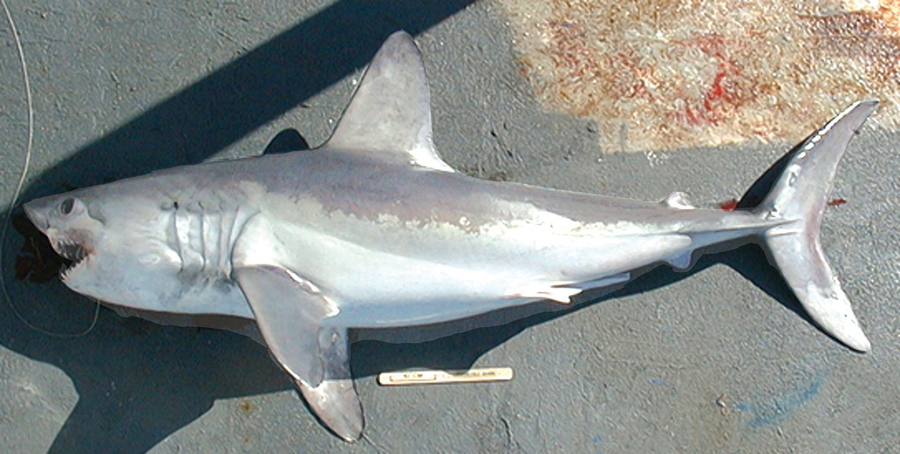
Counter-current heat exchangers keep muscles warm for fast pursuit in cold water. A white flank patch and crescent tail distinguish porbeagles from similar sharks.
Mackerel, squid, and cod
Schooling fish and squid dominate the diet. Pups are born live in nursery areas on continental shelves.
North Atlantic and southern oceans
Northwest Atlantic, Northeast Atlantic, and South Pacific temperate waters. Seasonal migrations follow prey concentrations.
Vulnerable to targeted fishing
IUCN lists porbeagle Vulnerable. Decades of sport and commercial harvest for meat and fins depleted stocks; recovery is slow due to late maturity.
Explore the Porbeagle
Close relatives
- Great White Shark Same family
- Shortfin Mako Shark Same family
- Thresher Shark Same order
- Basking Shark Same order
Collections
Conservation status of the Porbeagle
The porbeagle (Lamna nasus) is listed as Vulnerable on the IUCN Red List. Vulnerable (VU) means a species faces a high risk of extinction in the medium-term future. It is the lowest-risk of the three 'threatened' IUCN categories — one step below Endangered, which is itself below Critically Endangered — and is often an early warning that a population is in trouble.
Main threats to the porbeagle
- Targeted fisheries for meat and fins
- Bycatch in pelagic and demersal gear
- Slow growth and late maturity
- Inadequate management in parts of the range
Porbeagle (Lamna nasus) was most recently assessed for the IUCN Red List in 2018. Look up on the IUCN Red List .
Frequently asked questions about the Porbeagle
Is the porbeagle related to great white sharks?
Yes — both are lamnid sharks with partial warm-blooded physiology for fast swimming.
What is the white patch on a porbeagle?
A pale mark on the rear flank helps separate porbeagles from mako sharks.
Are porbeagles dangerous?
Bites to humans are extremely rare; they are offshore fish-eaters.
Why is the porbeagle Vulnerable?
Slow reproduction and heavy fishing pressure collapsed populations in the Atlantic and elsewhere.
Where are porbeagle nurseries?
Shallow continental shelf waters where females bear live young.
What is a group of porbeagles called?
A group of Porbeagles is called a shiver.
What is a baby porbeagle called?
A baby Porbeagle is called a pup.
Sources & references
This guide is compiled and reviewed against established zoological and conservation references. Key sources for the Porbeagle:
-
IUCN Red List of Threatened Species
Conservation status (Vulnerable) reflects the IUCN Red List category for Lamna nasus, most recently assessed in 2018.
-
iNaturalist — observations & photos
Search citizen-science observations and community IDs for Lamna nasus. Useful for range checks and recent sightings — not a substitute for formal Red List status.
-
GBIF — occurrence data
Global Biodiversity Information Facility species search for Lamna nasus. Explore published occurrence records used in range research.
-
Global Animal Guide editorial standards
How we research, source, review, and update every guide for accuracy.