Image sourcing: see credits & licences
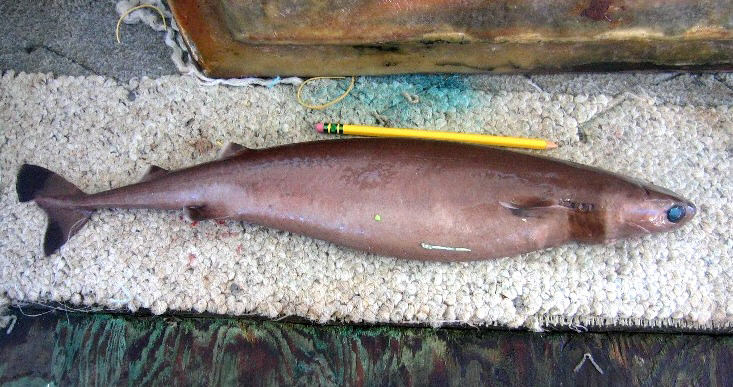
The cookiecutter shark (Isistius brasiliensis) is a cartilaginous fish of the family Dalatiidae, in the order Squaliformes.
Quick answer
The cookiecutter shark (Isistius brasiliensis) is a small deep-sea shark that bites round plugs of flesh from whales, tuna, and submarines. Adults reach 50 cm, glow with bioluminescence, and are Least Concern.
Top questions about the Cookiecutter Shark
Cookiecutter Shark facts at a glance
- Weight 700 g
- Length 50 cm
- Top speed 15 km/h
- Lifespan 25 years
| Scientific name | Isistius brasiliensis |
|---|---|
| Diet | Carnivore (ectoparasitic bites) |
| Habitat | Open ocean midwaters |
| Lifespan | 20–30 years |
| Weight | 0.5–1 kg |
| Top speed | up to 15 km/h |
| Conservation status | Least Concern (IUCN) |
| Kingdom | Animalia |
|---|---|
| Phylum | Chordata |
| Class | Chondrichthyes |
| Order | Squaliformes |
| Family | Dalatiidae |
| Genus | Isistius |
Where it lives
The cookiecutter shark (Isistius brasiliensis) is native to Tropical oceans worldwide. — recorded across North America, South America, Africa, Asia, Oceania in this guide’s range summary.
For occurrence records, see GBIF species search and sources below.
How big is a cookiecutter shark?
An adult cookiecutter shark measures 50 cm long — about 29% of the height of an average adult person (1.73 m) — and weighs around 700 g, about 1% of an average adult’s body weight (70 kg).
Length vs an average adult’s height (to scale)
What is a group of cookiecutter sharks called?
Group name (collective noun)
A group of Cookiecutter Sharks is called a shiver.
Baby name
A baby Cookiecutter Shark is called a pup.
Explore more animal collective nouns and baby animal names .
Living melon baller
Lower teeth fuse into a saw-like plate that scoops cylindrical plugs of meat from much larger animals. Photophores on the belly hide the silhouette from below.
Squid, fish, and flesh bites
Whole small prey are swallowed, but adults also ambush large animals — whales, dolphins, tuna — leaving crater scars. Even sonar domes and rubber seals get sampled.
Tropical oceanic midwaters
Worldwide in warm deep water, rising vertically at night toward surface prey. Migration follows the deep scattering layer.
Tiny terror, stable numbers
Least Concern with vast habitat and no fishery. Famous bite scars on submarines and whales document their bold parasitic feeding.
Explore the Cookiecutter Shark
Close relatives
- Great White Shark Same class
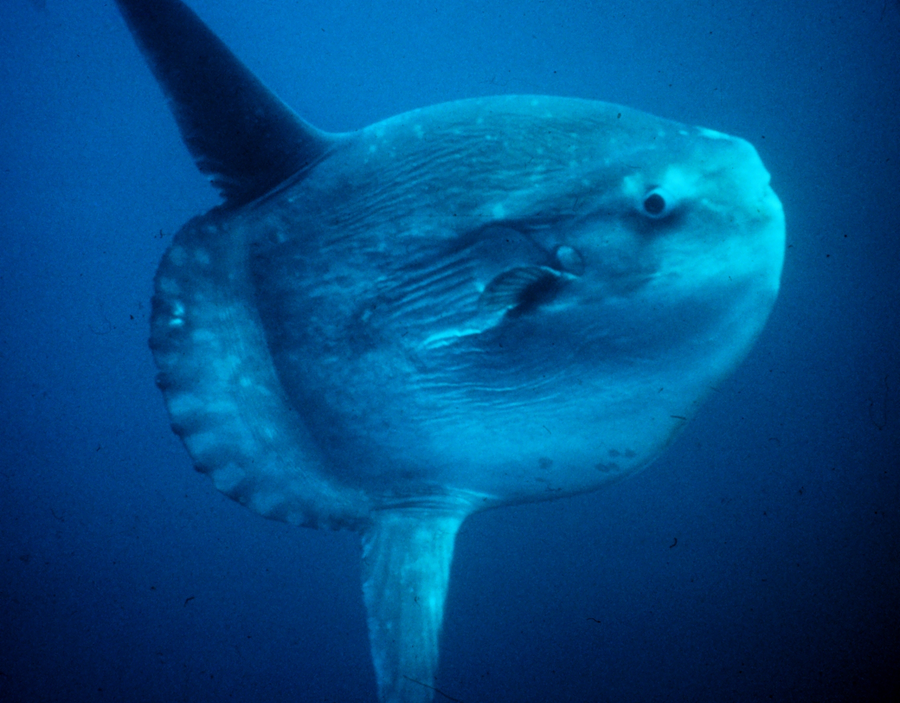
- Ocean Sunfish Same class
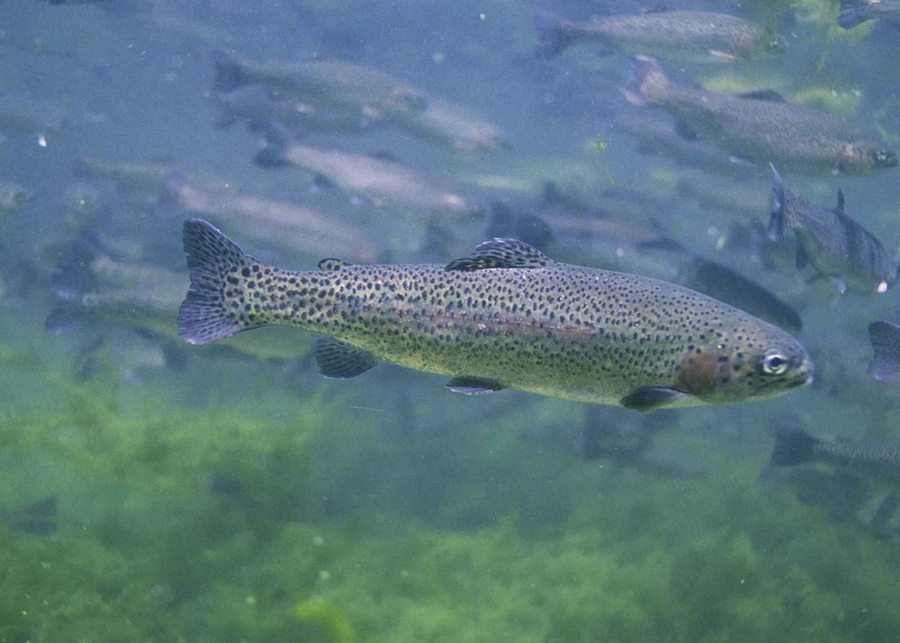
- Rainbow Trout Same class
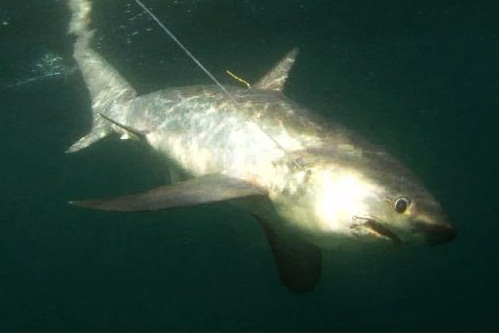
- Thresher Shark Same class
Conservation status of the Cookiecutter Shark
The cookiecutter shark (Isistius brasiliensis) is listed as Least Concern on the IUCN Red List. Least Concern (LC) is the IUCN's lowest-risk category, assigned to widespread, abundant species that have been evaluated and found not to be threatened. It does not mean a species faces no pressures — only that it is not currently at risk of extinction.
The cookiecutter shark (Isistius brasiliensis) is assessed on the IUCN Red List. Look up on the IUCN Red List .
Frequently asked questions about the Cookiecutter Shark
How does a cookiecutter shark bite?
It latches on and spins, carving a round plug of flesh with serrated lower teeth.
Why do whales have round scars?
Many come from cookiecutter sharks and similar species taking plug bites at night.
Do cookiecutter sharks glow?
Yes — belly photophores match downwelling light, hiding the shark's silhouette.
How big is a cookiecutter shark?
About 40–50 cm — tiny compared with the whales they scar.
Have cookiecutters damaged submarines?
Yes — they have bitten rubber sonar domes and cables on navy vessels.
What is a group of cookiecutter sharks called?
A group of Cookiecutter Sharks is called a shiver.
What is a baby cookiecutter shark called?
A baby Cookiecutter Shark is called a pup.
Sources & references
This guide is compiled and reviewed against established zoological and conservation references. Key sources for the Cookiecutter Shark:
-
IUCN Red List of Threatened Species
Conservation status (Least Concern) reflects the IUCN Red List category for Isistius brasiliensis.
-
iNaturalist — observations & photos
Search citizen-science observations and community IDs for Isistius brasiliensis. Useful for range checks and recent sightings — not a substitute for formal Red List status.
-
GBIF — occurrence data
Global Biodiversity Information Facility species search for Isistius brasiliensis. Explore published occurrence records used in range research.
-
Global Animal Guide editorial standards
How we research, source, review, and update every guide for accuracy.