Image sourcing: see credits & licences
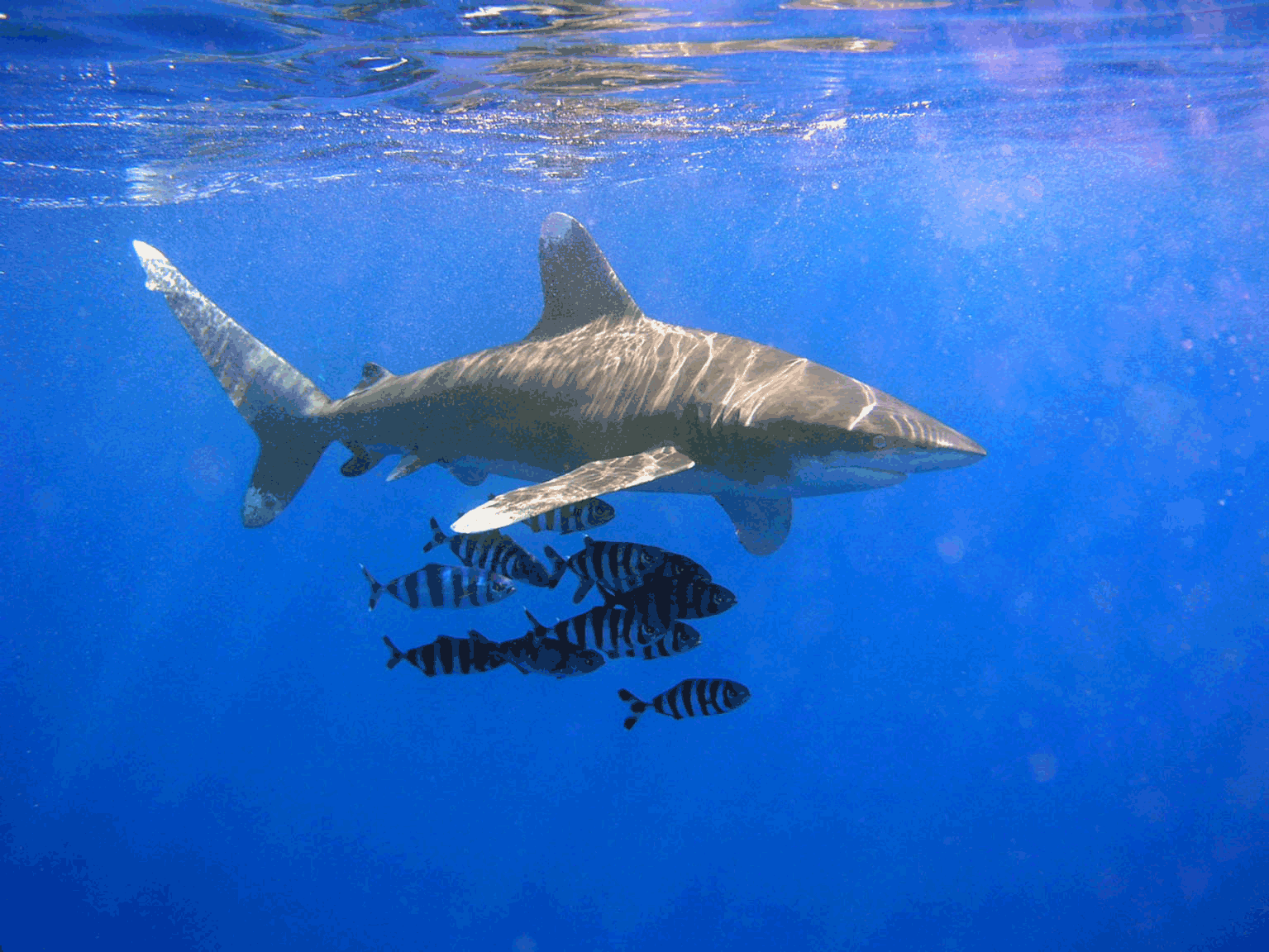
The oceanic whitetip shark (Carcharhinus longimanus) is a cartilaginous fish of the family Carcharhinidae, in the order Carcharhiniformes.
Quick answer
The oceanic whitetip shark (Carcharhinus longimanus) is an open-ocean predator with long white-tipped fins that once followed ships for days. Adults reach 3 m, and the species is Critically Endangered.
Top questions about the Oceanic Whitetip Shark
Oceanic Whitetip Shark facts at a glance
- Weight 130 kg
- Length 3 m
- Top speed 30 km/h
- Lifespan 22 years
| Scientific name | Carcharhinus longimanus |
|---|---|
| Diet | Carnivore |
| Habitat | Open ocean surface waters |
| Lifespan | 20–25 years |
| Weight | 80–170 kg |
| Top speed | up to 30 km/h |
| Conservation status | Critically Endangered (IUCN) |
| Kingdom | Animalia |
|---|---|
| Phylum | Chordata |
| Class | Chondrichthyes |
| Order | Carcharhiniformes |
| Family | Carcharhinidae |
| Genus | Carcharhinus |
Where it lives
The oceanic whitetip shark (Carcharhinus longimanus) is native to Open tropical oceans worldwide. — recorded across North America, South America, Africa, Asia, Oceania in this guide’s range summary.
For occurrence records, see GBIF species search and sources below.
How big is a oceanic whitetip shark?
An adult oceanic whitetip shark measures 3 m long — about 1.7× the height of an average adult person (1.73 m) — and weighs around 130 kg, about 1.9× an average adult’s body weight (70 kg).
Length vs an average adult’s height (to scale)
What is a group of oceanic whitetip sharks called?
Group name (collective noun)
A group of Oceanic Whitetip Sharks is called a shiver.
Baby name
A baby Oceanic Whitetip Shark is called a pup.
Explore more animal collective nouns and baby animal names .
Open-ocean opportunist
Long paddle-like pectoral fins and slow cruising suit endless pelagic travel. Once abundant around shipwrecks and air crashes, populations have crashed from finning.
Squid, fish, and carrion
Prey includes bony fish, squid, seabirds, and marine mammal carcasses. Bold investigation of anything floating can bring them to disaster survivors.
All tropical open seas
Circumtropical surface waters far from land. Tagged sharks cross entire ocean basins.
Critically Endangered from fin trade
IUCN lists oceanic whitetip Critically Endangered. Longline fisheries kill them as bycatch; high-value fins drove catastrophic decline since the 1950s.
Explore the Oceanic Whitetip Shark
Close relatives
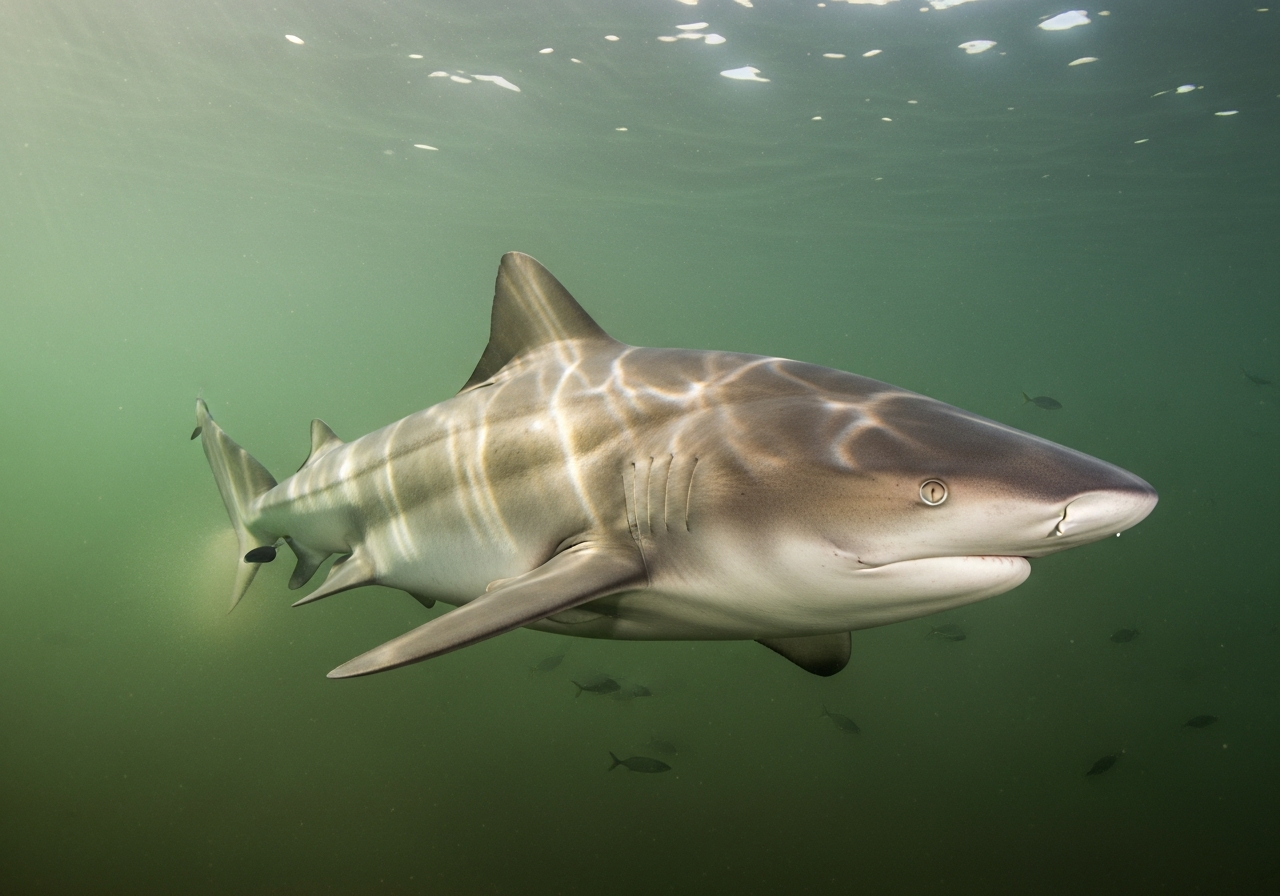
- Bull Shark Same genus
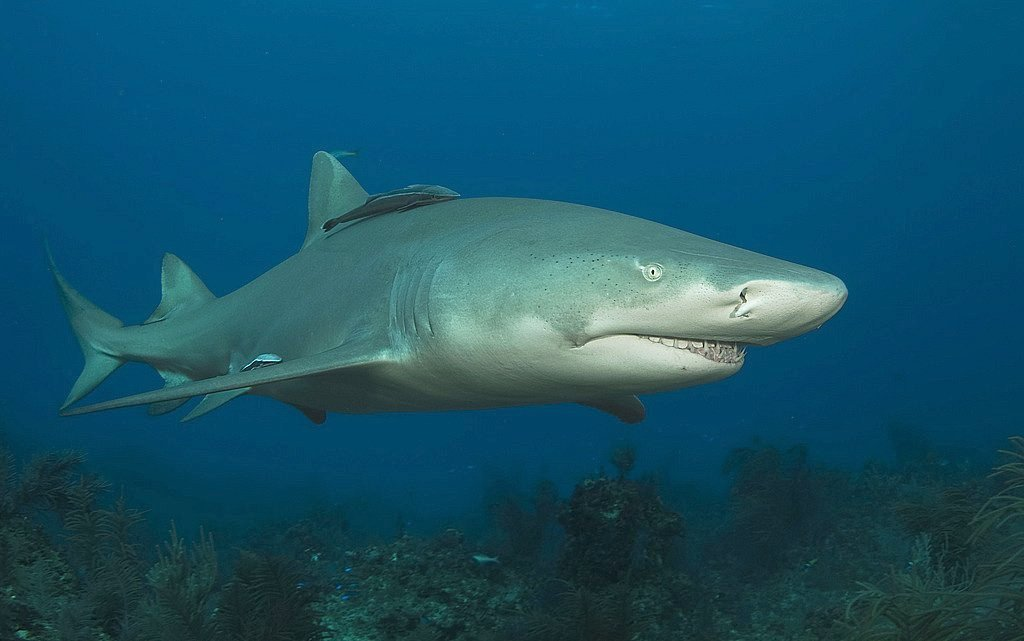
- Lemon Shark Same family
- Hammerhead Shark Same order
- Tiger Shark Same order
Collections
Conservation status of the Oceanic Whitetip Shark
The oceanic whitetip shark (Carcharhinus longimanus) is listed as Critically Endangered on the IUCN Red List. Critically Endangered (CR) is the highest-risk category the IUCN Red List assigns to a wild species before Extinct in the Wild. It means a species faces an extremely high probability of extinction — usually because its population has collapsed, its range has shrunk drastically, or very few mature individuals remain. Species at this level typically depend on active conservation to survive.
Main threats to the oceanic whitetip shark
- Targeted take for fins in pelagic fisheries
- Bycatch in longline and gillnet gear
- Very slow reproduction
- Historical population crashes in the Pacific and Atlantic
Oceanic Whitetip Shark (Carcharhinus longimanus) was most recently assessed for the IUCN Red List in 2019. Look up on the IUCN Red List .
Frequently asked questions about the Oceanic Whitetip Shark
Why are oceanic whitetip fins white-tipped?
White mottling on rounded fins is a key field mark distinguishing them from other offshore sharks.
Are oceanic whitetips ship followers?
Historically they trailed vessels for discarded waste — behaviour that made them easy finning targets.
How dangerous are oceanic whitetips?
Rare human encounters can be serious in open water after disasters, but most people never meet them.
Why is the oceanic whitetip Critically Endangered?
Industrial longline bycatch and targeted finning removed most individuals from open oceans.
Where do oceanic whitetips live?
Warm open oceans worldwide, far from coasts.
What is a group of oceanic whitetip sharks called?
A group of Oceanic Whitetip Sharks is called a shiver.
What is a baby oceanic whitetip shark called?
A baby Oceanic Whitetip Shark is called a pup.
Sources & references
This guide is compiled and reviewed against established zoological and conservation references. Key sources for the Oceanic Whitetip Shark:
-
IUCN Red List of Threatened Species
Conservation status (Critically Endangered) reflects the IUCN Red List category for Carcharhinus longimanus, most recently assessed in 2019.
-
iNaturalist — observations & photos
Search citizen-science observations and community IDs for Carcharhinus longimanus. Useful for range checks and recent sightings — not a substitute for formal Red List status.
-
GBIF — occurrence data
Global Biodiversity Information Facility species search for Carcharhinus longimanus. Explore published occurrence records used in range research.
-
Global Animal Guide editorial standards
How we research, source, review, and update every guide for accuracy.