Image sourcing: see credits & licences
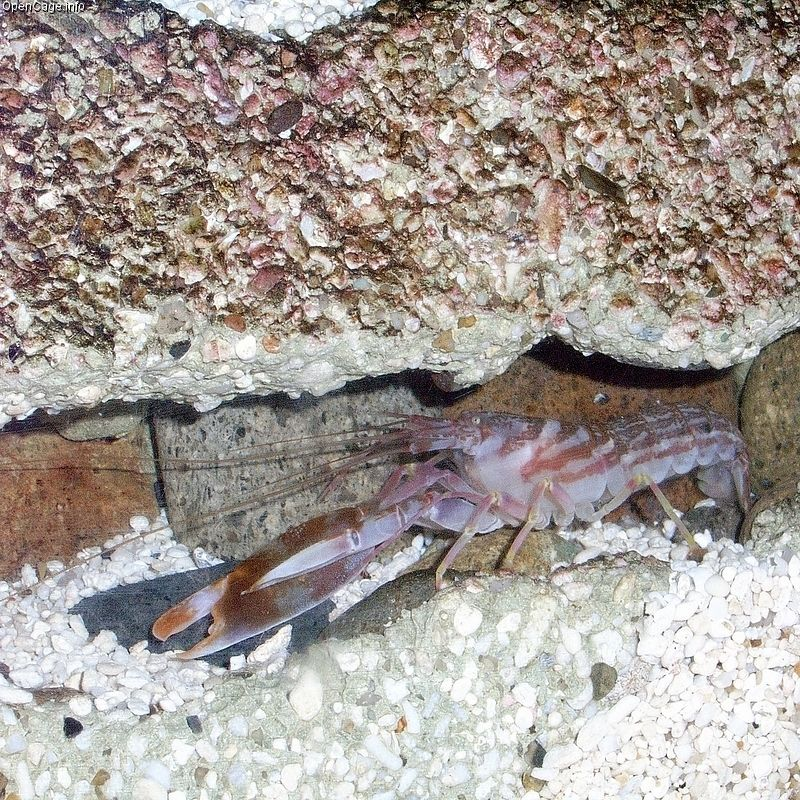
The pistol shrimp (Alpheus digitalis) is a crustacean of the family Alpheidae, in the order Decapoda.
Quick answer
The pistol shrimp (Alpheus digitalis) snaps its claw to create a cavitation bubble that stuns prey and communicates with mates. Adults reach 5 cm and are Least Concern.
Top questions about the Pistol Shrimp
Pistol Shrimp facts at a glance
- Weight 5 g
- Length 5 cm
- Top speed 2 km/h
- Lifespan 2 years
| Scientific name | Alpheus digitalis |
|---|---|
| Diet | Carnivore |
| Habitat | Reef burrows and sand flats |
| Lifespan | 2–3 years |
| Weight | 0.003–0.01 kg |
| Top speed | up to 2 km/h |
| Conservation status | Least Concern (IUCN) |
| Kingdom | Animalia |
|---|---|
| Phylum | Arthropoda |
| Class | Malacostraca |
| Order | Decapoda |
| Family | Alpheidae |
| Genus | Alpheus |
Where it lives
The pistol shrimp (Alpheus digitalis) is native to Indo-Pacific reefs and burrows. — recorded across Asia, Oceania in this guide’s range summary.
For occurrence records, see GBIF species search and sources below.
How big is a pistol shrimp?
An adult pistol shrimp measures 5 cm long — about 3% of the height of an average adult person (1.73 m) — and weighs around 5 g, a small fraction of an average adult’s body weight (70 kg).
Length vs an average adult’s height (to scale)
What is a group of pistol shrimp called?
Group name (collective noun)
A group of Pistol Shrimp is called a colony.
Baby name
A baby Pistol Shrimp is called a larva.
Explore more animal collective nouns and baby animal names .
Cavitation snap
The enlarged claw closes so fast it vaporises water, producing a bubble that collapses with a snap up to 210 decibels — stunning prey and generating a flash of heat and light.
Worms, fish, and goby partners
Small fish and invertebrates are stunned then eaten. Many species share burrows with gobies that watch for danger while shrimp maintain the tunnel.
Indo-Pacific reef sand
Alpheus digitalis inhabits burrows in tropical reef flats and rubble. Snapping choruses audible on quiet reefs come from colonies.
Noisy but secure
Least Concern across extensive reef habitat. Symbiosis with gobies and cryptic burrows protect them from many predators.
Explore the Pistol Shrimp
Close relatives
- Coconut Crab Same order
- Japanese Spider Crab Same order
- Blue Crab Same order
- American Lobster Same order
Range & geography
Conservation status of the Pistol Shrimp
The pistol shrimp (Alpheus digitalis) is listed as Least Concern on the IUCN Red List. Least Concern (LC) is the IUCN's lowest-risk category, assigned to widespread, abundant species that have been evaluated and found not to be threatened. It does not mean a species faces no pressures — only that it is not currently at risk of extinction.
The pistol shrimp (Alpheus digitalis) is assessed on the IUCN Red List. Look up on the IUCN Red List .
Frequently asked questions about the Pistol Shrimp
How loud is a pistol shrimp snap?
The cavitation pop can exceed 200 decibels — louder than a gunshot at close range.
Why do pistol shrimp have one big claw?
The major claw is specialised for the high-speed snap that stuns prey.
Do pistol shrimp partner with gobies?
Yes — gobies stand guard while shrimp dig; both retreat into the shared burrow when threatened.
Can pistol shrimp break glass?
Colonies in aquariums can crack thin glass with repeated snaps — a known hobby hazard.
What do pistol shrimp eat?
Small fish, worms, and crustaceans stunned by the cavitation snap.
What is a group of pistol shrimp called?
A group of Pistol Shrimp is called a colony.
What is a baby pistol shrimp called?
A baby Pistol Shrimp is called a larva.
Sources & references
This guide is compiled and reviewed against established zoological and conservation references. Key sources for the Pistol Shrimp:
-
IUCN Red List of Threatened Species
Conservation status (Least Concern) reflects the IUCN Red List category for Alpheus digitalis.
-
iNaturalist — observations & photos
Search citizen-science observations and community IDs for Alpheus digitalis. Useful for range checks and recent sightings — not a substitute for formal Red List status.
-
GBIF — occurrence data
Global Biodiversity Information Facility species search for Alpheus digitalis. Explore published occurrence records used in range research.
-
Global Animal Guide editorial standards
How we research, source, review, and update every guide for accuracy.