Image sourcing: see credits & licences
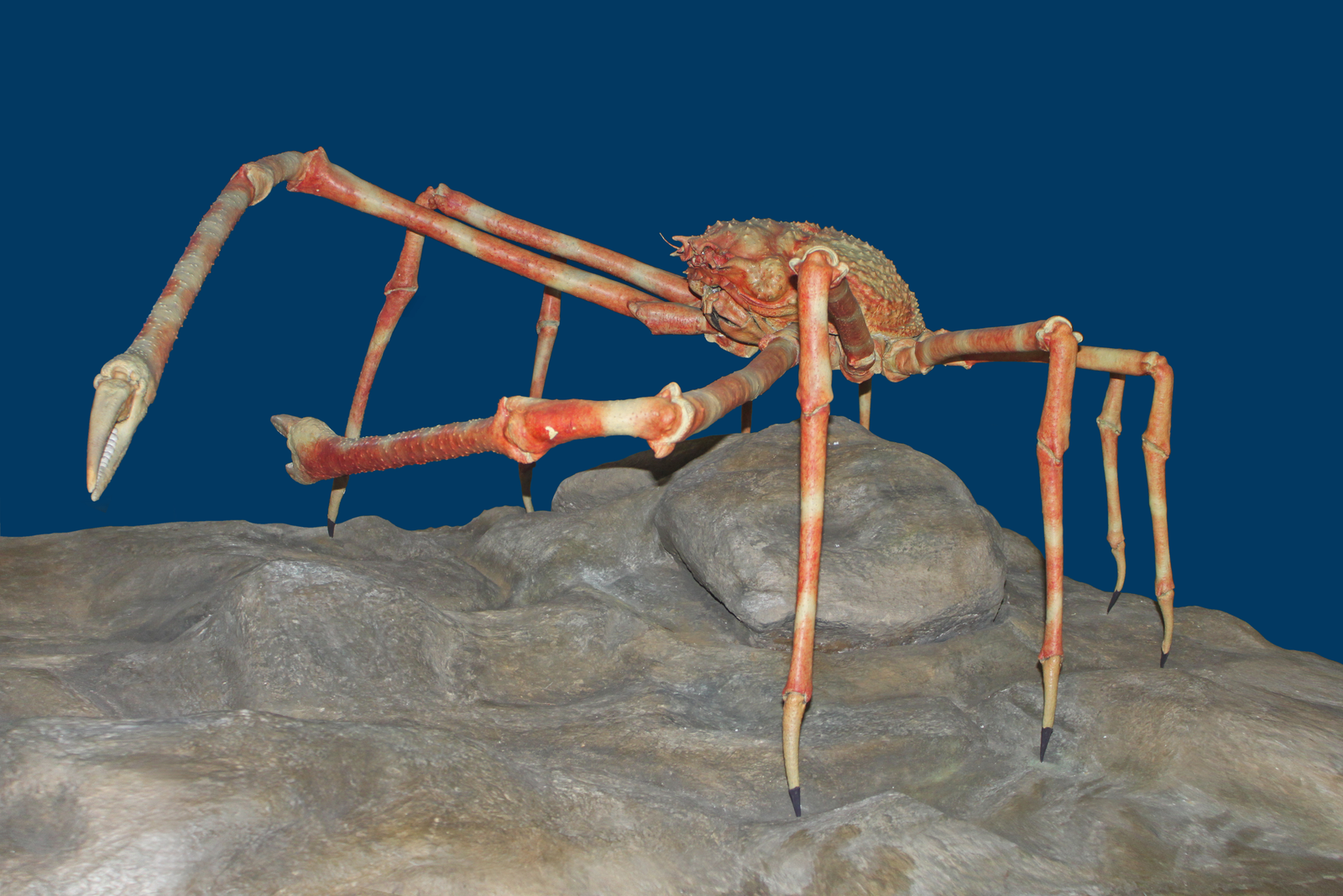
The Japanese spider crab (Macrocheira kaempferi) is a crustacean of the family Inachidae, in the order Decapoda.
Quick answer
The Japanese spider crab (Macrocheira kaempferi) is the world's largest arthropod, with leg spans reaching 3.7 m in deep Pacific waters off Japan. Adults weigh 20 kg and are Least Concern.
Top questions about the Japanese Spider Crab
Japanese Spider Crab facts at a glance
- Weight 18 kg
- Length 40 cm
- Top speed 3 km/h
- Lifespan 80 years
| Scientific name | Macrocheira kaempferi |
|---|---|
| Diet | Scavenger / carnivore |
| Habitat | Deep continental slopes |
| Lifespan | 50–100 years |
| Weight | 15–20 kg |
| Top speed | up to 3 km/h |
| Conservation status | Least Concern (IUCN) |
| Kingdom | Animalia |
|---|---|
| Phylum | Arthropoda |
| Class | Malacostraca |
| Order | Decapoda |
| Family | Inachidae |
| Genus | Macrocheira |
Where it lives
The japanese spider crab (Macrocheira kaempferi) is native to Deep waters off Japan. — recorded across Asia in this guide’s range summary.
For occurrence records, see GBIF species search and sources below.
How big is a japanese spider crab?
An adult japanese spider crab measures 40 cm long — about 23% of the height of an average adult person (1.73 m) — and weighs around 18 kg, about 26% of an average adult’s body weight (70 kg).
Length vs an average adult’s height (to scale)
What is a group of japanese spider crabs called?
Group name (collective noun)
A group of Japanese Spider Crabs is called a cast.
Baby name
A baby Japanese Spider Crab is called a zoea.
Explore more animal collective nouns and baby animal names .
Leg span of a small car
Spindly legs and a relatively small knobby carapace create record arthropod span. Slow metabolism suits cold deep water on continental slopes.
Scavenger of the deep slope
Dead fish, molluscs, and plant debris are picked from the seabed. Adults migrate seasonally to shallower depths for breeding.
Deep waters off Japan
Pacific slopes around Honshu and nearby depths of 200–800 m. Larvae develop in plankton before settling to the abyssal fringe.
Protected giant
Least Concern with fishing restrictions in Japan. Aquarium displays and cultural fame support conservation awareness.
Explore the Japanese Spider Crab
Close relatives
- Coconut Crab Same order
- Pistol Shrimp Same order
- Blue Crab Same order
- American Lobster Same order
Range & geography
Conservation status of the Japanese Spider Crab
The japanese spider crab (Macrocheira kaempferi) is listed as Least Concern on the IUCN Red List. Least Concern (LC) is the IUCN's lowest-risk category, assigned to widespread, abundant species that have been evaluated and found not to be threatened. It does not mean a species faces no pressures — only that it is not currently at risk of extinction.
The japanese spider crab (Macrocheira kaempferi) is assessed on the IUCN Red List. Look up on the IUCN Red List .
Frequently asked questions about the Japanese Spider Crab
How wide is a Japanese spider crab?
Leg span can reach about 3.7 m — the largest known arthropod span.
Are Japanese spider crabs dangerous?
They are slow deep-water scavengers; claws can pinch but they are not predators of humans.
Where do Japanese spider crabs live?
Deep Pacific continental slopes primarily around Japan.
What do Japanese spider crabs eat?
Carrion, molluscs, and plant material scavenged on the seabed.
Can you eat Japanese spider crab?
Yes — it is a delicacy in Japan under regulated fisheries.
What is a group of japanese spider crabs called?
A group of Japanese Spider Crabs is called a cast.
What is a baby japanese spider crab called?
A baby Japanese Spider Crab is called a zoea.
Sources & references
This guide is compiled and reviewed against established zoological and conservation references. Key sources for the Japanese Spider Crab:
-
IUCN Red List of Threatened Species
Conservation status (Least Concern) reflects the IUCN Red List category for Macrocheira kaempferi.
-
iNaturalist — observations & photos
Search citizen-science observations and community IDs for Macrocheira kaempferi. Useful for range checks and recent sightings — not a substitute for formal Red List status.
-
GBIF — occurrence data
Global Biodiversity Information Facility species search for Macrocheira kaempferi. Explore published occurrence records used in range research.
-
Global Animal Guide editorial standards
How we research, source, review, and update every guide for accuracy.