Image sourcing: see credits & licences
Quick answer
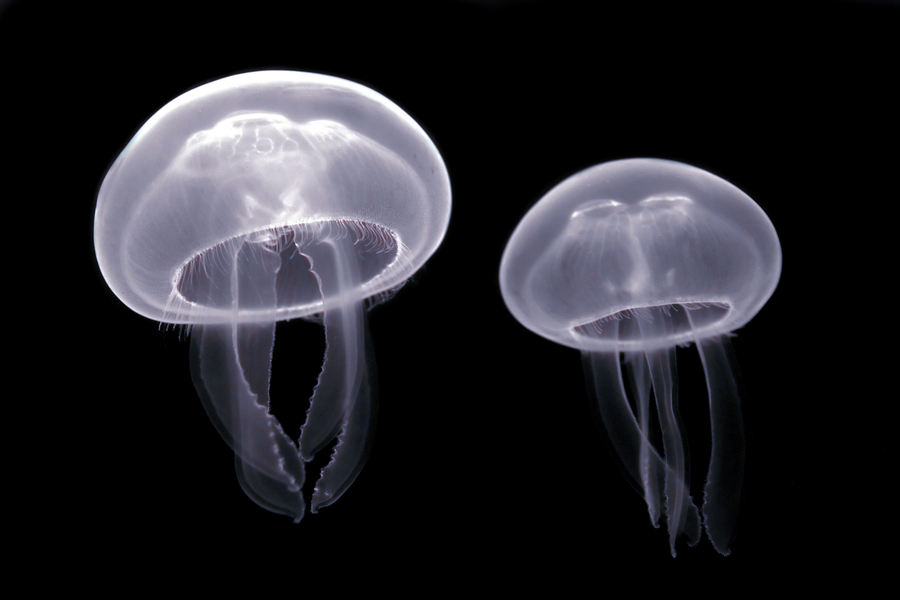
The moon jellyfish (Aurelia aurita) is a translucent pulsing disc common in harbours worldwide, harmless to most swimmers. Bell diameter reaches 40 cm and the species is Least Concern.
Top questions about the Moon Jellyfish
Moon Jellyfish facts at a glance
- Weight 200 g
- Length 40 cm
- Top speed 3 km/h
- Lifespan 1 years
| Scientific name | Aurelia aurita |
|---|---|
| Diet | Carnivore (plankton) |
| Habitat | Coastal seas and harbours |
| Lifespan | 1–2 years |
| Weight | 0.1–0.5 kg |
| Top speed | up to 3 km/h |
| Conservation status | Least Concern (IUCN) |
| Kingdom | Animalia |
|---|---|
| Phylum | Cnidaria |
| Class | Scyphozoa |
| Order | Semaeostomeae |
| Family | Ulmaridae |
| Genus | Aurelia |
Where it lives
The moon jellyfish (Aurelia aurita) is native to Coastal waters nearly worldwide. — recorded across North America, Europe, Asia, Oceania in this guide’s range summary.
For occurrence records, see GBIF species search and sources below.
How big is a moon jellyfish?
An adult moon jellyfish measures 40 cm long — about 23% of the height of an average adult person (1.73 m) — and weighs around 200 g, a small fraction of an average adult’s body weight (70 kg).
Length vs an average adult’s height (to scale)
What is a group of moon jellyfish called?
Group name (collective noun)
A group of Moon Jellyfish is called a smack.
Baby name
A baby Moon Jellyfish is called an ephyra.
Explore more animal collective nouns and baby animal names .
Four rings in a glass bell
Transparent bells show four horseshoe gonads. Short fine tentacles carry mild stinging cells. Rhythmic pulsation drives slow cruising in weak currents.
Plankton and mollusc larvae
Cilia on oral arms move food to the mouth. They thrive in nutrient-rich harbours where zooplankton blooms.
Coastal seas nearly worldwide
Harbours, bays, and shelf seas in temperate and tropical waters. Aurelia aurita is a complex of similar species globally.
Bloom and bust cycles
Least Concern and often superabundant. Warm water, aquaculture nutrients, and reduced predators trigger spectacular blooms that clog power plant intakes.
Explore the Moon Jellyfish
Close relatives
- Octopus Same class
- Black Widow Same class
- Jellyfish Same class
- Tarantula Same class
Range & geography
Conservation status of the Moon Jellyfish
The moon jellyfish (Aurelia aurita) is listed as Least Concern on the IUCN Red List. Least Concern (LC) is the IUCN's lowest-risk category, assigned to widespread, abundant species that have been evaluated and found not to be threatened. It does not mean a species faces no pressures — only that it is not currently at risk of extinction.
The moon jellyfish (Aurelia aurita) is assessed on the IUCN Red List. Look up on the IUCN Red List .
Frequently asked questions about the Moon Jellyfish
Are moon jellyfish dangerous?
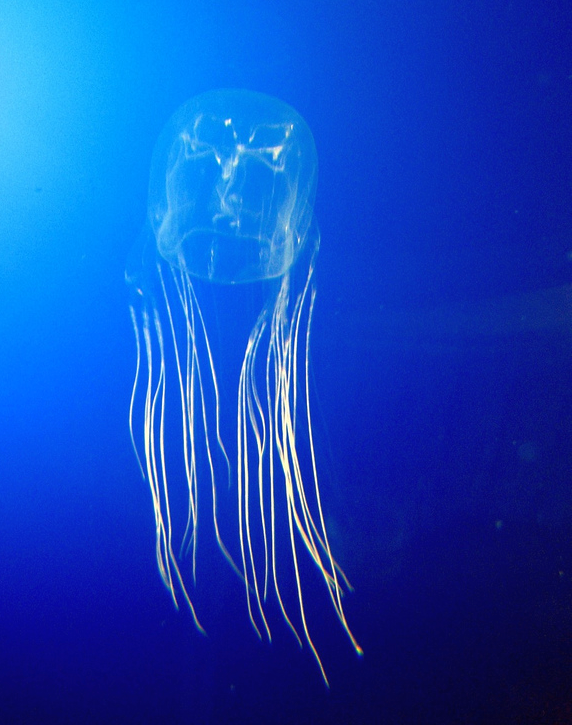
Stings are mild for most people — a tingle rather than the medical emergency of box jellyfish.
What are the pink shapes inside the bell?
Horseshoe-shaped gonads — reproductive organs visible through the transparent tissue.
Why do moon jellyfish bloom?
Nutrient runoff, warming water, and fewer predators can trigger huge seasonal swarms.
Do moon jellyfish have brains?
They have a diffuse nerve net — enough to pulse and orient but not for complex thought.
Where are moon jellyfish found?
Coastal waters worldwide, especially harbours and sheltered bays.
What is a group of moon jellyfish called?
A group of Moon Jellyfish is called a smack.
What is a baby moon jellyfish called?
A baby Moon Jellyfish is called an ephyra.
Sources & references
This guide is compiled and reviewed against established zoological and conservation references. Key sources for the Moon Jellyfish:
-
IUCN Red List of Threatened Species
Conservation status (Least Concern) reflects the IUCN Red List category for Aurelia aurita.
-
iNaturalist — observations & photos
Search citizen-science observations and community IDs for Aurelia aurita. Useful for range checks and recent sightings — not a substitute for formal Red List status.
-
GBIF — occurrence data
Global Biodiversity Information Facility species search for Aurelia aurita. Explore published occurrence records used in range research.
-
Global Animal Guide editorial standards
How we research, source, review, and update every guide for accuracy.