Image sourcing: see credits & licences
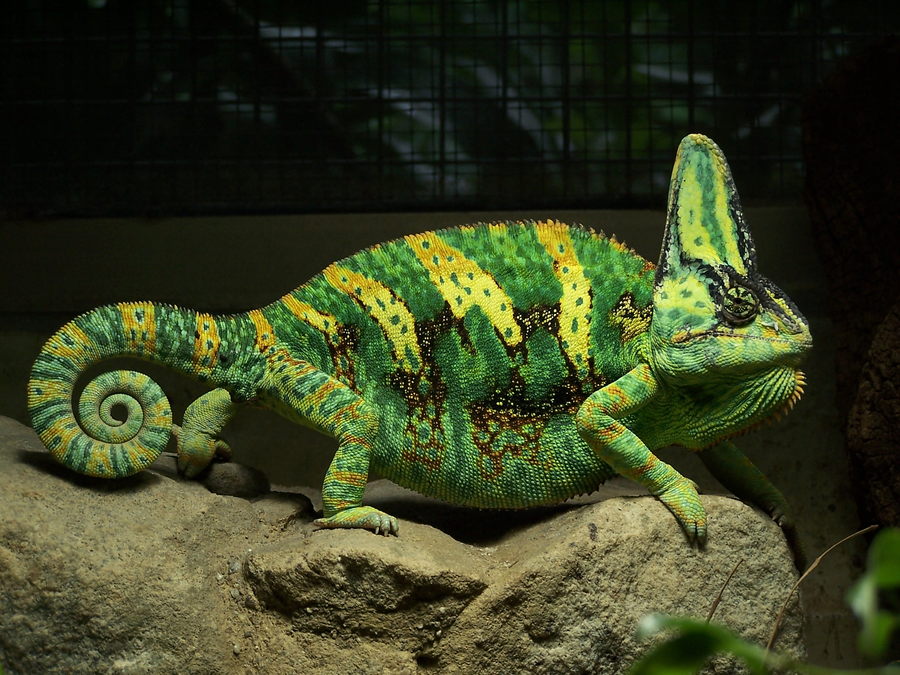
The veiled chameleon (Chamaeleo calyptratus) is a reptile of the family Chamaeleonidae, in the order Squamata.
Quick answer
The veiled chameleon (Chamaeleo calyptratus) is a tall-casqued chameleon of Yemen and Saudi Arabia, popular in the pet trade for its colour changes and projectile tongue. Adults weigh about 150 g, hunt insects in plateau scrub, and are listed Least Concern — though wild collection and habitat pressure occur locally.
Top questions about the Veiled Chameleon
Veiled Chameleon facts at a glance
- Weight 150 g
- Length 45 cm
- Top speed 2 km/h
- Lifespan 6 years
| Scientific name | Chamaeleo calyptratus |
|---|---|
| Diet | Insectivore |
| Habitat | Plateau scrub and mountain valleys |
| Lifespan | Around 6 years in the wild (varies by population and captivity). |
| Weight | About 0.15 kg typical adult mass (sex and region vary). |
| Top speed | Up to roughly 2 km/h when moving at speed. |
| Conservation status | Least Concern (IUCN) |
| Kingdom | Animalia |
|---|---|
| Phylum | Chordata |
| Class | Reptilia |
| Order | Squamata |
| Family | Chamaeleonidae |
| Genus | Chamaeleo |
Where it lives
The veiled chameleon (Chamaeleo calyptratus) is native to Mountain and coastal regions of Yemen and Saudi Arabia; popular in the pet trade. — recorded across Asia in this guide’s range summary.
For occurrence records, see GBIF species search and sources below.
How big is a veiled chameleon?
An adult veiled chameleon measures 45 cm long — about 26% of the height of an average adult person (1.73 m) — and weighs around 150 g, a small fraction of an average adult’s body weight (70 kg).
Length vs an average adult’s height (to scale)
What is a group of veiled chameleons called?
Group name (collective noun)
A group of Veiled Chameleons is called a lounge.
Baby name
A baby Veiled Chameleon is called a hatchling.
Explore more animal collective nouns and baby animal names .
Casque and turret eyes
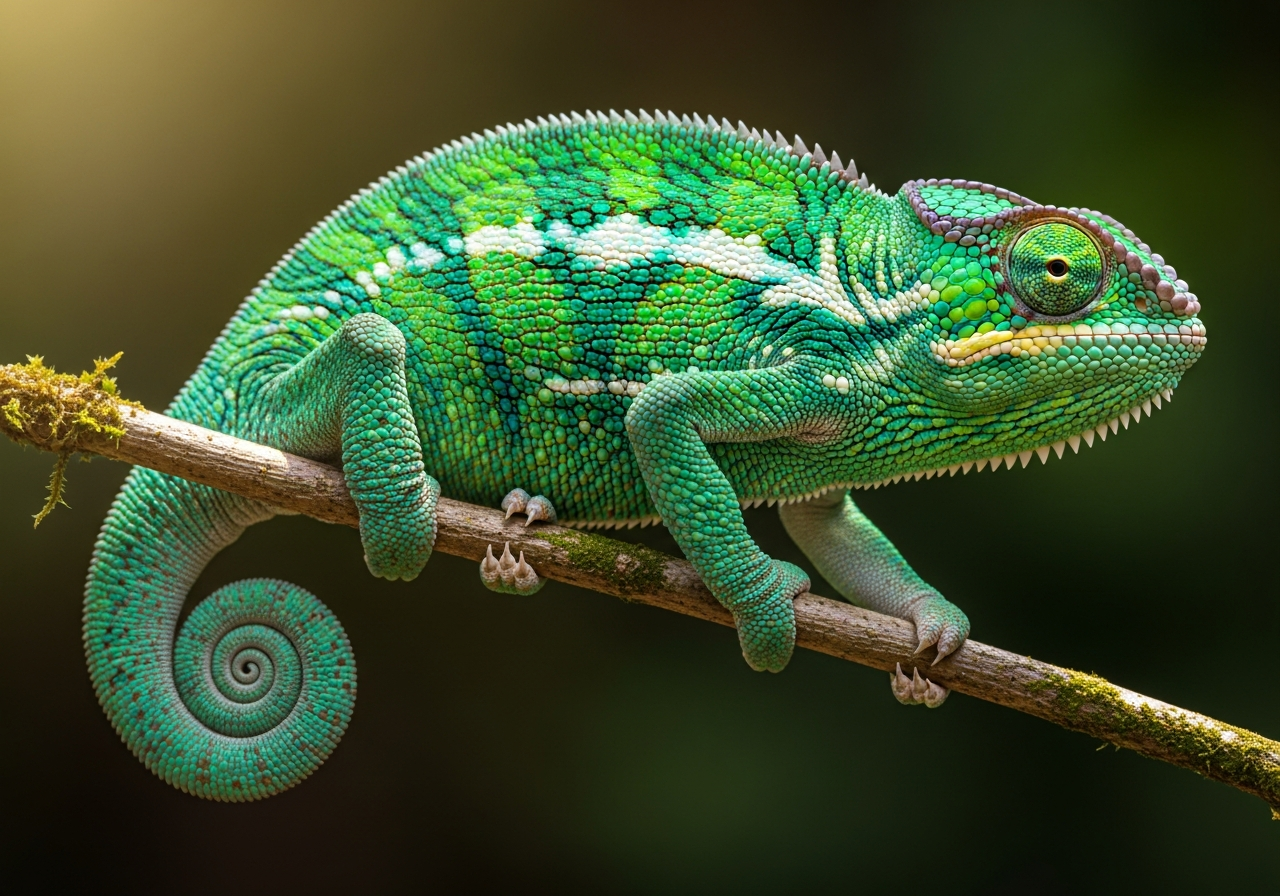
The bony casque is taller in males. Independently moving eyes scan for prey; the tongue can exceed body length to snatch insects. Colour shifts signal mood and social status more than perfect background matching.
Insect hunter of arid scrub
Diet is insects and other arthropods; captive animals sometimes accept vegetation, but protein from insects is essential. They drink droplets from leaves more than still bowls.
Yemen and Saudi mountains
Mountain and coastal regions of Yemen and Saudi Arabia in plateau scrub and valleys — surprisingly arid compared with rainforest chameleons.
Pet-trade abundance
Least Concern with a reasonably wide native range. Captive breeding supplies most pets; wild collection and qat agriculture can still stress local habitats.
Explore the Veiled Chameleon
Close relatives
- Chameleon Same family
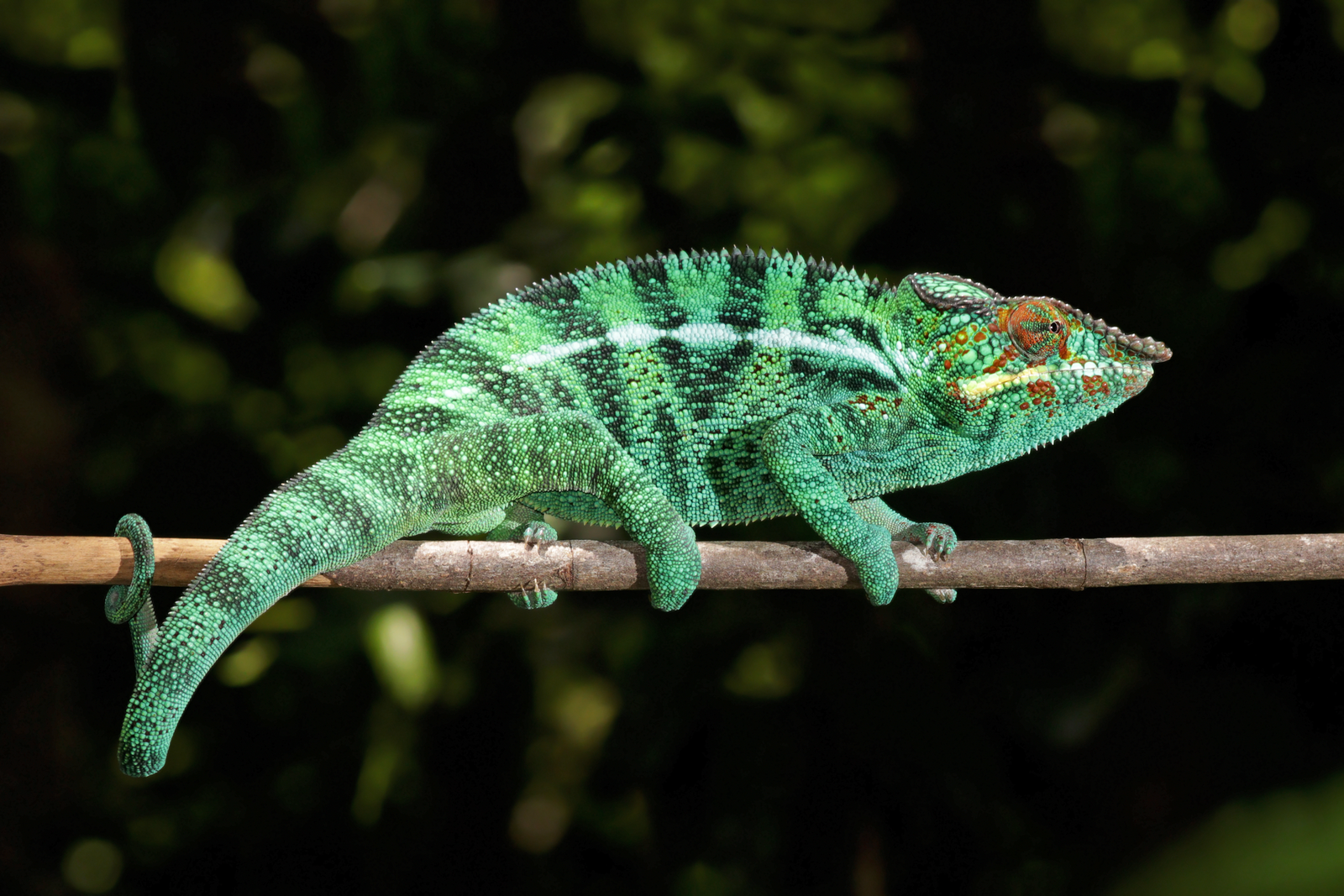
- Panther Chameleon Same family
- Black Mamba Same order
- Inland Taipan Same order
Range & geography
Conservation status of the Veiled Chameleon
The veiled chameleon (Chamaeleo calyptratus) is listed as Least Concern on the IUCN Red List. Least Concern (LC) is the IUCN's lowest-risk category, assigned to widespread, abundant species that have been evaluated and found not to be threatened. It does not mean a species faces no pressures — only that it is not currently at risk of extinction.
The veiled chameleon (Chamaeleo calyptratus) is assessed on the IUCN Red List. Look up on the IUCN Red List .
Frequently asked questions about the Veiled Chameleon
What is the helmet on a veiled chameleon?
A bony casque that is especially tall in males; roles may include display and water channelling.
How far can a veiled chameleon's tongue shoot?
The tongue can extend roughly 1.5–2 times the body length to catch insects.
Do veiled chameleons change colour for camouflage?
Colour change mainly signals temperature and social state; camouflage is secondary.
Where are veiled chameleons from?
Yemen and Saudi Arabia — not Madagascar. Native range summary: Mountain and coastal regions of Yemen and Saudi Arabia; popular in the pet trade.
Are veiled chameleons good beginner pets?
They need specialised UVB lighting, ventilation, and insect diets; many beginners underestimate care requirements.
What is a group of veiled chameleons called?
A group of Veiled Chameleons is called a lounge.
What is a baby veiled chameleon called?
A baby Veiled Chameleon is called a hatchling.
Sources & references
This guide is compiled and reviewed against established zoological and conservation references. Key sources for the Veiled Chameleon:
-
IUCN Red List of Threatened Species
Conservation status (Least Concern) reflects the IUCN Red List category for Chamaeleo calyptratus.
-
iNaturalist — observations & photos
Search citizen-science observations and community IDs for Chamaeleo calyptratus. Useful for range checks and recent sightings — not a substitute for formal Red List status.
-
GBIF — occurrence data
Global Biodiversity Information Facility species search for Chamaeleo calyptratus. Explore published occurrence records used in range research.
-
Global Animal Guide editorial standards
How we research, source, review, and update every guide for accuracy.