Image sourcing: see credits & licences
The green tree python (Morelia viridis) is a reptile of the family Pythonidae, in the order Squamata.
Quick answer
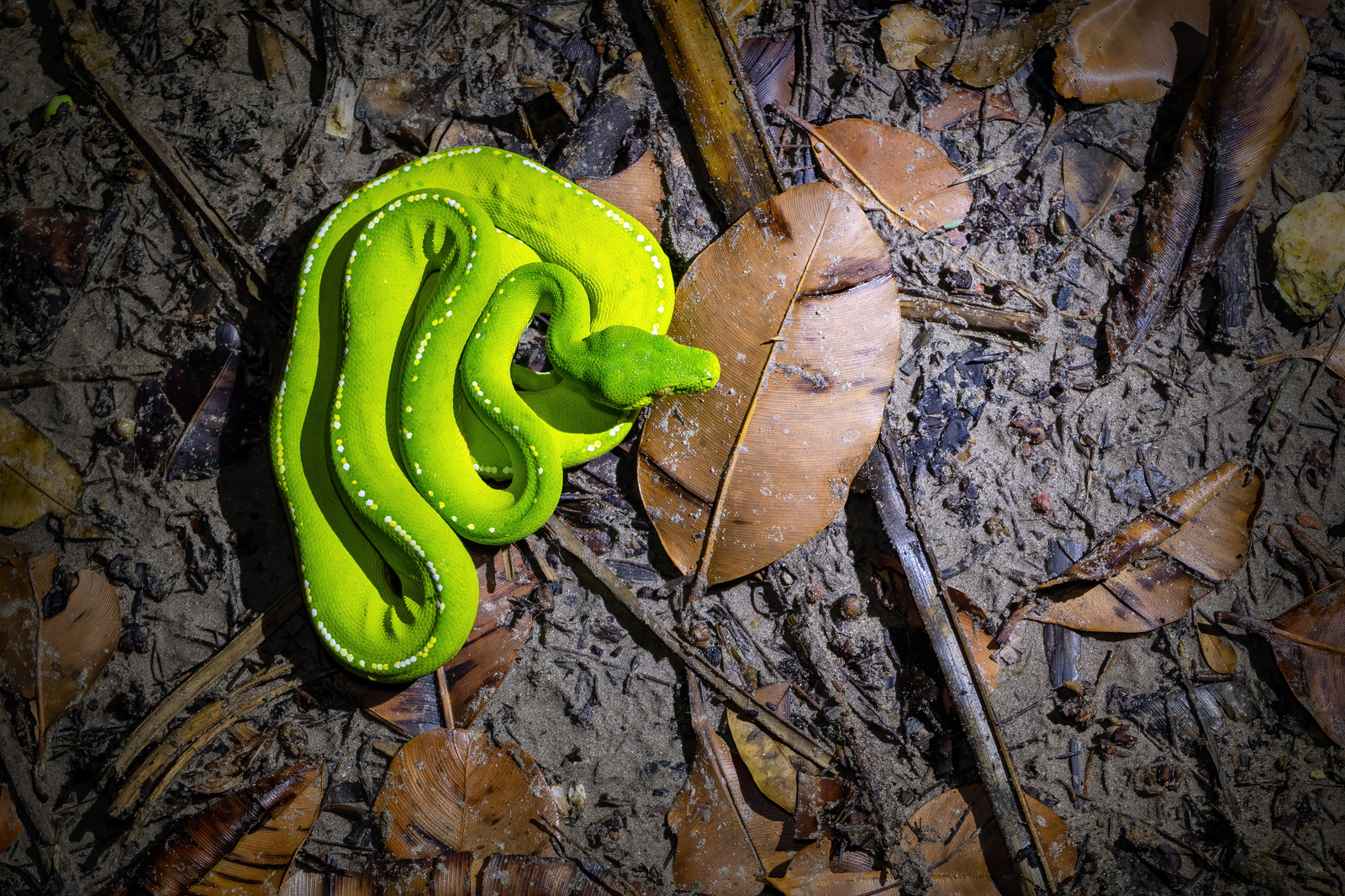
The green tree python (Morelia viridis) is a lime-green New Guinea snake that drapes in loops over branches. Adults reach about 1.8 m, hunt mammals and birds at night, and are listed Least Concern.
Top questions about the Green Tree Python
Green Tree Python facts at a glance
- Weight 1.5 kg
- Length 1.8 m
- Top speed 8 km/h
- Lifespan 18 years
| Scientific name | Morelia viridis |
|---|---|
| Diet | Carnivore |
| Habitat | Rainforest canopy |
| Lifespan | 15–20 years |
| Weight | 1–2 kg |
| Top speed | up to 8 km/h |
| Conservation status | Least Concern (IUCN) |
| Kingdom | Animalia |
|---|---|
| Phylum | Chordata |
| Class | Reptilia |
| Order | Squamata |
| Family | Pythonidae |
| Genus | Morelia |
Where it lives
The green tree python (Morelia viridis) is native to New Guinea and nearby islands into northern Australia's Cape York. — recorded across Oceania, Asia in this guide’s range summary.
For occurrence records, see GBIF species search and sources below.
How big is a green tree python?
An adult green tree python measures 1.8 m long — about 1.0× the height of an average adult person (1.73 m) — and weighs around 1.5 kg, about 2% of an average adult’s body weight (70 kg).
Length vs an average adult’s height (to scale)
What is a group of green tree pythons called?
Group name (collective noun)
A group of Green Tree Pythons is called a bed.
Baby name
A baby Green Tree Python is called a neonate.
Explore more animal collective nouns and baby animal names .
Looping arboreal predator
Adults sit coiled on branches, head resting in the centre of the loop. Juveniles may be yellow or red before turning brilliant green — convergent with emerald tree boas.
Rodents, birds, and lizards
Heat-sensitive pits line the jaw for night strikes at birds and small mammals. Prey is constricted and swallowed whole while the snake remains anchored on the perch.
New Guinea and Cape York
Rainforest canopy of New Guinea and nearby islands, plus northern Queensland's Cape York Peninsula. Humid lowland forest is primary habitat.
Captive-bred ambassador
Least Concern wild populations face local collection pressure, but most pets today are captive-bred. Habitat loss matters more than trade in remote forests.
Explore the Green Tree Python
Close relatives
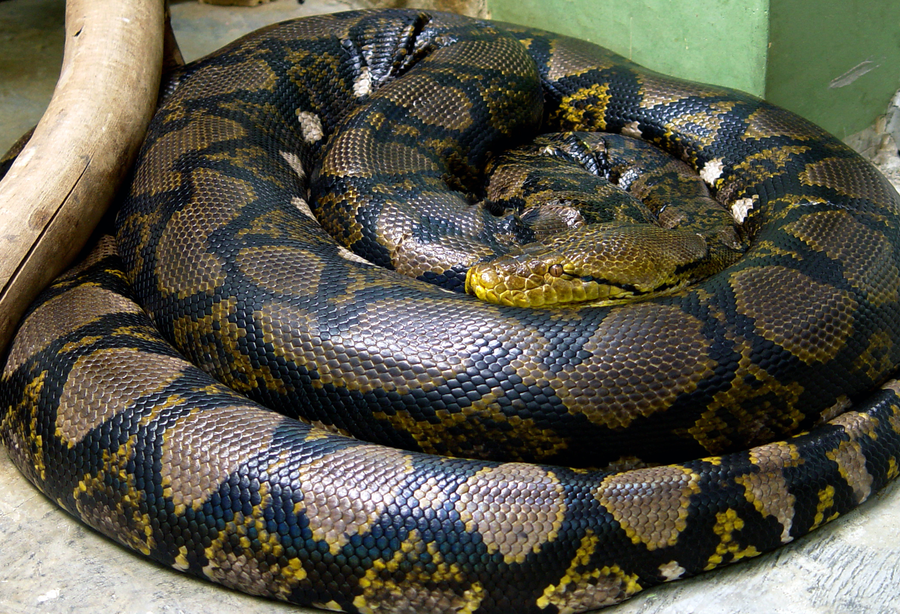
- Reticulated Python Same family
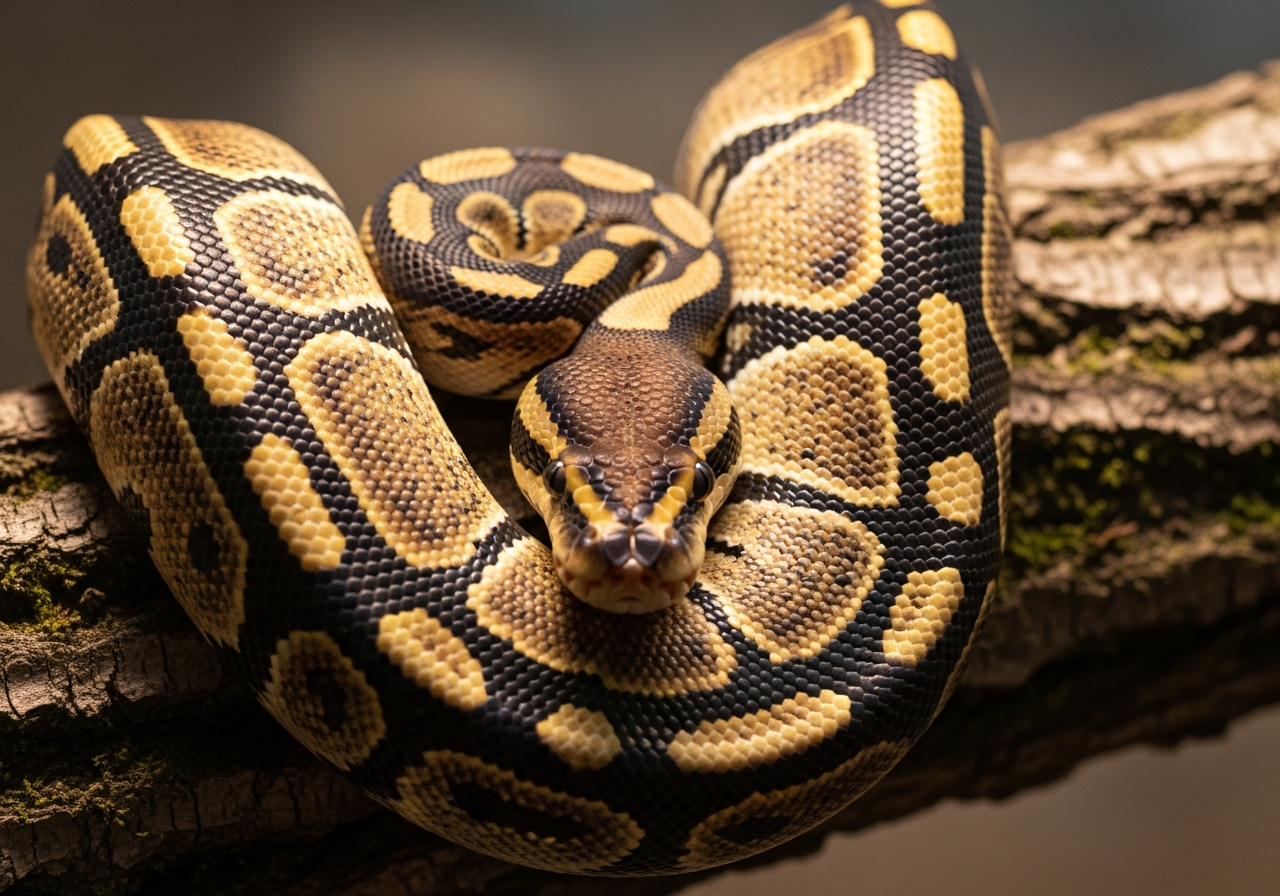
- Ball Python Same family
- Black Mamba Same order
- Inland Taipan Same order
Range & geography
Conservation status of the Green Tree Python
The green tree python (Morelia viridis) is listed as Least Concern on the IUCN Red List. Least Concern (LC) is the IUCN's lowest-risk category, assigned to widespread, abundant species that have been evaluated and found not to be threatened. It does not mean a species faces no pressures — only that it is not currently at risk of extinction.
The green tree python (Morelia viridis) is assessed on the IUCN Red List. Look up on the IUCN Red List .
Frequently asked questions about the Green Tree Python
Are green tree pythons the same as emerald tree boas?
No — they are pythons from Australasia; emerald tree boas are boas from South America. Similar green colour evolved separately.
Why do juvenile green tree pythons change colour?
Young snakes are often yellow or red for camouflage, then turn green at maturity.
Do green tree pythons bite?
They can deliver a painful defensive bite; wild individuals are often irritable when handled.
Where do green tree pythons live?
Rainforest canopies of New Guinea, nearby islands, and Australia's Cape York.
How do green tree pythons hunt?
They ambush from branches at night, using heat pits to detect warm-blooded prey.
What is a group of green tree pythons called?
A group of Green Tree Pythons is called a bed.
What is a baby green tree python called?
A baby Green Tree Python is called a neonate.
Sources & references
This guide is compiled and reviewed against established zoological and conservation references. Key sources for the Green Tree Python:
-
IUCN Red List of Threatened Species
Conservation status (Least Concern) reflects the IUCN Red List category for Morelia viridis.
-
iNaturalist — observations & photos
Search citizen-science observations and community IDs for Morelia viridis. Useful for range checks and recent sightings — not a substitute for formal Red List status.
-
GBIF — occurrence data
Global Biodiversity Information Facility species search for Morelia viridis. Explore published occurrence records used in range research.
-
Global Animal Guide editorial standards
How we research, source, review, and update every guide for accuracy.