Image sourcing: see credits & licences
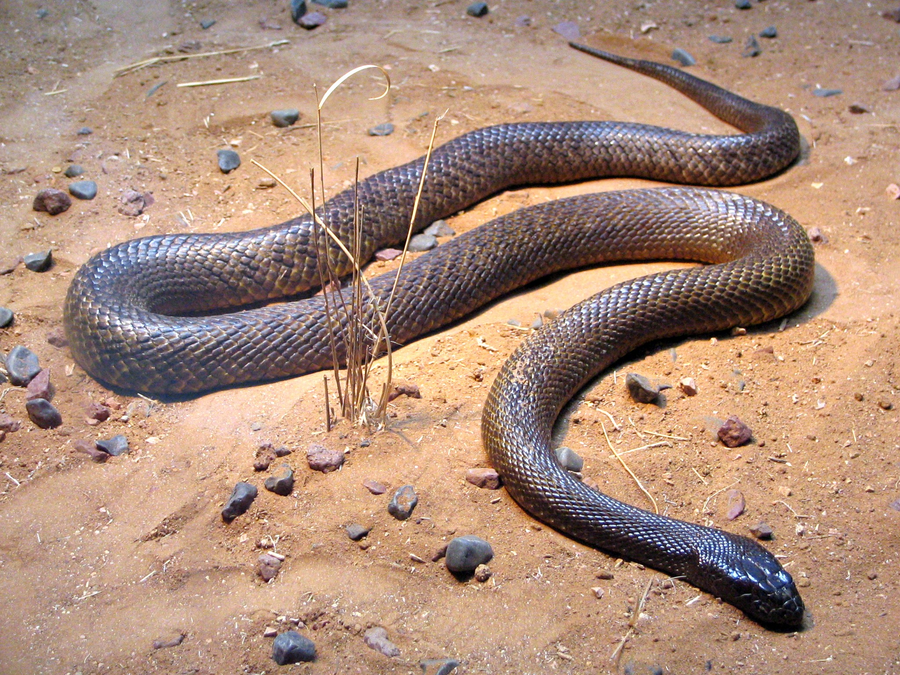
The inland taipan (Oxyuranus microlepidotus) is a reptile of the family Elapidae, in the order Squamata.
Quick answer
The inland taipan (Oxyuranus microlepidotus) has the most toxic snake venom measured in laboratory tests, yet it lives shyly on remote cracking-clay plains of southwest Queensland and adjacent South Australia and Northern Territory. It eats rodents, rarely encounters people, and is listed Least Concern.
Top questions about the Inland Taipan
Also available in Español (Taipán del interior)
Inland Taipan facts at a glance
- Weight 1.5 kg
- Length 1.8 m
- Top speed 10 km/h
- Lifespan 15 years
| Scientific name | Oxyuranus microlepidotus |
|---|---|
| Diet | Carnivore (rodents) |
| Habitat | Arid cracking-clay plains and scrub |
| Lifespan | Around 15 years in the wild (varies by population and captivity). |
| Weight | About 1.5 kg typical adult mass (sex and region vary). |
| Top speed | Up to roughly 10 km/h when moving at speed. |
| Conservation status | Least Concern (IUCN) |
| Kingdom | Animalia |
|---|---|
| Phylum | Chordata |
| Class | Reptilia |
| Order | Squamata |
| Family | Elapidae |
| Genus | Oxyuranus |
Where it lives
The inland taipan (Oxyuranus microlepidotus) is native to Channel Country of southwest Queensland and adjacent South Australia and Northern Territory. — recorded across Oceania in this guide’s range summary.
For occurrence records, see GBIF species search and sources below.
How big is a inland taipan?
An adult inland taipan measures 1.8 m long — about 1.0× the height of an average adult person (1.73 m) — and weighs around 1.5 kg, about 2% of an average adult’s body weight (70 kg).
Length vs an average adult’s height (to scale)
What is a group of inland taipans called?
Group name (collective noun)
A group of Inland Taipans is called a bed.
Baby name
A baby Inland Taipan is called a hatchling.
Explore more animal collective nouns and baby animal names .
Record toxicity, reclusive habits
Venom is extraordinarily potent in mouse LD50 tests, packed with neurotoxins and coagulants. In the wild the snake is shy, diurnal in cooler weather, and specialised on mammalian prey in sparsely peopled Channel Country.
Rat specialist of the cracks
Primary prey are native rodents such as the long-haired rat, taken in soil cracks and burrows. After a strike the snake waits for venom to immobilise prey before swallowing.
Channel Country stronghold
Arid cracking-clay plains and scrub of southwest Queensland into neighbouring South Australia and Northern Territory — one of Australia's least populated regions.
Least Concern because remote
Few bites occur because humans seldom meet the species. Antivenom exists in Australia; the snake's conservation status is Least Concern with no major documented decline.
Explore the Inland Taipan
Close relatives
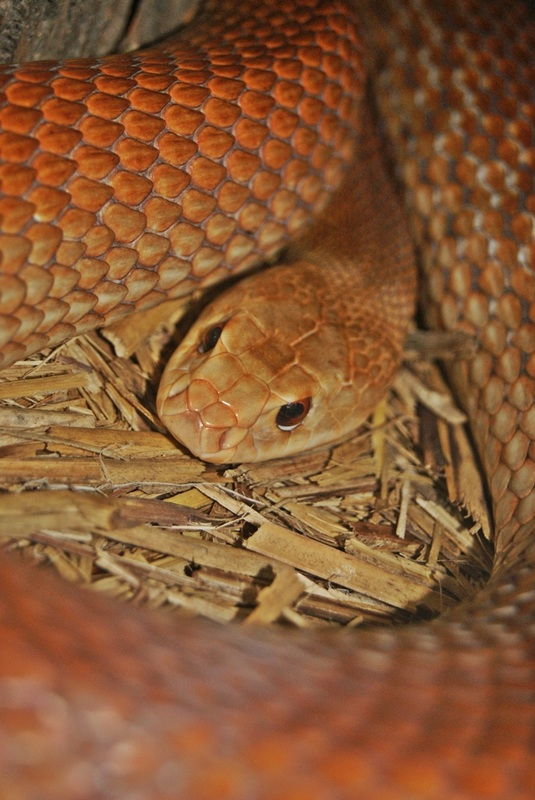
- Coastal Taipan Same genus
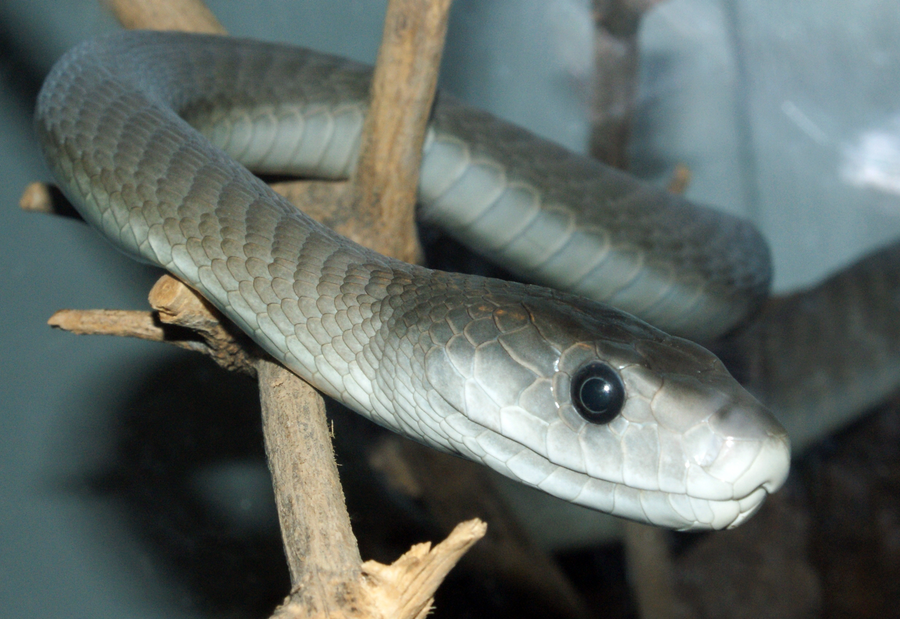
- Black Mamba Same family
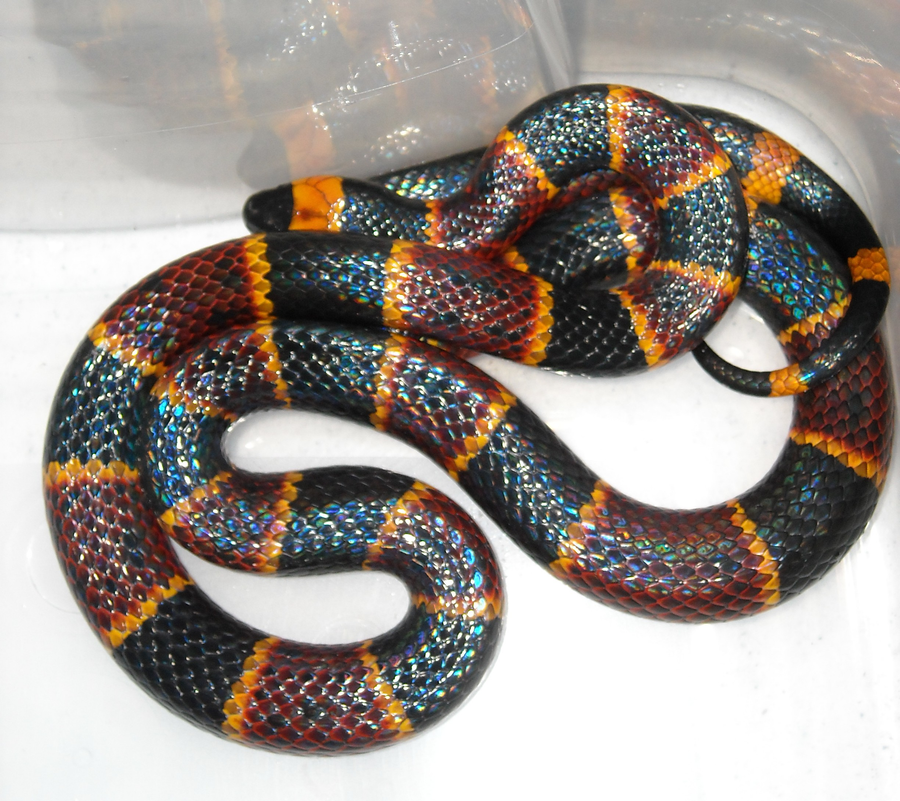
- Eastern Coral Snake Same family
- King Cobra Same family
Collections
Range & geography
Conservation status of the Inland Taipan
The inland taipan (Oxyuranus microlepidotus) is listed as Least Concern on the IUCN Red List. Least Concern (LC) is the IUCN's lowest-risk category, assigned to widespread, abundant species that have been evaluated and found not to be threatened. It does not mean a species faces no pressures — only that it is not currently at risk of extinction.
The inland taipan (Oxyuranus microlepidotus) is assessed on the IUCN Red List. Look up on the IUCN Red List .
Frequently asked questions about the Inland Taipan
Is the inland taipan the deadliest snake?
It has the most toxic venom in standard lab tests, but it causes far fewer human deaths than more commonly encountered snakes such as the saw-scaled viper or cobras.
Has anyone survived an inland taipan bite?
Yes — with prompt antivenom and hospital care, documented bites have been treatable.
What does the inland taipan eat?
Almost entirely rodents of the arid plains.
Where does the inland taipan live?
Remote cracking-clay plains of Channel Country in southwest Queensland and adjacent states.
Why are inland taipan bites rare?
The snake's range is thinly populated and it avoids confrontation when possible.
What is a group of inland taipans called?
A group of Inland Taipans is called a bed.
What is a baby inland taipan called?
A baby Inland Taipan is called a hatchling.
Sources & references
This guide is compiled and reviewed against established zoological and conservation references. Key sources for the Inland Taipan:
-
IUCN Red List of Threatened Species
Conservation status (Least Concern) reflects the IUCN Red List category for Oxyuranus microlepidotus.
-
iNaturalist — observations & photos
Search citizen-science observations and community IDs for Oxyuranus microlepidotus. Useful for range checks and recent sightings — not a substitute for formal Red List status.
-
GBIF — occurrence data
Global Biodiversity Information Facility species search for Oxyuranus microlepidotus. Explore published occurrence records used in range research.
-
Global Animal Guide editorial standards
How we research, source, review, and update every guide for accuracy.