Image sourcing: see credits & licences
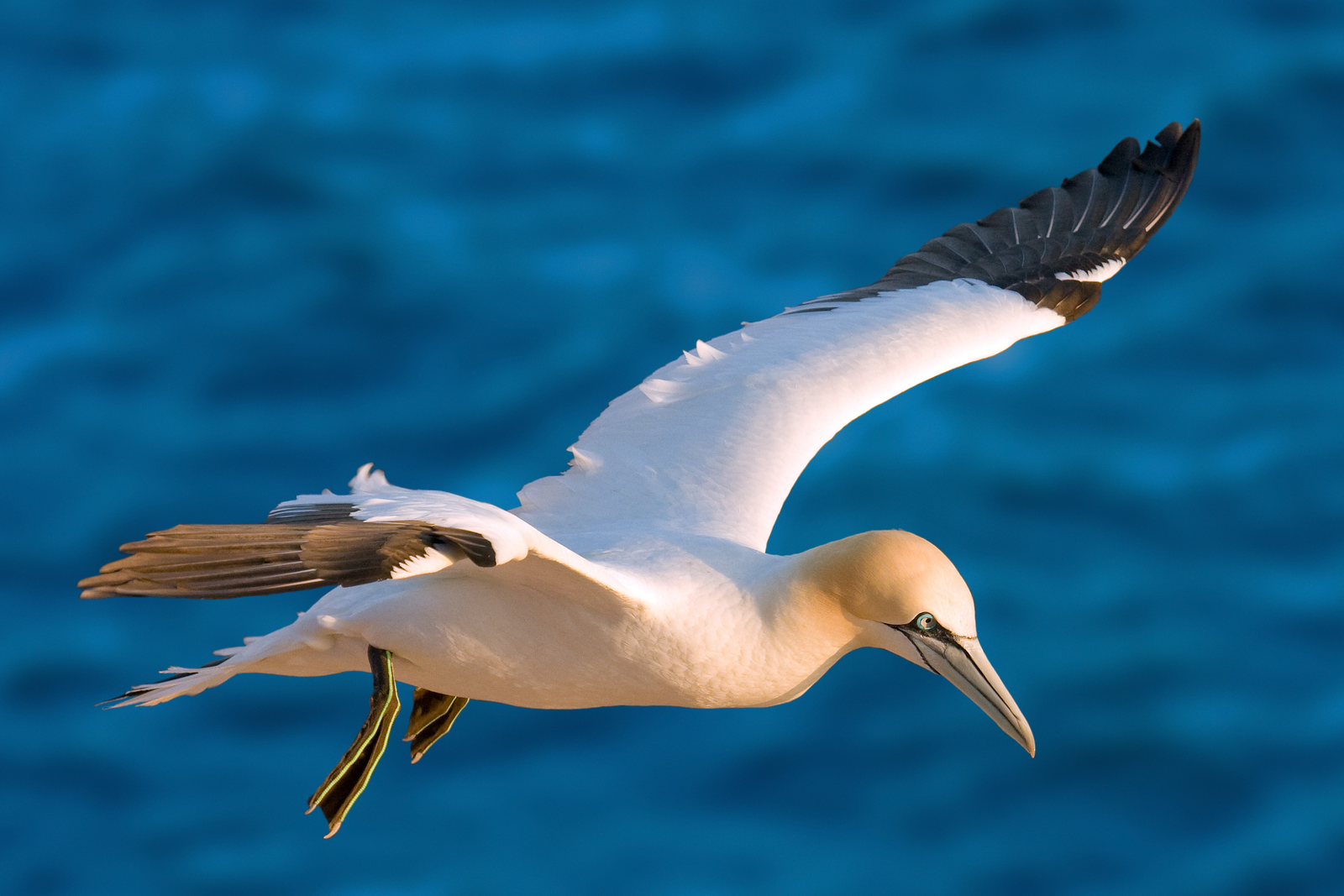
The northern gannet (Morus bassanus) is a bird of the family Sulidae, in the order Suliformes.
Quick answer
The northern gannet (Morus bassanus) is a heavy seabird that plunge-dives from great height into North Atlantic fish shoals. Adults weigh about 3 kg, nest in vast cliff colonies from Canada to Norway, and are listed Least Concern.
Top questions about the Northern Gannet
Northern Gannet facts at a glance
- Weight 3 kg
- Length 90 cm
- Top speed 65 km/h
- Lifespan 22 years
| Scientific name | Morus bassanus |
|---|---|
| Diet | Carnivore |
| Habitat | Coastal cliffs and open ocean |
| Lifespan | 20–25 years |
| Weight | 2.5–3.5 kg |
| Top speed | up to 65 km/h |
| Conservation status | Least Concern (IUCN) |
| Kingdom | Animalia |
|---|---|
| Phylum | Chordata |
| Class | Aves |
| Order | Suliformes |
| Family | Sulidae |
| Genus | Morus |
Where it lives
The northern gannet (Morus bassanus) is native to North Atlantic cliffs from Canada to Scotland and Norway. — recorded across North America, Europe in this guide’s range summary.
For occurrence records, see GBIF species search and sources below.
How big is a northern gannet?
An adult northern gannet measures 90 cm long — about 52% of the height of an average adult person (1.73 m) — and weighs around 3.0 kg, about 4% of an average adult’s body weight (70 kg).
Length vs an average adult’s height (to scale)
What is a group of northern gannets called?
Group name (collective noun)
A group of Northern Gannets is called a gannetry.
Baby name
A baby Northern Gannet is called a guga.
Explore more animal collective nouns and baby animal names .
Spear-like plunge diver
Gannets fold wings and strike the sea from 10–30 m, using air sacs under the skin to cushion impact. Adults are white with black wingtips and a golden head wash; juveniles are dark brown.
Pursuit of pelagic fish
Mackerel, herring, sand eels, and other schooling fish are taken underwater after the plunge. Birds may form large feeding flocks over productive upwellings.
Atlantic cliff cities
Breeding colonies crowd sea cliffs from Maritime Canada and Scotland to Norway — Bass Rock and Bonaventure Island are famous. Non-breeders roam the open North Atlantic year-round.
Fisheries and plastic risk
Least Concern with millions of pairs globally. Bycatch in nets, oil pollution, and ingested plastic still kill birds, but populations remain large and widespread.
Explore the Northern Gannet
Close relatives
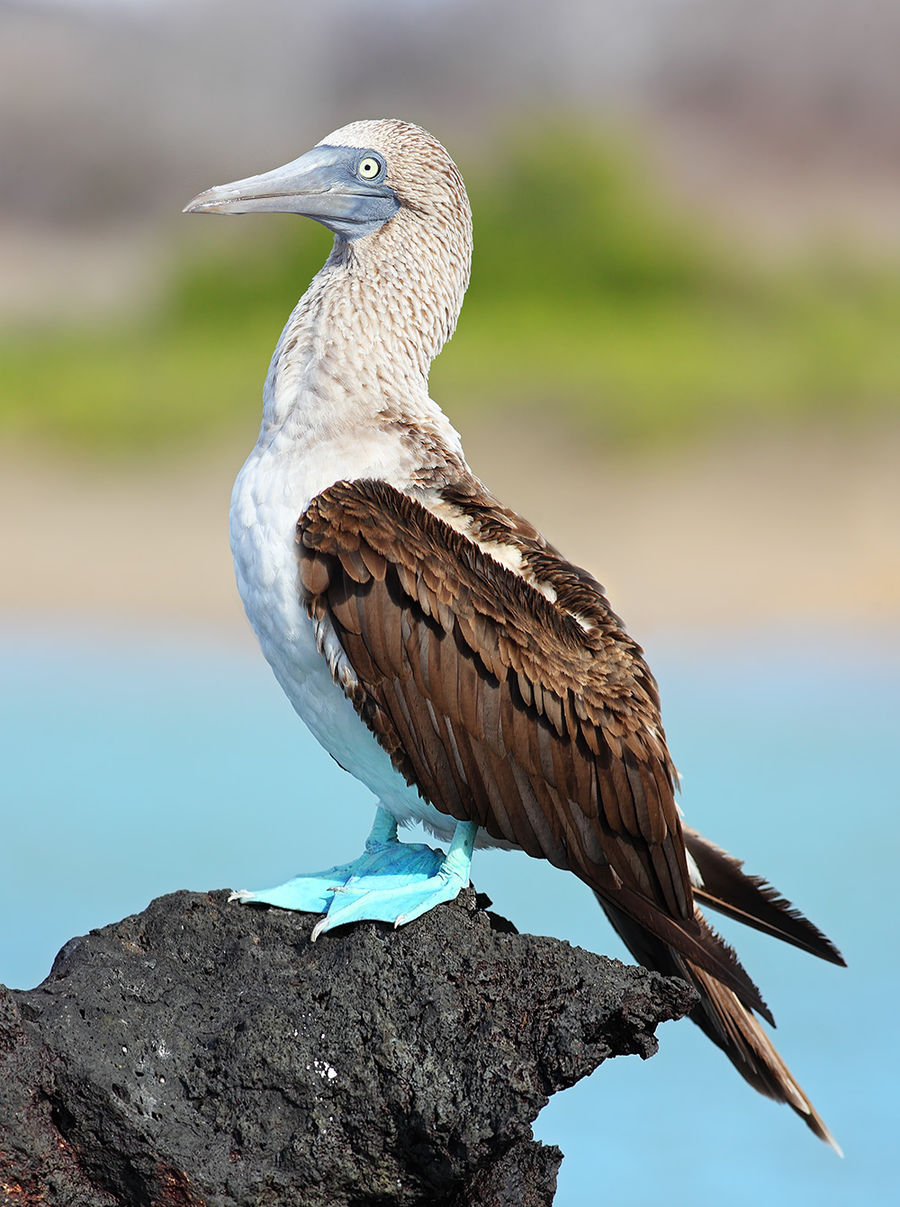
- Blue-footed Booby Same family
- Magnificent Frigatebird Same order
- Chicken Same class
- Wandering Albatross Same class
Conservation status of the Northern Gannet
The northern gannet (Morus bassanus) is listed as Least Concern on the IUCN Red List. Least Concern (LC) is the IUCN's lowest-risk category, assigned to widespread, abundant species that have been evaluated and found not to be threatened. It does not mean a species faces no pressures — only that it is not currently at risk of extinction.
The northern gannet (Morus bassanus) is assessed on the IUCN Red List. Look up on the IUCN Red List .
Frequently asked questions about the Northern Gannet
How deep can gannets dive?
After plunging, they swim underwater to roughly 15 m pursuing fish.
Why do gannets nest on cliffs?
Steep sites reduce predation from foxes and gulls while giving launch points over the sea.
What is the largest gannet colony?
Bass Rock in Scotland and Bonaventure Island in Quebec host tens of thousands of pairs.
How do juvenile gannets differ from adults?
Young birds are dark brown for several years before acquiring adult white plumage.
Do northern gannets migrate?
They disperse widely on the North Atlantic after breeding rather than following a single narrow migration route.
What is a group of northern gannets called?
A group of Northern Gannets is called a gannetry.
What is a baby northern gannet called?
A baby Northern Gannet is called a guga.
Sources & references
This guide is compiled and reviewed against established zoological and conservation references. Key sources for the Northern Gannet:
-
IUCN Red List of Threatened Species
Conservation status (Least Concern) reflects the IUCN Red List category for Morus bassanus.
-
iNaturalist — observations & photos
Search citizen-science observations and community IDs for Morus bassanus. Useful for range checks and recent sightings — not a substitute for formal Red List status.
-
GBIF — occurrence data
Global Biodiversity Information Facility species search for Morus bassanus. Explore published occurrence records used in range research.
-
eBird — bird observations
Cornell Lab eBird target search for Northern Gannet. Check recent checklists and seasonal abundance where birders report this species.
-
Global Animal Guide editorial standards
How we research, source, review, and update every guide for accuracy.