Minke Whale
Balaenoptera acutorostrata
Quick answer
The common minke whale is the smallest baleen whale in the rorqual family, reaching 8–10 m (26–33 ft) and inhabiting oceans from the Arctic to the Antarctic. It feeds on krill and fish, surfaces frequently, and is hunted in limited numbers by Japan, Norway, and Iceland despite global concern.
Minke Whale facts at a glance
| Scientific name | Balaenoptera acutorostrata |
|---|---|
| Diet | Carnivore — krill, small fish, and plankton (filter feeder) |
| Habitat | Coastal and offshore waters of all oceans; polar to temperate |
| Lifespan | 30–50 years |
| Weight | 5,000–10,000 kg (11,000–22,000 lb) |
| Top speed | Up to 35 km/h (22 mph) |
| Conservation status | Least Concern (IUCN) |
| Kingdom | Animalia |
|---|---|
| Phylum | Chordata |
| Class | Mammalia |
| Order | Artiodactyla |
| Family | Balaenopteridae |
| Genus | Balaenoptera |
Where it lives
Common minke in the North Atlantic and North Pacific; dwarf and Antarctic minke in Southern Ocean waters from the ice edge to temperate seas.
What is a group of minke whales called?
Group name (collective noun)
A group of Minke Whales is called a pod.
Baby name
A baby Minke Whale is called a calf.
Explore more animal collective nouns and baby animal names .
Elusive surface behaviour
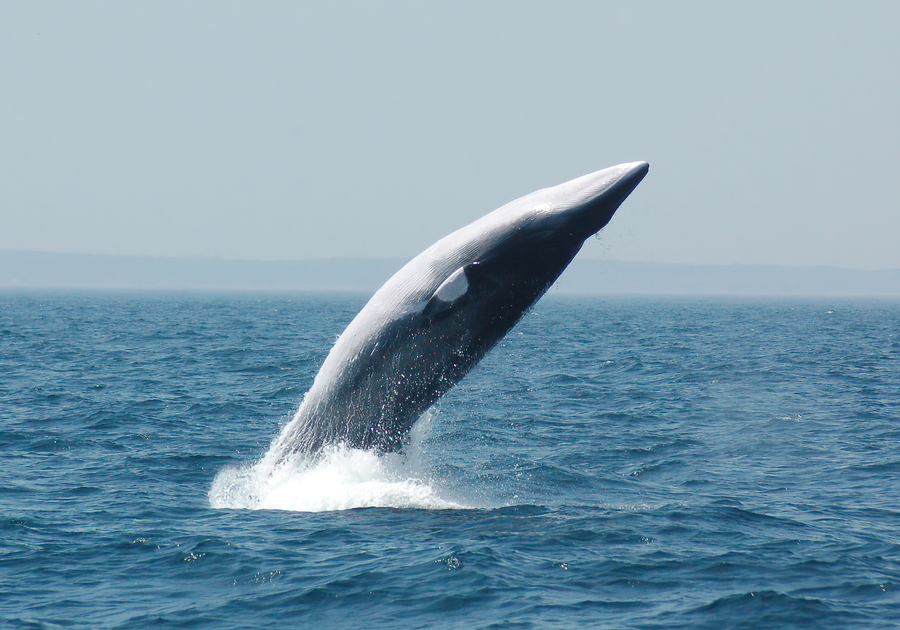
Minke whales surface briefly with little fluke show, making them harder to study than larger whales. They are curious and sometimes approach boats. Pointed snouts and white banding on the flippers distinguish common minkes from the larger Antarctic minke.
Feeding ecology
Minke whales lunge-feed on krill in polar summers and take herring, capelin, and sand eels in temperate waters. Their relatively small size lets them exploit shallow bays and fjords larger rorquals cannot enter as easily.
Whaling controversy
Minke whales were less targeted during industrial whaling's peak but are now the main species hunted by Japan, Norway, and Iceland under objections or reservations to the commercial whaling moratorium. Population impacts are debated by the IWC and conservation groups.
Conservation outlook
Listed Least Concern globally with hundreds of thousands estimated, minke whales still face entanglement, ship strikes, and climate-driven shifts in prey distribution. They are important indicators of ocean health in both polar and temperate ecosystems.
Dig deeper into the Minke Whale
- How Fast Is A Minke Whale
Dig deeper into minke whale — how fast is a minke whale.
- How Long do Minke Whale Live?
Dig deeper into minke whale — how long do minke whale live.
- Minke Whale Facts 5
Dig deeper into minke whale — minke whale facts 5.
- What do Minke Whale Eat
Dig deeper into minke whale — what do minke whale eat.
- Where do Minke Whale Live?
Dig deeper into minke whale — where do minke whale live.
Explore the Minke Whale
Compare
Collections
Did you know? Minke Whale facts
- The common minke whale is the smallest baleen whale in the rorqual family, reaching 8–10 m (26–33 ft) and inhabiting oceans from the Arctic to the Antarctic.
- Common minkes reach about 8–10 m and 5–10 tonnes — small compared with fin or blue whales but still large marine mammals.
- Yes — Japan, Norway, and Iceland hunt minke whales commercially or for research, controversial under international whaling agreements.
- Minke whales are much larger baleen whales that filter feed. Dolphins are toothed whales that hunt individual prey.
- All oceans — common minke in the North Atlantic and North Pacific; Antarctic minke in Southern Ocean ice edges.
- Conservation: Least Concern (IUCN).
Diet & feeding
Minke Whale feeds primarily as a carnivore — krill, small fish, and plankton (filter feeder). Minke whales lunge-feed on krill in polar summers and take herring, capelin, and sand eels in temperate waters. Their relatively small size lets them exploit shallow bays and fjords larger rorquals cannot enter as easily.
Adaptations
- Minke whales surface briefly with little fluke show, making them harder to study than larger whales. They are curious and sometimes approach boats. Pointed snouts and white banding on the flippers distinguish common minkes from the larger Antarctic minke.
- Minke whales lunge-feed on krill in polar summers and take herring, capelin, and sand eels in temperate waters. Their relatively small size lets them exploit shallow bays and fjords larger rorquals cannot enter as easily.
Behaviour & ecology
- Minke whales surface briefly with little fluke show, making them harder to study than larger whales. They are curious and sometimes approach boats. Pointed snouts and white banding on the flippers distinguish common minkes from the larger Antarctic minke.
- Minke whales lunge-feed on krill in polar summers and take herring, capelin, and sand eels in temperate waters. Their relatively small size lets them exploit shallow bays and fjords larger rorquals cannot enter as easily.
- Minke whales were less targeted during industrial whaling's peak but are now the main species hunted by Japan, Norway, and Iceland under objections or reservations to the commercial whaling moratorium. Population impacts are debated by the IWC and conservation groups.
Communication
- Minke Whale uses scent, posture, and vocal signals to mark territory and coordinate social behaviour.
- Communication intensity often peaks during breeding seasons and territorial disputes.
Habitat & range
Coastal and offshore waters of all oceans; polar to temperate
Ecological role
Minke Whale acts as a predator that helps regulate prey populations and maintain balance in coastal and offshore waters of all oceans; polar to temperate.
Frequently asked questions about the Minke Whale
How big is a minke whale?
Common minkes reach about 8–10 m and 5–10 tonnes — small compared with fin or blue whales but still large marine mammals.
Are minke whales hunted?
Yes — Japan, Norway, and Iceland hunt minke whales commercially or for research, controversial under international whaling agreements.
Minke whale vs dolphin?
Minke whales are much larger baleen whales that filter feed. Dolphins are toothed whales that hunt individual prey.
Where do minke whales live?
All oceans — common minke in the North Atlantic and North Pacific; Antarctic minke in Southern Ocean ice edges.
What do minke whales eat?
Krill in polar regions and small schooling fish such as herring and capelin in temperate waters.
What is a group of minke whales called?
A group of Minke Whales is called a pod.
What is a baby minke whale called?
A baby Minke Whale is called a calf.
Sources & references
This guide is compiled and reviewed against established zoological and conservation references. Key sources for the Minke Whale:
-
IUCN Red List of Threatened Species
Conservation status (Least Concern) reflects the IUCN Red List category for Balaenoptera acutorostrata.
- IUCN Red List — Balaenoptera acutorostrata.
Conservation status (Least Concern) and population trends.
- Animal Diversity Web — Balaenoptera acutorostrata. University of Michigan Museum of Zoology.
Life history, morphology, and range.
- Wikipedia — Minke Whale.
General taxonomy and overview (cross-check primary sources).
-
Global Animal Guide editorial standards
How we research, source, review, and update every guide for accuracy.