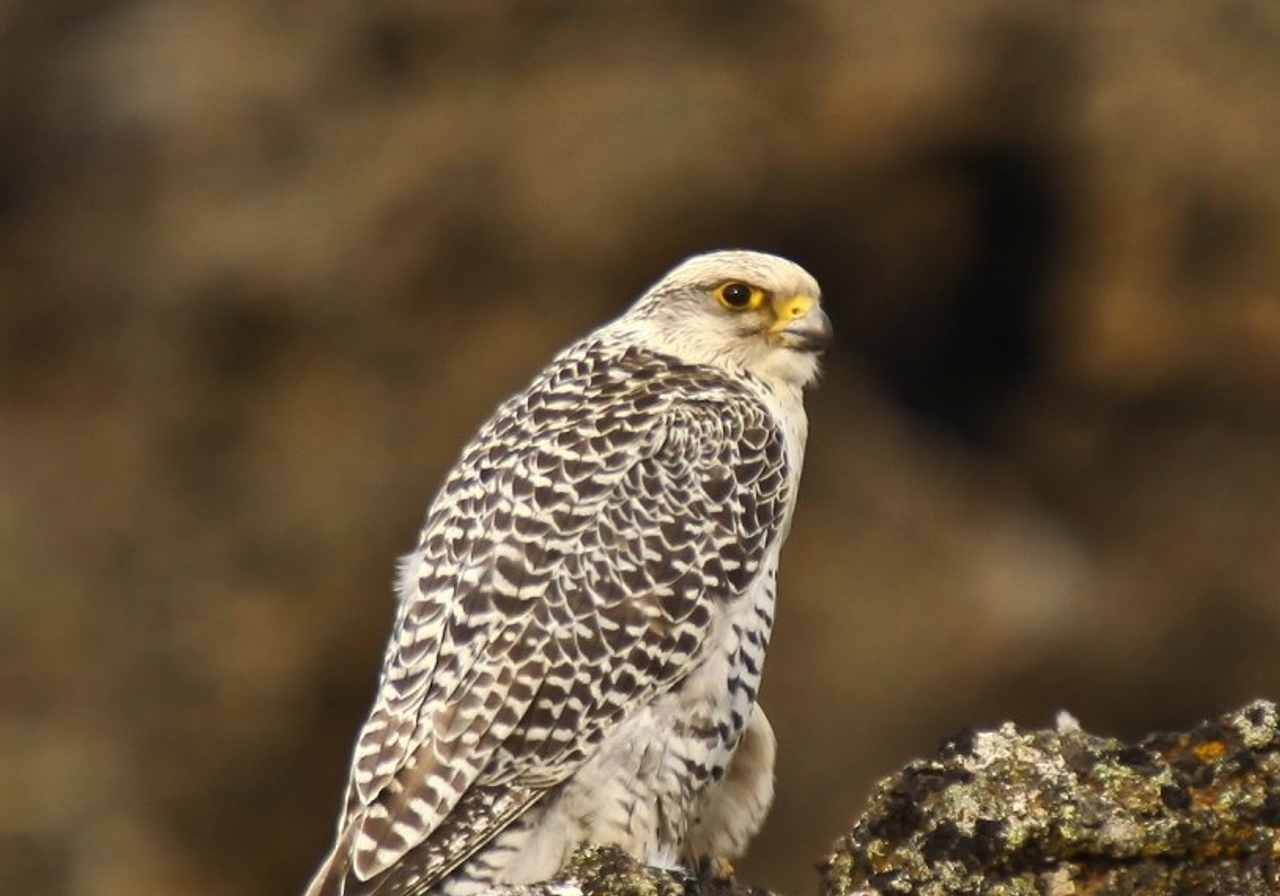
Photo: Falco_rusticolus_white.jpg: Ólafur Larsen derivative work: Bogbumper (talk) · CC BY-SA 2.0 · source · credits
The gyrfalcon (Falco rusticolus) is a bird of the falcon family, Falconidae, in the order Falconiformes.
Quick answer
The gyrfalcon (Falco rusticolus) is the largest falcon in the world, weighing 0.8–2.1 kg. It breeds around the Arctic in North America, Greenland, Iceland, Scandinavia and Russia and comes in white, grey and dark colour forms. It hunts ptarmigan and seabirds in fast, low chases. Gyrfalcons have long been prized in falconry. They are listed as Least Concern.
Top questions about the Gyrfalcon
Gyrfalcon facts at a glance
- Weight 1.4 kg
| Scientific name | Falco rusticolus |
|---|---|
| Diet | Mainly ptarmigan and other birds; Arctic ground squirrels and hares |
| Habitat | Arctic tundra, coasts and mountains |
| Weight | 0.8–2.1 kg; females heavier |
| Oldest known | About 13.5 years (banded wild bird) |
| Range | Around the Arctic |
| Conservation status | Least Concern (IUCN Red List, assessed 2021) |
| Kingdom | Animalia |
|---|---|
| Phylum | Chordata |
| Class | Aves |
| Order | Falconiformes |
| Family | Falconidae |
| Genus | Falco |
Where it lives
The gyrfalcon (Falco rusticolus) is native to Around the Arctic in Alaska, northern Canada, Greenland, Iceland, northern Scandinavia and Russia. — recorded across North America, Europe, Asia in this guide’s range summary.
For occurrence records, see GBIF species search and sources below.
What is a baby gyrfalcon called?
Baby name
A baby Gyrfalcon is called an eyas.
Explore more animal collective nouns and baby animal names .
Three colour forms
Gyrfalcons come in white, grey and dark forms. White birds, nearly pure white with dark flecks, are most frequent in Greenland; dark birds, almost black in some cases, occur in northern Canada; grey birds are found throughout the range.
Arctic hunter
Rather than diving from great heights like the peregrine, the gyrfalcon usually hunts with fast, low flight, chasing ptarmigan and seabirds and wearing them down. It also takes Arctic ground squirrels, lemmings and hares.
Falconry
For centuries gyrfalcons were the most prized falconry birds, reserved in medieval Europe for kings. Wild-caught birds are now protected, and falconry birds are captive-bred.
Status
BirdLife International lists the gyrfalcon as Least Concern (2021), estimating 12,600 to 55,300 mature birds and a stable trend. Changes in Arctic prey populations and climate are potential long-term threats.
Explore the Gyrfalcon
Close relatives
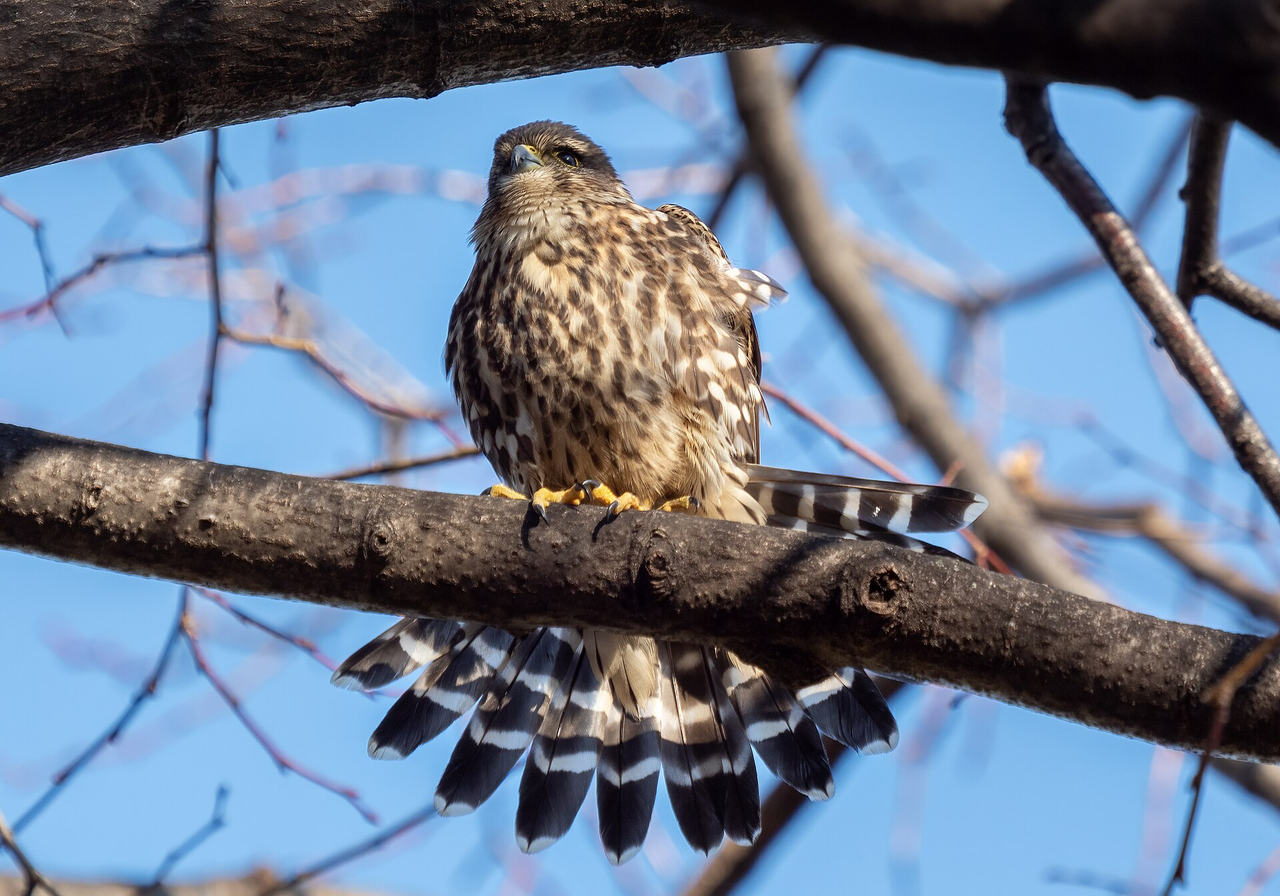
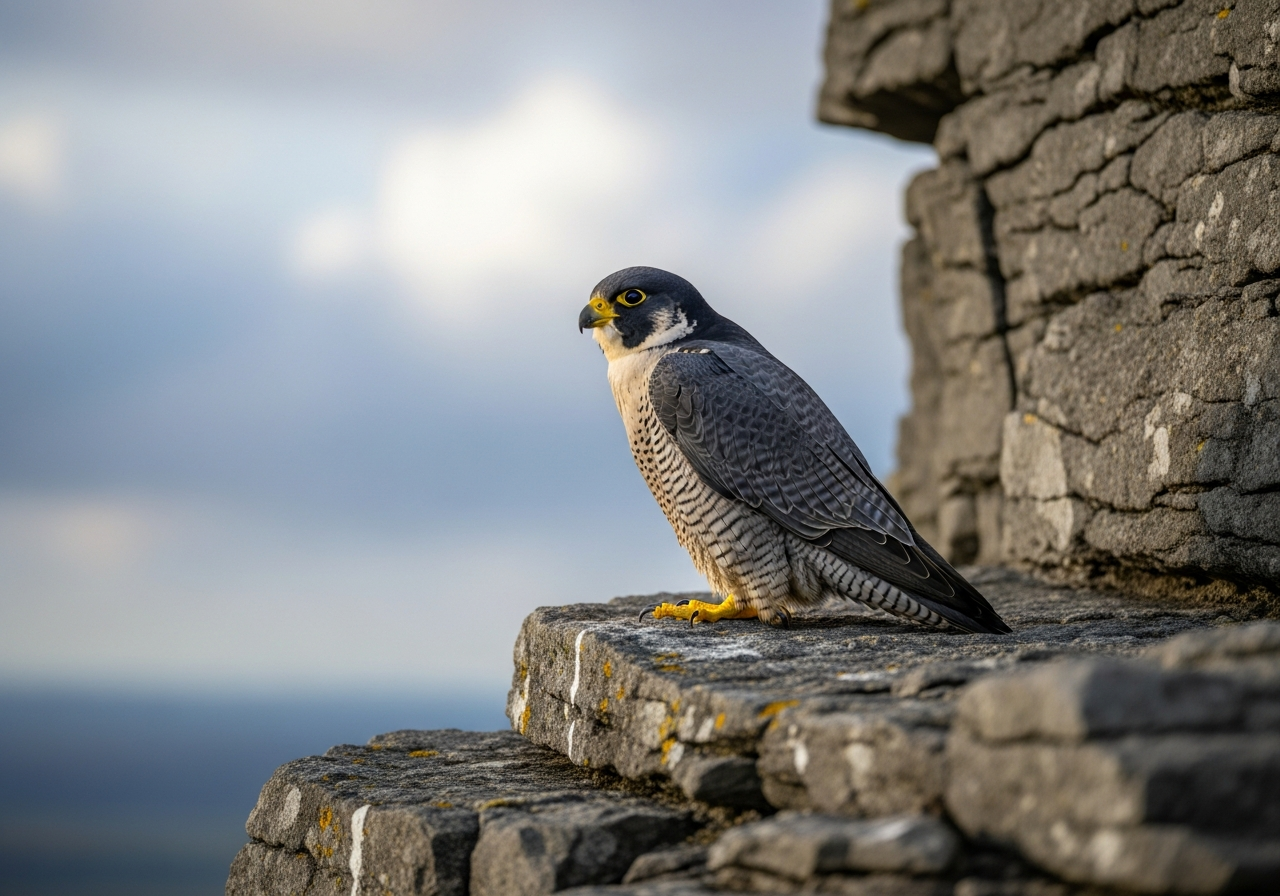
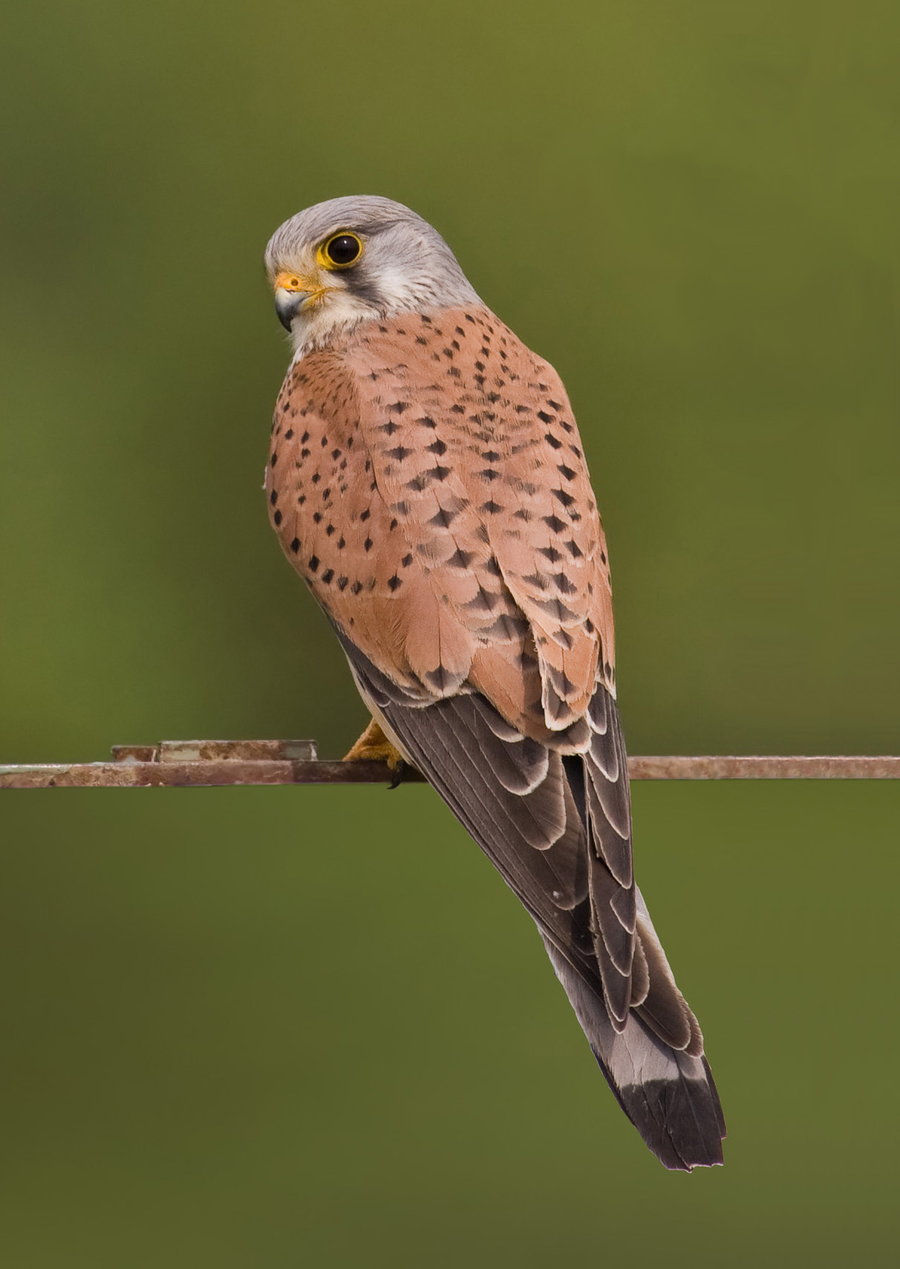
- Common Kestrel Same genus
- Merlin Same genus
- American Kestrel Same genus
- Peregrine Falcon Same genus
Did you know? Gyrfalcon facts
- White gyrfalcons are most frequent in Greenland.
- In medieval Europe gyrfalcons were reserved for royalty in falconry.
Conservation status of the Gyrfalcon
The gyrfalcon (Falco rusticolus) is listed as Least Concern on the IUCN Red List. Least Concern (LC) is the IUCN's lowest-risk category, assigned to widespread, abundant species that have been evaluated and found not to be threatened. It does not mean a species faces no pressures — only that it is not currently at risk of extinction.
Gyrfalcon (Falco rusticolus) was most recently assessed for the IUCN Red List in 2021. Look up on the IUCN Red List .
Frequently asked questions about the Gyrfalcon
What is the largest falcon?
The gyrfalcon, which can weigh up to about 2.1 kg.
Is a gyrfalcon faster than a peregrine?
In level flight gyrfalcons are very fast and powerful, but the peregrine's hunting dive is the fastest recorded movement of any bird.
Where do gyrfalcons live?
Around the Arctic: Alaska, northern Canada, Greenland, Iceland, northern Scandinavia and Russia. Some move south in winter.
How do you say gyrfalcon?
JER-fal-kun.
What is a baby gyrfalcon called?
A baby Gyrfalcon is called an eyas.
Sources & references
This guide is compiled and reviewed against established zoological and conservation references. Key sources for the Gyrfalcon:
-
IUCN Red List of Threatened Species
Conservation status (Least Concern) reflects the IUCN Red List category for Falco rusticolus, most recently assessed in 2021.
-
iNaturalist — observations & photos
Search citizen-science observations and community IDs for Falco rusticolus. Useful for range checks and recent sightings — not a substitute for formal Red List status.
-
GBIF — occurrence data
Global Biodiversity Information Facility species search for Falco rusticolus. Explore published occurrence records used in range research.
-
eBird — bird observations
Cornell Lab eBird target search for Gyrfalcon. Check recent checklists and seasonal abundance where birders report this species.
- BirdLife International (2026). Species factsheet: Gyrfalcon Falco rusticolus. BirdLife DataZone. Checked 1 November 2026.
IUCN Red List category Least Concern (assessed 2021), population estimate and trend.
- Animal Diversity Web: Falco rusticolus. University of Michigan Museum of Zoology.
Size, lifespan and behaviour.
- Tobias, J. A. et al. (2022). AVONET: morphological, ecological and geographical data for all birds. Ecology Letters 25: 581–597. doi:10.1111/ele.13898
Average body mass.
- Gill, F., Donsker, D. & Rasmussen, P. (Eds). IOC World Bird List v15.2.
English and scientific name, classification and range.
-
Global Animal Guide editorial standards
How we research, source, review, and update every guide for accuracy.