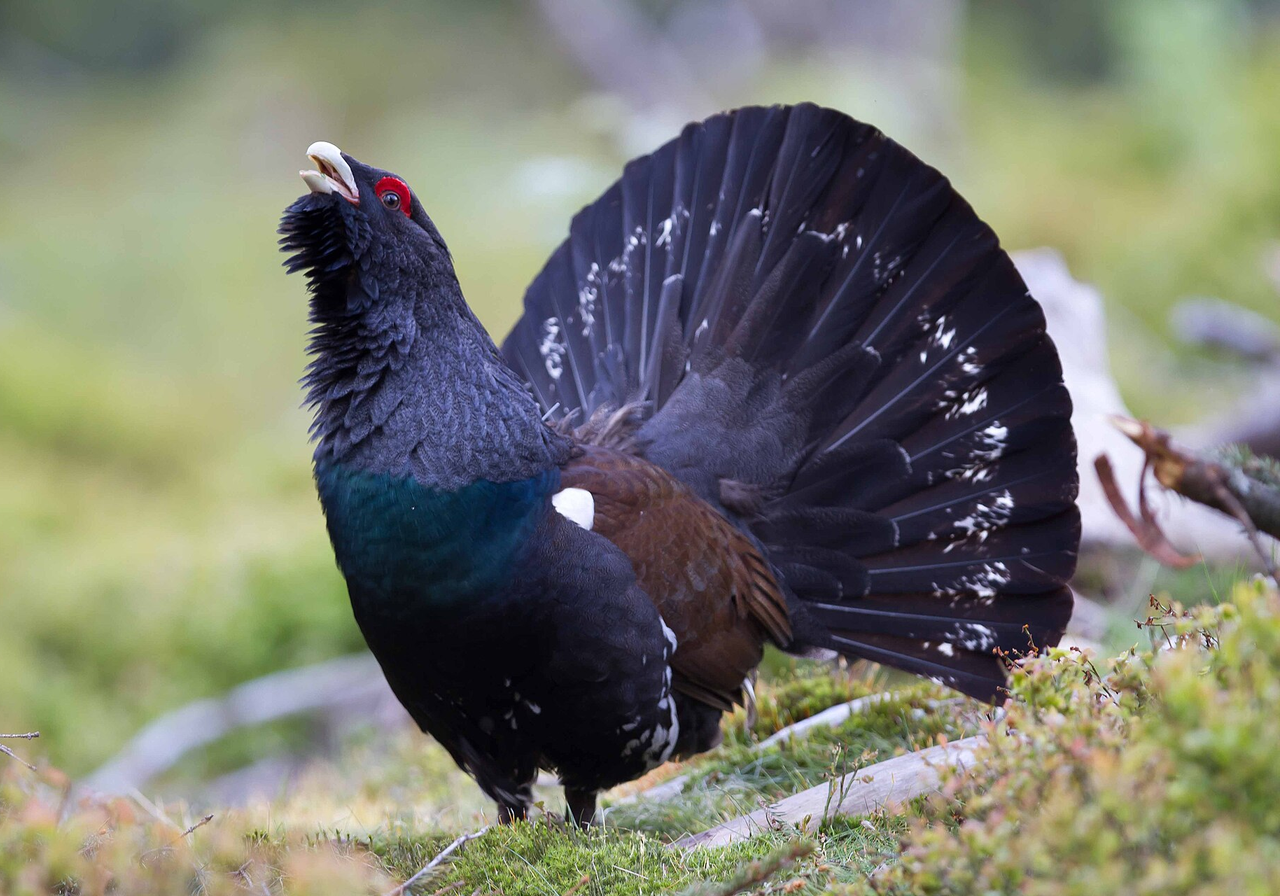
The western capercaillie (Tetrao urogallus) is a bird of the family Phasianidae, in the order Galliformes.
Quick answer
The western capercaillie (Tetrao urogallus) is the world's largest grouse. Males are dark, turkey-sized birds of 4–6.5 kg that fan their tails and give clicking, popping display calls at dawn leks; females are much smaller and barred brown. It lives in old conifer forests from Scotland and Scandinavia to Siberia. It is Least Concern globally but declining, and Scotland's population is down to a few hundred birds.
Top questions about the Western Capercaillie
Western Capercaillie facts at a glance
- Weight 4.1 kg
- Length 86 cm
| Scientific name | Tetrao urogallus |
|---|---|
| Diet | Pine needles in winter; buds, berries and insects in summer |
| Habitat | Old conifer and mixed forest with a rich shrub layer |
| Size | 61–86 cm long; wingspan 87–125 cm |
| Weight | Males about 3.9–6.5 kg; females much smaller |
| Range | Scotland, Scandinavia and the mountains of Europe east to Siberia |
| Conservation status | Least Concern (IUCN Red List, assessed 2024) |
| Kingdom | Animalia |
|---|---|
| Phylum | Chordata |
| Class | Aves |
| Order | Galliformes |
| Family | Phasianidae |
| Genus | Tetrao |
Where it lives
The western capercaillie (Tetrao urogallus) is native to Conifer forests of Scotland, Scandinavia and the mountains of central and southern Europe east across Russia to central Siberia. — recorded across Europe, Asia in this guide’s range summary.
For occurrence records, see GBIF species search and sources below.
How big is a western capercaillie?
An adult western capercaillie measures 86 cm long — about 50% of the height of an average adult person (1.73 m) — and weighs around 4.1 kg, about 6% of an average adult’s body weight (70 kg).
Length vs an average adult’s height (to scale)
What is a baby western capercaillie called?
Baby name
A baby Western Capercaillie is called a chick.
Explore more animal collective nouns and baby animal names .
The biggest grouse
Males are dark slate-grey and black with a glossy green breast, a red wattle over the eye, a pale bill and a long, rounded tail. Females are barred brown and orange, about half the weight, and well camouflaged on the forest floor.
Lekking at dawn
In spring males gather at traditional display grounds called leks. With tails fanned and necks stretched, they perform a song of clicks, a 'cork-popping' note and a grinding wheeze, and fight rivals. Females visit to choose a mate.
Living on pine needles
In winter capercaillie feed almost entirely on conifer needles, especially Scots pine, which few other birds can digest. In summer they eat bilberry, buds and seeds, and the chicks need insects.
Status
BirdLife International lists the species as Least Concern (2024) with 4 to 8.6 million mature birds, but the trend is decreasing. In Scotland it died out in the 18th century, was reintroduced from Sweden in 1837, and has now fallen to a few hundred birds because of habitat loss, fence collisions, predation and wet springs.
Explore the Western Capercaillie
Close relatives
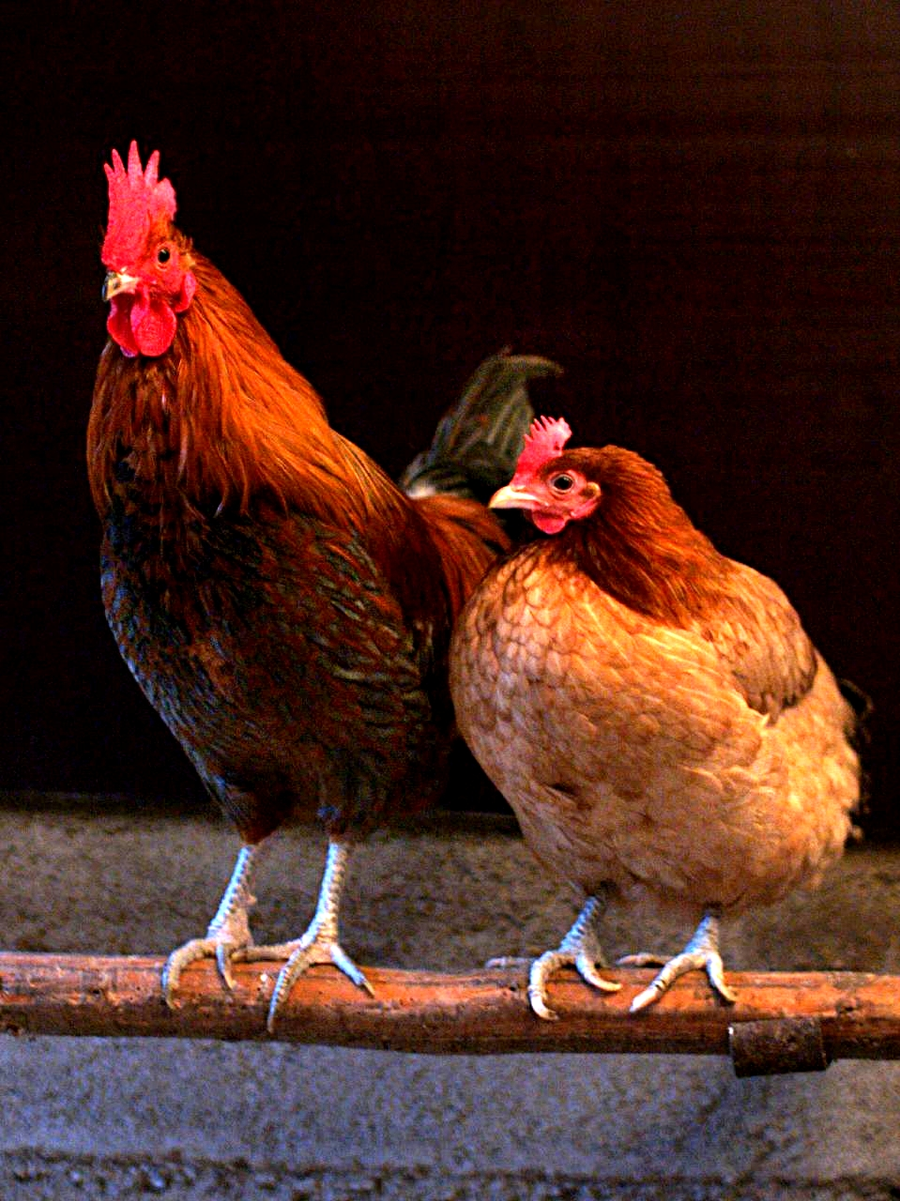
- Chicken Same family
- Rooster Same family
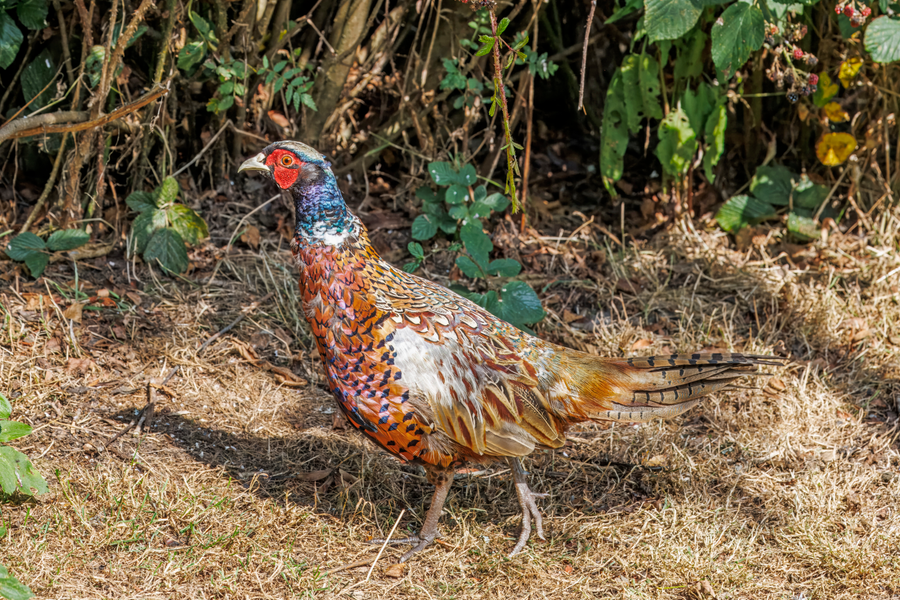
- Common Pheasant Same family
- Peacock Same family
Did you know? Western Capercaillie facts
- In winter capercaillie live almost entirely on pine needles.
- Females weigh about half as much as males.
Conservation status of the Western Capercaillie
The western capercaillie (Tetrao urogallus) is listed as Least Concern on the IUCN Red List. Least Concern (LC) is the IUCN's lowest-risk category, assigned to widespread, abundant species that have been evaluated and found not to be threatened. It does not mean a species faces no pressures — only that it is not currently at risk of extinction.
Western Capercaillie (Tetrao urogallus) was most recently assessed for the IUCN Red List in 2024. Look up on the IUCN Red List .
Frequently asked questions about the Western Capercaillie
What is the largest grouse in the world?
The western capercaillie. Males can weigh about 6.5 kg.
Where can you see capercaillie in the UK?
Only in the Scottish Highlands, mainly the Cairngorms and Strathspey. Disturbance harms them, so visitors are asked to stay on paths and not seek out leks.
What does 'capercaillie' mean?
It comes from the Scottish Gaelic 'capall coille', meaning 'horse of the woods'.
Are capercaillie endangered?
Globally they are Least Concern, but they are declining in much of western Europe and are critically low in Scotland.
What is a baby western capercaillie called?
A baby Western Capercaillie is called a chick.
Sources & references
This guide is compiled and reviewed against established zoological and conservation references. Key sources for the Western Capercaillie:
-
IUCN Red List of Threatened Species
Conservation status (Least Concern) reflects the IUCN Red List category for Tetrao urogallus, most recently assessed in 2024.
-
iNaturalist — observations & photos
Search citizen-science observations and community IDs for Tetrao urogallus. Useful for range checks and recent sightings — not a substitute for formal Red List status.
-
GBIF — occurrence data
Global Biodiversity Information Facility species search for Tetrao urogallus. Explore published occurrence records used in range research.
-
eBird — bird observations
Cornell Lab eBird target search for Western Capercaillie. Check recent checklists and seasonal abundance where birders report this species.
- BirdLife International (2026). Species factsheet: Western Capercaillie Tetrao urogallus. BirdLife DataZone. Checked 1 November 2026.
IUCN Red List category Least Concern (assessed 2024), population estimate and trend.
- Animal Diversity Web: Tetrao urogallus. University of Michigan Museum of Zoology.
Size, lifespan and behaviour.
- BTO BirdFacts: Capercaillie. British Trust for Ornithology.
Typical lifespan, oldest ringed bird and UK body weight.
- Tobias, J. A. et al. (2022). AVONET: morphological, ecological and geographical data for all birds. Ecology Letters 25: 581–597. doi:10.1111/ele.13898
Average body mass.
- Gill, F., Donsker, D. & Rasmussen, P. (Eds). IOC World Bird List v15.2.
English and scientific name, classification and range.
-
Global Animal Guide editorial standards
How we research, source, review, and update every guide for accuracy.