Image sourcing: see credits & licences
The great tit (Parus major) is a bird of the family Paridae, in the order Passeriformes.
Quick answer
The great tit (Parus major) is a bold black-capped tit of Eurasian woodlands and gardens from Europe to East Asia. Larger than a blue tit, it takes insects and seeds, drums on feeders, and sings a ringing "teacher-teacher" song. Listed Least Concern and a model species for evolutionary research.
Top questions about the Great Tit
Great Tit facts at a glance
- Weight 18 g
- Length 14 cm
- Top speed 30 km/h
- Lifespan 3 years
| Scientific name | Parus major |
|---|---|
| Diet | Omnivore (insects and seeds) |
| Habitat | Woodland, parks, and gardens |
| Lifespan | Around 3 years in the wild (varies by population and captivity). |
| Weight | About 0.018 kg typical adult mass (sex and region vary). |
| Top speed | Up to roughly 30 km/h when moving at speed. |
| Conservation status | Least Concern (IUCN) |
| Kingdom | Animalia |
|---|---|
| Phylum | Chordata |
| Class | Aves |
| Order | Passeriformes |
| Family | Paridae |
| Genus | Parus |
Where it lives
The great tit (Parus major) is native to Woodland and gardens from Europe to East Asia and into North Africa. — recorded across Europe, Asia in this guide’s range summary.
For occurrence records, see GBIF species search and sources below.
How big is a great tit?
An adult great tit measures 14 cm long — about 8% of the height of an average adult person (1.73 m) — and weighs around 18 g, a small fraction of an average adult’s body weight (70 kg).
Length vs an average adult’s height (to scale)
What is a group of great tits called?
Group name (collective noun)
A group of Great Tits is called a band.
Baby name
A baby Great Tit is called a chick.
Explore more animal collective nouns and baby animal names .
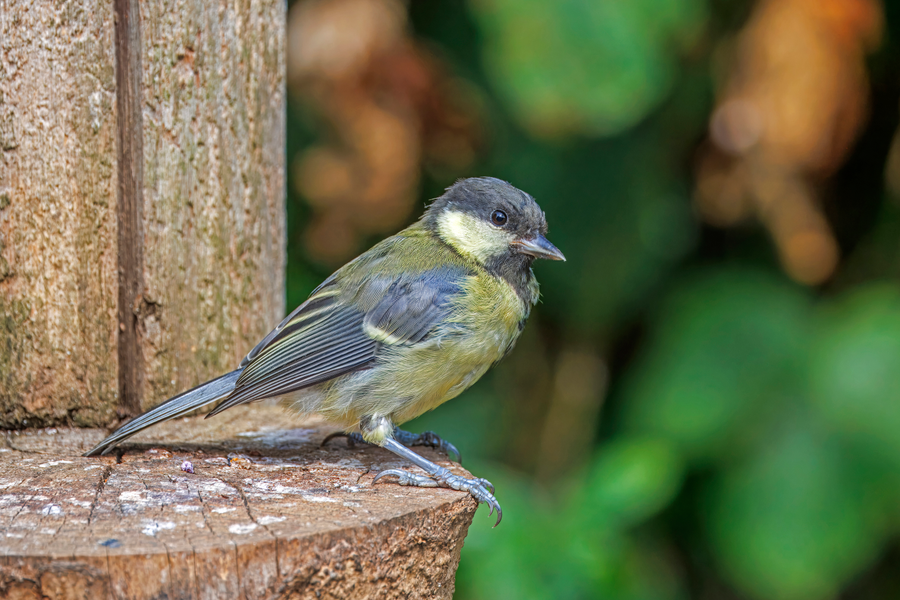
Black tie and white cheeks
A broad black band down the yellow belly helps sex birds — wider in males. They dominate smaller tits at feeders and nest in cavities and boxes.
Insects plus winter seeds
Breeding diet is rich in caterpillars and other invertebrates; in winter they switch more to seeds and beech mast, and visit peanut feeders.
Europe to East Asia
Woodland, parks, and gardens from Europe across temperate Asia into North Africa — one of the widest ranges of any tit. Across its range it is tied to woodland, parks, and gardens, and field accounts emphasise this species’ distinctive ecology rather than generic habitat labels.
Science celebrity
Least Concern and abundant; decades of nest-box studies in Europe made great tits a flagship for research on clutch size, song, and climate responses.
Explore the Great Tit
Close relatives
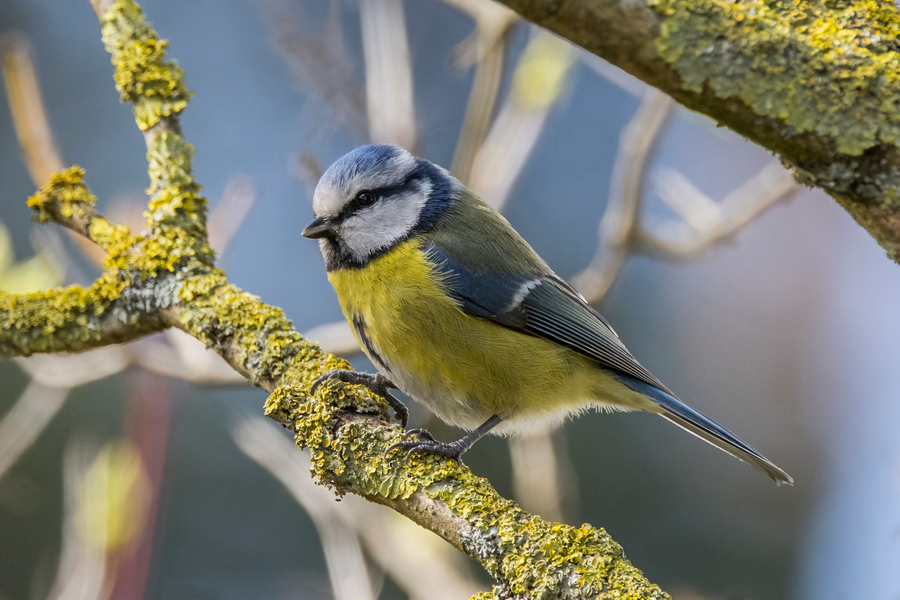
- Blue Tit Same family
- Canary Same order
- House Sparrow Same order
- Superb Lyrebird Same order
Range & geography
Conservation status of the Great Tit
The great tit (Parus major) is listed as Least Concern on the IUCN Red List. Least Concern (LC) is the IUCN's lowest-risk category, assigned to widespread, abundant species that have been evaluated and found not to be threatened. It does not mean a species faces no pressures — only that it is not currently at risk of extinction.
The great tit (Parus major) is assessed on the IUCN Red List. Look up on the IUCN Red List .
Frequently asked questions about the Great Tit
How do you tell great tits from blue tits?
Great tits are larger with a black crown and a black stripe down the belly; blue tits have a blue cap and lack the full belly stripe.
What does a great tit song sound like?
A clear, repeated two-note phrase often rendered as "teacher-teacher" or "tea-cher".
Do great tits eat peanuts?
Yes — they are regular visitors to garden peanut and seed feeders.
Are great tits aggressive?
They can dominate smaller birds at feeders and defend nest cavities vigorously.
Where do great tits live?
From Europe to East Asia in woodland, parks, and gardens.
What is a group of great tits called?
A group of Great Tits is called a band.
What is a baby great tit called?
A baby Great Tit is called a chick.
Sources & references
This guide is compiled and reviewed against established zoological and conservation references. Key sources for the Great Tit:
-
IUCN Red List of Threatened Species
Conservation status (Least Concern) reflects the IUCN Red List category for Parus major.
-
iNaturalist — observations & photos
Search citizen-science observations and community IDs for Parus major. Useful for range checks and recent sightings — not a substitute for formal Red List status.
-
GBIF — occurrence data
Global Biodiversity Information Facility species search for Parus major. Explore published occurrence records used in range research.
-
eBird — bird observations
Cornell Lab eBird target search for Great Tit. Check recent checklists and seasonal abundance where birders report this species.
-
Global Animal Guide editorial standards
How we research, source, review, and update every guide for accuracy.