Image sourcing: see credits & licences
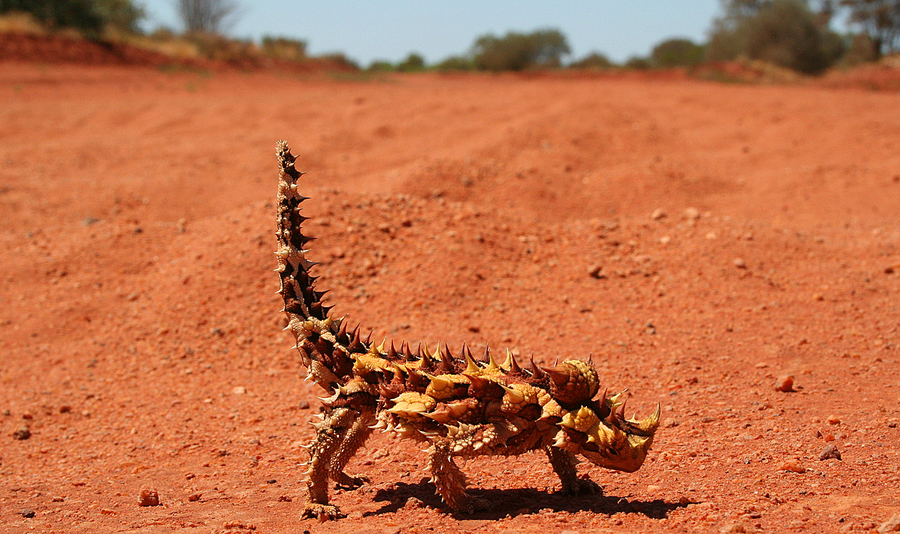
The thorny devil (Moloch horridus) is a reptile of the family Agamidae, in the order Squamata.
Quick answer
The thorny devil (Moloch horridus) is a tiny, spine-covered Australian desert lizard that drinks by channelling dew and rain along skin grooves to the corner of the mouth. It eats almost nothing but ants, weighs about 50 g, and is listed Least Concern across arid Western and Central Australia.
Top questions about the Thorny Devil
Thorny Devil facts at a glance
- Weight 50 g
- Length 20 cm
- Top speed 3 km/h
- Lifespan 15 years
| Scientific name | Moloch horridus |
|---|---|
| Diet | Ants |
| Habitat | Spinifex desert and sandy scrub |
| Lifespan | Around 15 years in the wild (varies by population and captivity). |
| Weight | About 0.05 kg typical adult mass (sex and region vary). |
| Top speed | Up to roughly 3 km/h when moving at speed. |
| Conservation status | Least Concern (IUCN) |
| Kingdom | Animalia |
|---|---|
| Phylum | Chordata |
| Class | Reptilia |
| Order | Squamata |
| Family | Agamidae |
| Genus | Moloch |
Where it lives
The thorny devil (Moloch horridus) is native to Arid interior of Western and Central Australia. — recorded across Oceania in this guide’s range summary.
For occurrence records, see GBIF species search and sources below.
How big is a thorny devil?
An adult thorny devil measures 20 cm long — about 12% of the height of an average adult person (1.73 m) — and weighs around 50 g, a small fraction of an average adult’s body weight (70 kg).
Length vs an average adult’s height (to scale)
What is a group of thorny devils called?
Group name (collective noun)
A group of Thorny Devils is called a lounge.
Baby name
A baby Thorny Devil is called a hatchling.
Explore more animal collective nouns and baby animal names .
Skin that drinks
Capillary grooves between scales move water from any part of the body to the mouth — a desert adaptation for sipping dew and brief rain. A false head on the neck may deflect predator bites.
Ants, ants, ants
Diet is almost exclusively ants, often picked singly with a sticky tongue as the lizard sits by foraging trails. Thousands may be eaten in a day.
Spinifex deserts
Arid interior of Western and Central Australia on sandy scrub and spinifex plains. Colour shifts subtly between yellows and browns with temperature and background.
Desert specialist still widespread
Least Concern, though local impacts from feral predators and off-road disturbance occur. They are fully protected from collection in Australian states.
Explore the Thorny Devil
Close relatives
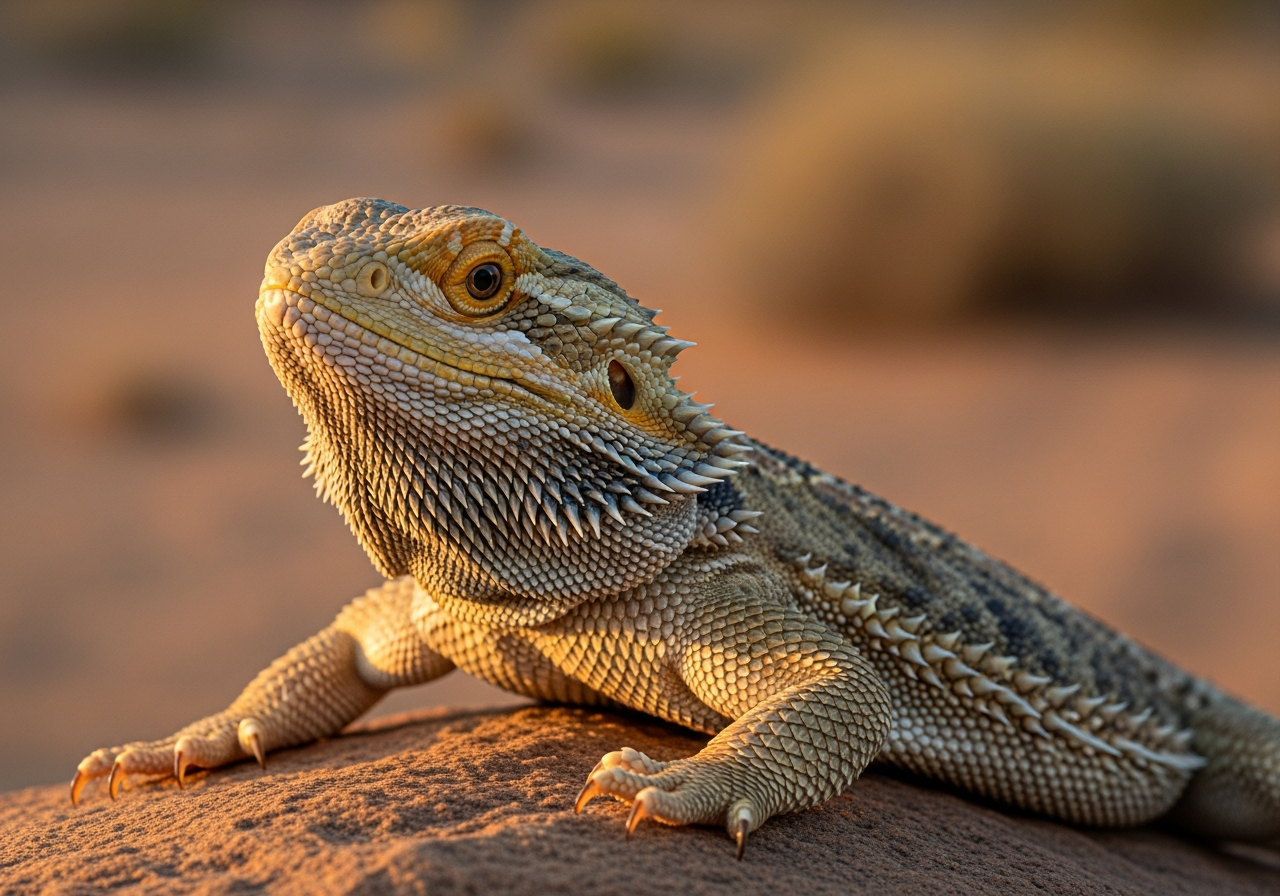
- Bearded Dragon Same family
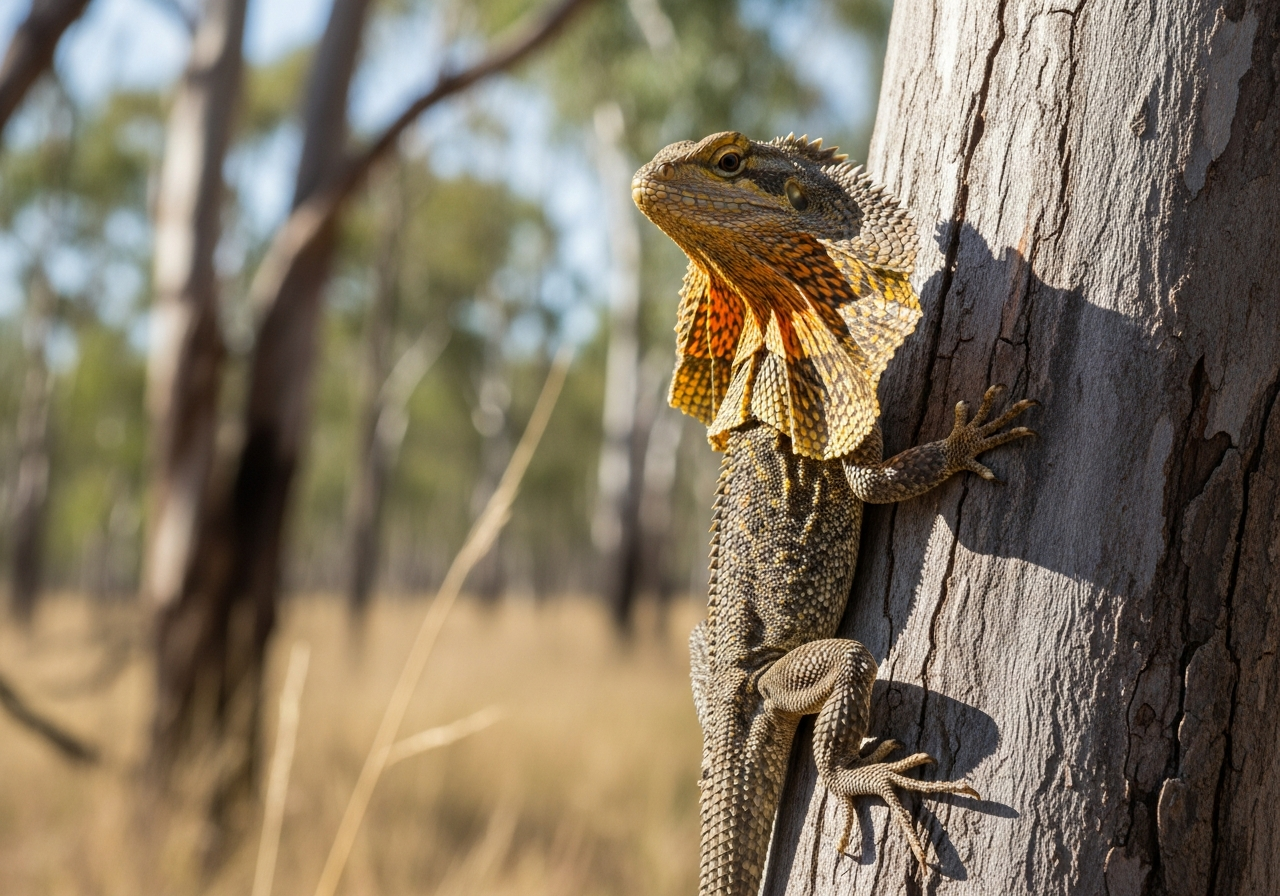
- Frilled Lizard Same family
- Black Mamba Same order
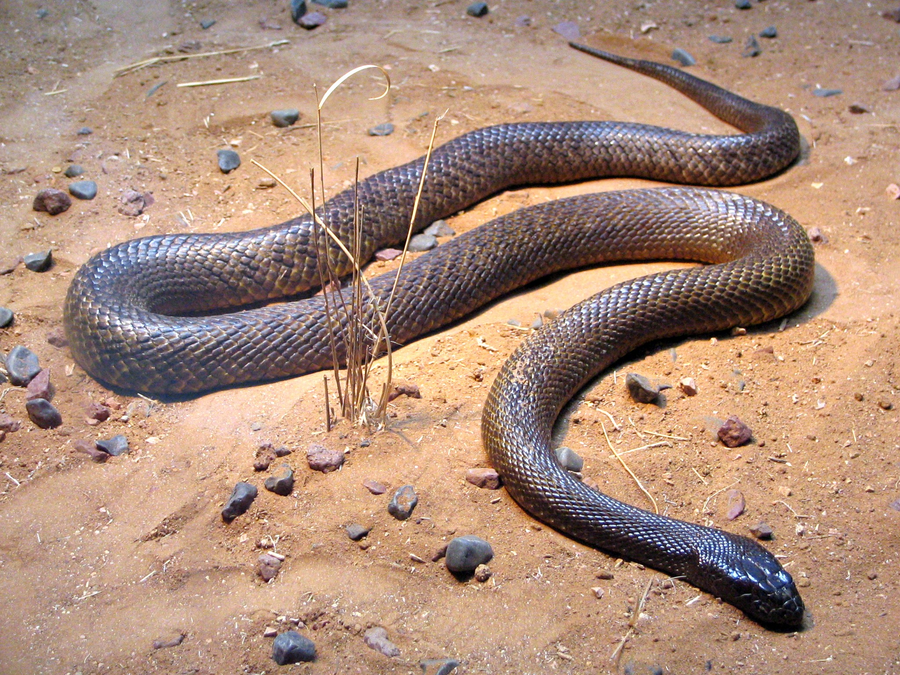
- Inland Taipan Same order
Range & geography
Conservation status of the Thorny Devil
The thorny devil (Moloch horridus) is listed as Least Concern on the IUCN Red List. Least Concern (LC) is the IUCN's lowest-risk category, assigned to widespread, abundant species that have been evaluated and found not to be threatened. It does not mean a species faces no pressures — only that it is not currently at risk of extinction.
The thorny devil (Moloch horridus) is assessed on the IUCN Red List. Look up on the IUCN Red List .
Frequently asked questions about the Thorny Devil
How do thorny devils drink without ponds?
Skin channels move dew and rainwater by capillary action to the mouth.
What do thorny devils eat?
Almost exclusively ants.
Why do thorny devils have a lump on the neck?
The "false head" may encourage predators to strike a less vulnerable spot while the real head is tucked.
Are thorny devils venomous?
No — spines are defensive, not venomous for the thorny devil.
Where do thorny devils live?
Arid Western and Central Australia in sandy spinifex country. Native range summary: Arid interior of Western and Central Australia.
What is a group of thorny devils called?
A group of Thorny Devils is called a lounge.
What is a baby thorny devil called?
A baby Thorny Devil is called a hatchling.
Sources & references
This guide is compiled and reviewed against established zoological and conservation references. Key sources for the Thorny Devil:
-
IUCN Red List of Threatened Species
Conservation status (Least Concern) reflects the IUCN Red List category for Moloch horridus.
-
iNaturalist — observations & photos
Search citizen-science observations and community IDs for Moloch horridus. Useful for range checks and recent sightings — not a substitute for formal Red List status.
-
GBIF — occurrence data
Global Biodiversity Information Facility species search for Moloch horridus. Explore published occurrence records used in range research.
-
Global Animal Guide editorial standards
How we research, source, review, and update every guide for accuracy.