Giant Clam
Tridacna gigas
Quick answer
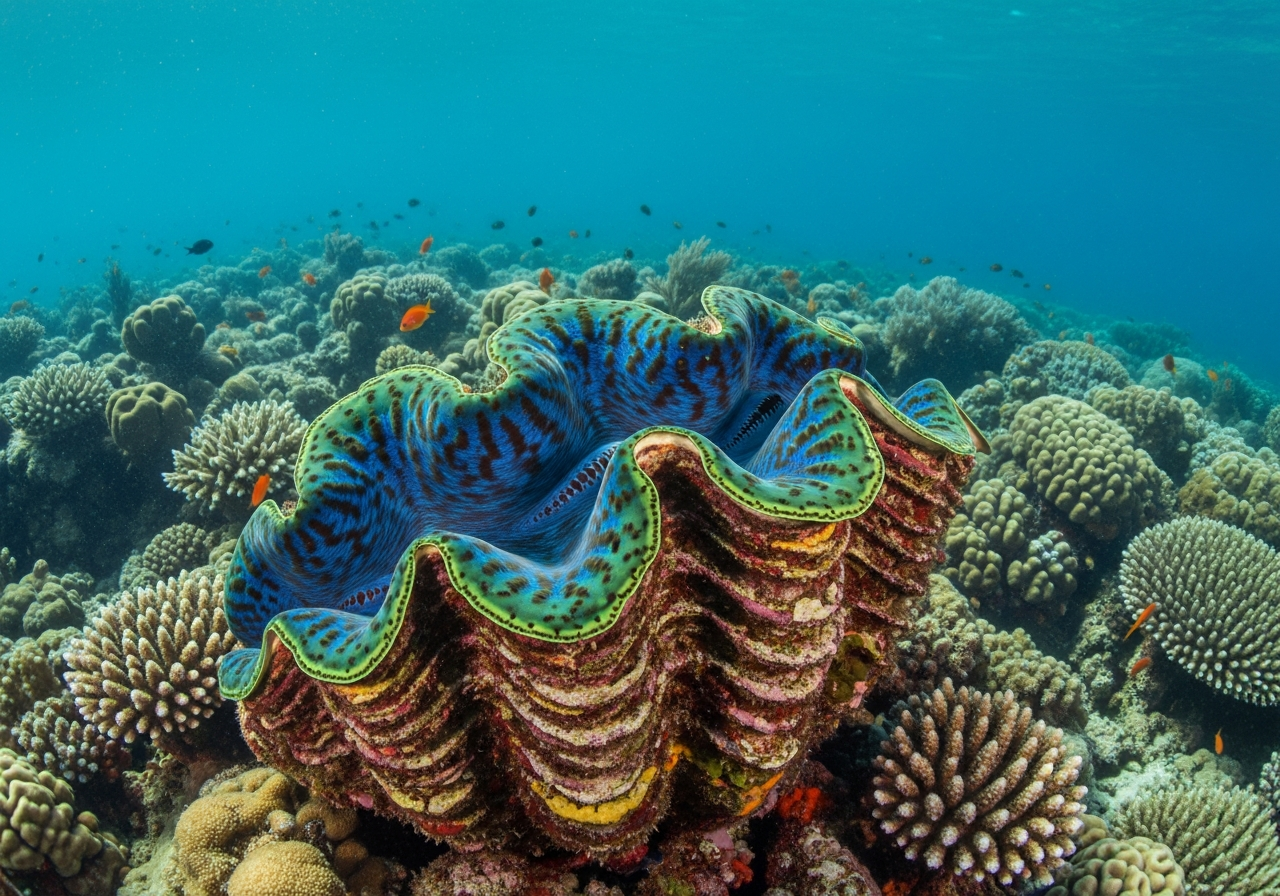
The giant clam is the largest living bivalve mollusk, growing over 1.2 m (4 ft) wide and weighing more than 200 kg (440 lb). It lives anchored to coral reefs in the warm Indo-Pacific, where it feeds partly by filtering water and partly through algae living in its colorful tissue. Giant clams grow slowly and can live more than 100 years.
Giant Clam facts at a glance
| Scientific name | Tridacna gigas |
|---|---|
| Diet | Filter feeder plus algae symbionts |
| Habitat | Coral reefs of the warm Indo-Pacific |
| Lifespan | Often 100+ years |
| Size | Over 1.2 m (4 ft) wide |
| Weight | Up to 200 kg (440 lb) or more |
| Conservation status | Vulnerable (IUCN) |
| Kingdom | Animalia |
|---|---|
| Phylum | Mollusca |
| Class | Bivalvia |
| Order | Cardiida |
| Family | Cardiidae |
| Genus | Tridacna |
What is a group of giant clams called?
Group name (collective noun)
A group of Giant Clams is called a bed.
Baby name
A baby Giant Clam is called a larva. It may also be called a veliger.
Explore more animal collective nouns and baby animal names .
The largest bivalve
The giant clam is the biggest of all living bivalve mollusks, with two heavy, ribbed shells joined by a hinge. Once it settles on a reef as a young clam, it stays fixed in place for the rest of its life. Its huge shells can weigh hundreds of kilograms and outlast the animal itself.
A partnership with algae
Much of the giant clam's food comes from tiny algae called zooxanthellae that live inside its brightly colored mantle tissue. The algae photosynthesize using sunlight and share sugars with the clam, which is why giant clams live in clear, shallow, sunlit reef water. The clam also filters plankton from the water for extra nutrition.
Colorful and harmless
The exposed mantle of a giant clam can be vivid blue, green, gold, or brown, with patterns created partly by the algae and by light-sensing cells. Despite old myths about clams trapping divers, giant clams close too slowly to be a danger and cannot hold a person. They simply pull their mantle in and shut gradually when disturbed.
Conservation
Giant clams grow slowly and are threatened by overharvesting for food, shells, and the aquarium trade, as well as by reef damage. They are listed as Vulnerable and protected under international trade rules, with farming and reef restocking helping some populations recover. Healthy reefs are essential to their survival.
Dig deeper into the Giant Clam
- Are Giant Clam Endangered
Dig deeper into giant clam — are giant clam endangered.
- How Long do Giant Clam Live?
Dig deeper into giant clam — how long do giant clam live.
- What do Giant Clam Eat
Dig deeper into giant clam — what do giant clam eat.
- Where do Giant Clam Live?
Dig deeper into giant clam — where do giant clam live.
Explore the Giant Clam
Related Invertebrates
Collections
Range & geography
Did you know? Giant Clam facts
- The giant clam is the largest living bivalve mollusk, growing over 1.2 m (4 ft) wide and weighing more than 200 kg (440 lb).
- Giant clams are the largest living bivalves, growing more than 1.2 m (4 ft) wide and weighing over 200 kg (440 lb). They reach this size by growing slowly over many decades.
- No. Despite old myths, giant clams close their shells far too slowly to trap a diver and cannot hold a person. When disturbed, they simply retract their mantle and shut gradually.
- Giant clams get much of their food from algae living in their tissue, which photosynthesize and share sugars with the clam. They also filter plankton from the surrounding water.
- Giant clams grow slowly and can live more than 100 years in the wild. Their large shells can persist long after the animal has died.
- Conservation: Vulnerable (IUCN).
Diet & feeding
Giant Clam feeds primarily as a filter feeder plus algae symbionts. The exposed mantle of a giant clam can be vivid blue, green, gold, or brown, with patterns created partly by the algae and by light-sensing cells. Despite old myths about clams trapping divers, giant clams close too slowly to be a danger and cannot hol
Adaptations
- The giant clam is the biggest of all living bivalve mollusks, with two heavy, ribbed shells joined by a hinge. Once it settles on a reef as a young clam, it stays fixed in place for the rest of its life. Its huge shells can weigh hundreds of kilograms and outlast the animal itself.
- Much of the giant clam's food comes from tiny algae called zooxanthellae that live inside its brightly colored mantle tissue. The algae photosynthesize using sunlight and share sugars with the clam, which is why giant clams live in clear, shallow, sunlit reef water. The clam also filters plankton from the water for extra nutrition.
Behaviour & ecology
- The giant clam is the biggest of all living bivalve mollusks, with two heavy, ribbed shells joined by a hinge. Once it settles on a reef as a young clam, it stays fixed in place for the rest of its life. Its huge shells can weigh hundreds of kilograms and outlast the animal itself.
- Much of the giant clam's food comes from tiny algae called zooxanthellae that live inside its brightly colored mantle tissue. The algae photosynthesize using sunlight and share sugars with the clam, which is why giant clams live in clear, shallow, sunlit reef water. The clam also filters plankton from the water for extra nutrition.
- The exposed mantle of a giant clam can be vivid blue, green, gold, or brown, with patterns created partly by the algae and by light-sensing cells. Despite old myths about clams trapping divers, giant clams close too slowly to be a danger and cannot hold a person. They simply pull their mantle in and shut gradually when disturbed.
Communication
- Giant Clam uses scent, posture, and vocal signals to mark territory and coordinate social behaviour.
- Communication intensity often peaks during breeding seasons and territorial disputes.
Habitat & range
Coral reefs of the warm Indo-Pacific
Ecological role
Giant Clam plays a recognised ecological role in coral reefs of the warm indo-pacific.
Conservation status of the Giant Clam
Vulnerable (VU) means a species faces a high risk of extinction in the medium-term future. It is the lowest-risk of the three 'threatened' IUCN categories — one step below Endangered, which is itself below Critically Endangered — and is often an early warning that a population is in trouble.
The giant clam (Tridacna gigas) is assessed on the IUCN Red List. Look up on the IUCN Red List .
Frequently asked questions about the Giant Clam
How big do giant clams get?
Giant clams are the largest living bivalves, growing more than 1.2 m (4 ft) wide and weighing over 200 kg (440 lb). They reach this size by growing slowly over many decades.
Can a giant clam trap a person?
No. Despite old myths, giant clams close their shells far too slowly to trap a diver and cannot hold a person. When disturbed, they simply retract their mantle and shut gradually.
What do giant clams eat?
Giant clams get much of their food from algae living in their tissue, which photosynthesize and share sugars with the clam. They also filter plankton from the surrounding water.
How long do giant clams live?
Giant clams grow slowly and can live more than 100 years in the wild. Their large shells can persist long after the animal has died.
Are giant clams endangered?
Giant clams are listed as Vulnerable by the IUCN due to overharvesting and reef damage. They are protected under international trade rules, and clam farming helps support struggling populations.
What is a group of giant clams called?
A group of Giant Clams is called a bed.
What is a baby giant clam called?
A baby Giant Clam is called a larva. It may also be called a veliger.
Sources & references
This guide is compiled and reviewed against established zoological and conservation references. Key sources for the Giant Clam:
-
IUCN Red List of Threatened Species
Conservation status (Vulnerable) reflects the IUCN Red List category for Tridacna gigas.
- IUCN Red List — Tridacna gigas.
Conservation status (Vulnerable) and population trends.
- Animal Diversity Web — Tridacna gigas. University of Michigan Museum of Zoology.
Life history, morphology, and range.
- Wikipedia — Giant Clam.
General taxonomy and overview (cross-check primary sources).
-
Global Animal Guide editorial standards
How we research, source, review, and update every guide for accuracy.