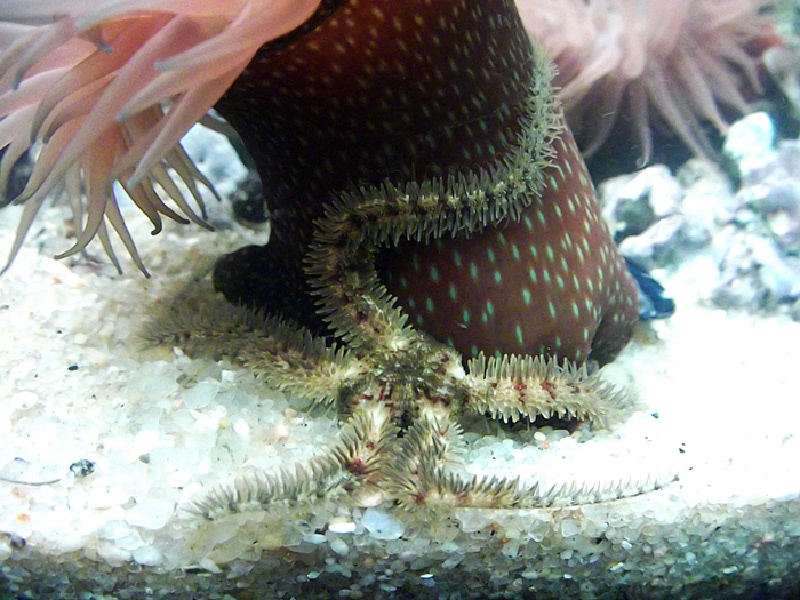
Image sourcing: see credits & licences
The feather star (Antedon bifida) is an echinoderm of the family Antedonidae, in the order Comatulida.
Quick answer
The common feather star (Antedon bifida) is a crinoid that walks on cirri while waving feathered arms to filter plankton. Adults reach 15 cm arm span and are Least Concern.
Top questions about the Feather Star
Feather Star facts at a glance
- Weight 20 g
- Length 15 cm
- Top speed 1 km/h
- Lifespan 8 years
| Scientific name | Antedon bifida |
|---|---|
| Diet | Filter feeder |
| Habitat | Rocky reefs |
| Lifespan | 5–10 years |
| Weight | 0.01–0.03 kg |
| Top speed | up to 1 km/h |
| Conservation status | Least Concern (IUCN) |
| Kingdom | Animalia |
|---|---|
| Phylum | Echinodermata |
| Class | Crinoidea |
| Order | Comatulida |
| Family | Antedonidae |
| Genus | Antedon |
Where it lives
The feather star (Antedon bifida) is native to Northeast Atlantic and Mediterranean rocky subtidal. — recorded across Europe in this guide’s range summary.
For occurrence records, see GBIF species search and sources below.
How big is a feather star?
An adult feather star measures 15 cm long — about 9% of the height of an average adult person (1.73 m) — and weighs around 20 g, a small fraction of an average adult’s body weight (70 kg).
Length vs an average adult’s height (to scale)
What is a group of feather stars called?
Group name (collective noun)
A group of Feather Stars is called a bed.
Baby name
A baby Feather Star is called a larva.
Explore more animal collective nouns and baby animal names .
Walking flower of the reef
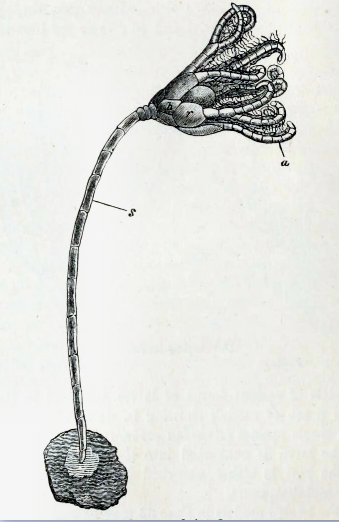
Feather stars are crinoids — ancient echinoderms with many branched arms lined in tube feet for filtering. Hooked cirri on the stalk let them crawl and re-anchor.
Plankton from passing currents
Arms form a fan in current, trapping particles moved toward the mouth at the arm base. Some species host tiny shrimp among the pinnules.
Northeast Atlantic rocky reefs
Antedon bifida lives from Norway to the Mediterranean on rocks and wrecks. Daytime they cling in current-swept sites.
Living fossil, stable stock
Least Concern with broad range. Crinoids dominated Paleozoic seas; feather stars are their reduced, mobile descendants.
Explore the Feather Star
Close relatives
- Octopus Same class
- Black Widow Same class
- Jellyfish Same class
- Tarantula Same class
Range & geography
Conservation status of the Feather Star
The feather star (Antedon bifida) is listed as Least Concern on the IUCN Red List. Least Concern (LC) is the IUCN's lowest-risk category, assigned to widespread, abundant species that have been evaluated and found not to be threatened. It does not mean a species faces no pressures — only that it is not currently at risk of extinction.
The feather star (Antedon bifida) is assessed on the IUCN Red List. Look up on the IUCN Red List .
Frequently asked questions about the Feather Star
Are feather stars related to starfish?
Both are echinoderms, but crinoids sit on a separate branch with filter-feeding arms on a stalk base.
Can feather stars swim?
Some species pulse arms to swim short distances, but Antedon usually crawls with cirri.
What do feather stars eat?
Plankton and organic particles filtered from water currents.
Why are crinoids called living fossils?
Their body plan dates back hundreds of millions of years with few changes.
Where do common feather stars live?
Rocky subtidal habitats in the northeast Atlantic and Mediterranean.
What is a group of feather stars called?
A group of Feather Stars is called a bed.
What is a baby feather star called?
A baby Feather Star is called a larva.
Sources & references
This guide is compiled and reviewed against established zoological and conservation references. Key sources for the Feather Star:
-
IUCN Red List of Threatened Species
Conservation status (Least Concern) reflects the IUCN Red List category for Antedon bifida.
-
iNaturalist — observations & photos
Search citizen-science observations and community IDs for Antedon bifida. Useful for range checks and recent sightings — not a substitute for formal Red List status.
-
GBIF — occurrence data
Global Biodiversity Information Facility species search for Antedon bifida. Explore published occurrence records used in range research.
-
Global Animal Guide editorial standards
How we research, source, review, and update every guide for accuracy.