Image sourcing: see credits & licences
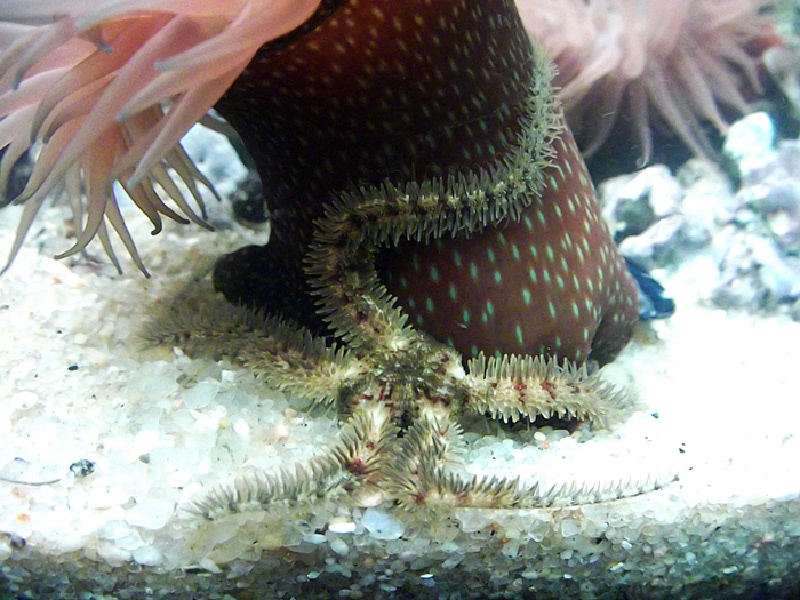
The brittle star (Ophiothrix fragilis) is an echinoderm of the family Ophiotrichidae, in the order Ophiurida.
Quick answer
The common brittle star (Ophiothrix fragilis) forms dense carpets on northeast Atlantic gravel, arms raised to filter feed. Adults reach 15 cm arm span and are Least Concern.
Top questions about the Brittle Star
Brittle Star facts at a glance
- Weight 15 g
- Length 15 cm
- Top speed 2 km/h
- Lifespan 4 years
| Scientific name | Ophiothrix fragilis |
|---|---|
| Diet | Detritivore / filter feeder |
| Habitat | Rocky and gravel bottoms |
| Lifespan | 3–5 years |
| Weight | 0.01–0.02 kg |
| Top speed | up to 2 km/h |
| Conservation status | Least Concern (IUCN) |
| Kingdom | Animalia |
|---|---|
| Phylum | Echinodermata |
| Class | Ophiuroidea |
| Order | Ophiurida |
| Family | Ophiotrichidae |
| Genus | Ophiothrix |
Where it lives
The brittle star (Ophiothrix fragilis) is native to Northeast Atlantic rocky and gravel seabeds. — recorded across Europe, Africa in this guide’s range summary.
For occurrence records, see GBIF species search and sources below.
How big is a brittle star?
An adult brittle star measures 15 cm long — about 9% of the height of an average adult person (1.73 m) — and weighs around 15 g, a small fraction of an average adult’s body weight (70 kg).
Length vs an average adult’s height (to scale)
What is a group of brittle stars called?
Group name (collective noun)
A group of Brittle Stars is called a bed.
Baby name
A baby Brittle Star is called a larva.
Explore more animal collective nouns and baby animal names .
Arms that break to escape
Long flexible arms detach easily when grabbed, regenerating later. A central disc hides the mouth; tube feet lack suckers unlike true starfish.
Filter feeding in aggregations
Arms are held vertical in current to trap plankton. Winter aggregations can cover thousands per square metre on gravel bottoms.
Northeast Atlantic gravel beds
From Norway to the Mediterranean on rocky and gravel seabeds. Trawling disturbance can break arms but populations rebound by regeneration.
Swarm engineer
Least Concern and often superabundant. Dense mats alter sediment chemistry and provide food for fish and crustaceans.
Explore the Brittle Star
Close relatives
- Octopus Same class
- Black Widow Same class
- Jellyfish Same class
- Tarantula Same class
Range & geography
Conservation status of the Brittle Star
The brittle star (Ophiothrix fragilis) is listed as Least Concern on the IUCN Red List. Least Concern (LC) is the IUCN's lowest-risk category, assigned to widespread, abundant species that have been evaluated and found not to be threatened. It does not mean a species faces no pressures — only that it is not currently at risk of extinction.
The brittle star (Ophiothrix fragilis) is assessed on the IUCN Red List. Look up on the IUCN Red List .
Frequently asked questions about the Brittle Star
Why are they called brittle stars?
Arms snap off easily under predator attack and regrow over time.
How do brittle stars feed?
Many species filter plankton with raised arms; others scavenge detritus on the seabed.
Are brittle stars the same as starfish?
They are related echinoderms in class Ophiuroidea with thinner, more flexible arms.
Can brittle stars regrow arms?
Yes — lost arms regenerate if the central disc survives.
Why do brittle stars form dense beds?
Current-fed gravel offers ideal filter-feeding conditions, triggering huge aggregations.
What is a group of brittle stars called?
A group of Brittle Stars is called a bed.
What is a baby brittle star called?
A baby Brittle Star is called a larva.
Sources & references
This guide is compiled and reviewed against established zoological and conservation references. Key sources for the Brittle Star:
-
IUCN Red List of Threatened Species
Conservation status (Least Concern) reflects the IUCN Red List category for Ophiothrix fragilis.
-
iNaturalist — observations & photos
Search citizen-science observations and community IDs for Ophiothrix fragilis. Useful for range checks and recent sightings — not a substitute for formal Red List status.
-
GBIF — occurrence data
Global Biodiversity Information Facility species search for Ophiothrix fragilis. Explore published occurrence records used in range research.
-
Global Animal Guide editorial standards
How we research, source, review, and update every guide for accuracy.