Image sourcing: see credits & licences
The gumboot chiton (Cryptochiton stelleri) is a chiton of the family Acanthochitonidae, in the order Chitonida.
Quick answer
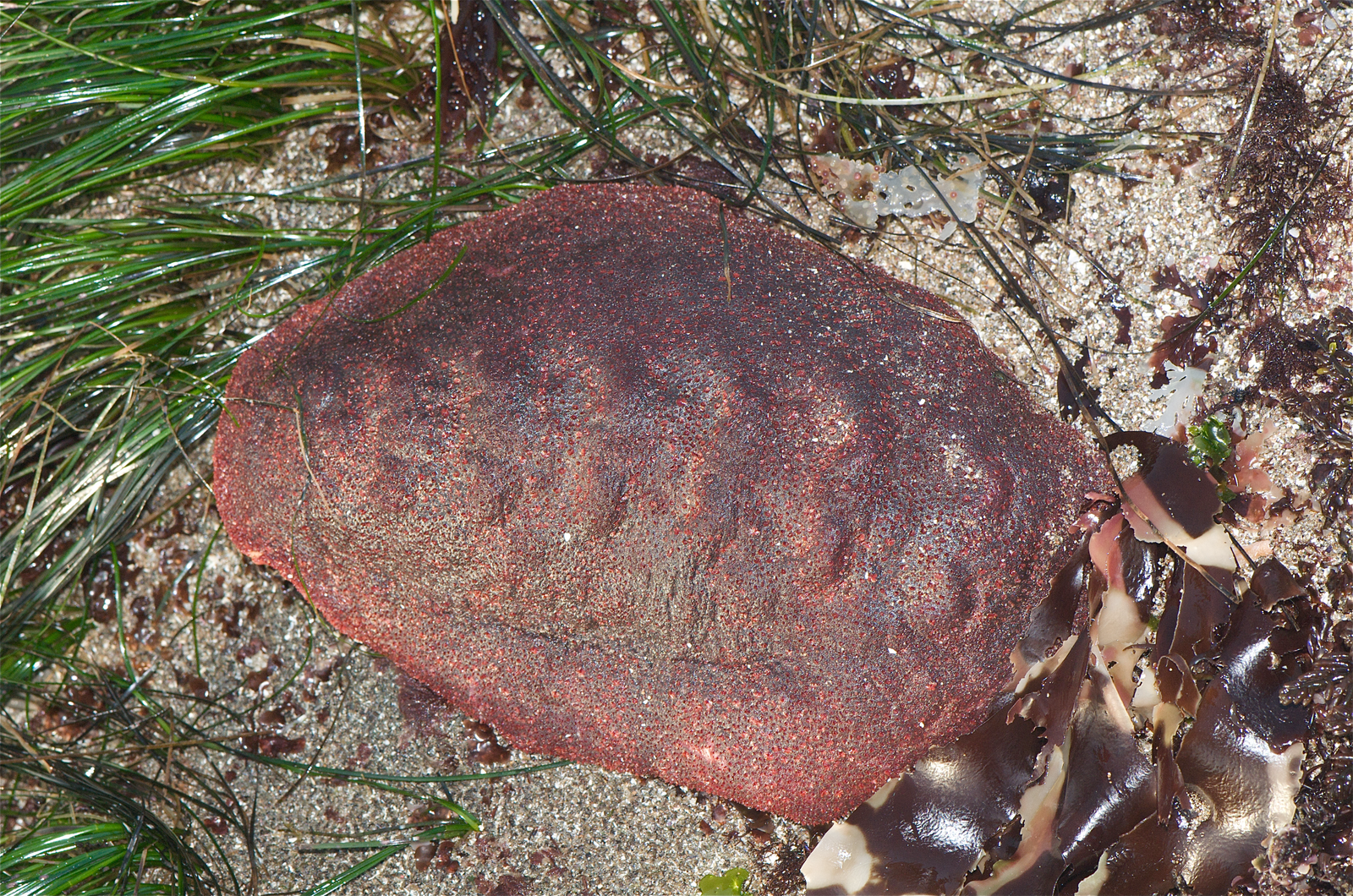
The gumboot chiton (Cryptochiton stelleri) is the largest chiton in the world, with a reddish leathery girdle on North Pacific rocks. Adults reach 30 cm and 1 kg and are Least Concern.
Top questions about the Gumboot Chiton
Gumboot Chiton facts at a glance
- Weight 800 g
- Length 30 cm
- Top speed 1 km/h
- Lifespan 25 years
| Scientific name | Cryptochiton stelleri |
|---|---|
| Diet | Herbivore |
| Habitat | Rocky intertidal |
| Lifespan | 20–30 years |
| Weight | 0.5–1.2 kg |
| Top speed | up to 1 km/h |
| Conservation status | Least Concern (IUCN) |
| Kingdom | Animalia |
|---|---|
| Phylum | Mollusca |
| Class | Polyplacophora |
| Order | Chitonida |
| Family | Acanthochitonidae |
| Genus | Cryptochiton |
Where it lives
The gumboot chiton (Cryptochiton stelleri) is native to North Pacific rocky shores from Alaska to California and Asia. — recorded across North America, Asia in this guide’s range summary.
For occurrence records, see GBIF species search and sources below.
How big is a gumboot chiton?
An adult gumboot chiton measures 30 cm long — about 17% of the height of an average adult person (1.73 m) — and weighs around 800 g, about 1% of an average adult’s body weight (70 kg).
Length vs an average adult’s height (to scale)
What is a group of gumboot chitons called?
Group name (collective noun)
A group of Gumboot Chitons is called a bed.
Baby name
A baby Gumboot Chiton is called a larva.
Explore more animal collective nouns and baby animal names .
Leathery coat over eight plates
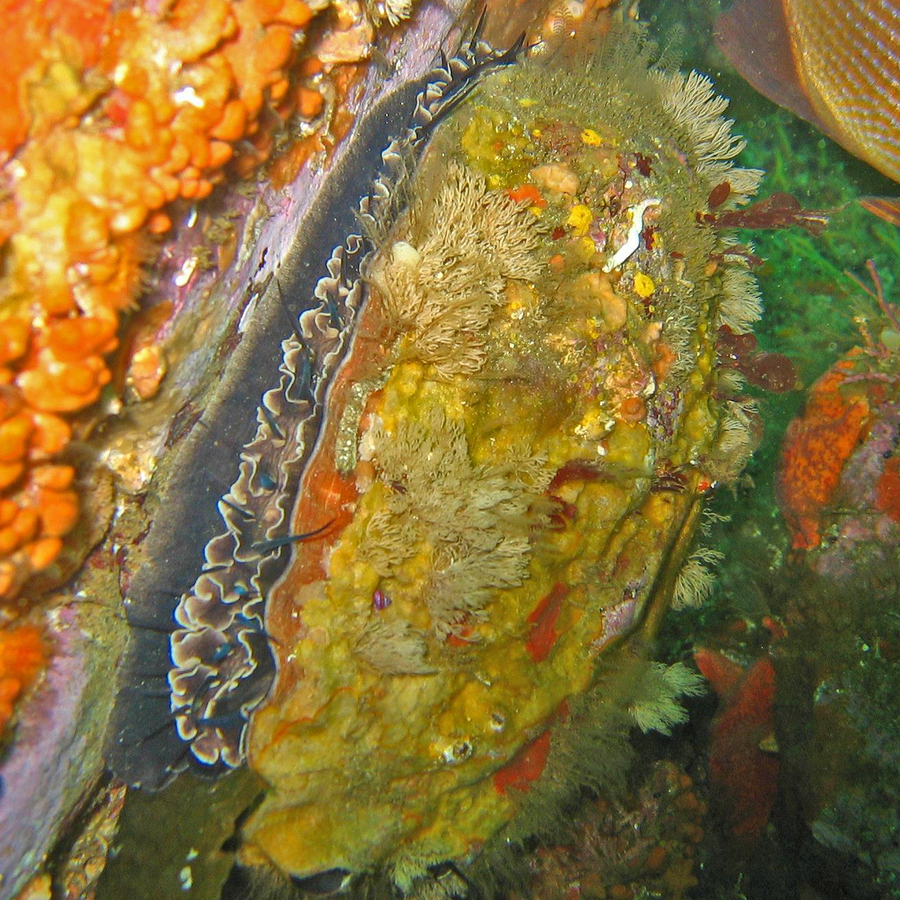
Unlike smaller chitons with visible armour rings, the gumboot's plates are hidden under a thick reddish mantle. A broad foot grips wave-swept boulders.
Algae scraper of surf zones
A rasping radula scrapes diatoms and macroalgae from rock surfaces. Slow movement suits intertidal and shallow subtidal zones.
North Pacific rocky shores
From Alaska to California and across to Asia on exposed coasts. Large size makes it a tidepool landmark.
Sturdy on the rocks
Least Concern across a long coastline. Collection for curiosity and localized pollution are minor compared with habitat extent.
Explore the Gumboot Chiton
Close relatives
- Octopus Same class
- Black Widow Same class
- Jellyfish Same class
- Tarantula Same class
Range & geography
Conservation status of the Gumboot Chiton
The gumboot chiton (Cryptochiton stelleri) is listed as Least Concern on the IUCN Red List. Least Concern (LC) is the IUCN's lowest-risk category, assigned to widespread, abundant species that have been evaluated and found not to be threatened. It does not mean a species faces no pressures — only that it is not currently at risk of extinction.
The gumboot chiton (Cryptochiton stelleri) is assessed on the IUCN Red List. Look up on the IUCN Red List .
Frequently asked questions about the Gumboot Chiton
What is a chiton?
A marine mollusc with eight overlapping shell plates and a muscular foot — like a armoured slug.
Why is it called gumboot chiton?
The thick leathery girdle resembles a reddish rubber boot covering the shell plates.
How big is a gumboot chiton?
Up to about 30 cm — the world's largest chiton species.
What do gumboot chitons eat?
Algae and biofilm scraped from rocks with a radula.
Where can you find gumboot chitons?
Rocky North Pacific shores from Alaska to California.
What is a group of gumboot chitons called?
A group of Gumboot Chitons is called a bed.
What is a baby gumboot chiton called?
A baby Gumboot Chiton is called a larva.
Sources & references
This guide is compiled and reviewed against established zoological and conservation references. Key sources for the Gumboot Chiton:
-
IUCN Red List of Threatened Species
Conservation status (Least Concern) reflects the IUCN Red List category for Cryptochiton stelleri.
-
iNaturalist — observations & photos
Search citizen-science observations and community IDs for Cryptochiton stelleri. Useful for range checks and recent sightings — not a substitute for formal Red List status.
-
GBIF — occurrence data
Global Biodiversity Information Facility species search for Cryptochiton stelleri. Explore published occurrence records used in range research.
-
Global Animal Guide editorial standards
How we research, source, review, and update every guide for accuracy.