Image sourcing: see credits & licences
The emerald tree boa (Corallus caninus) is a reptile of the family Boidae, in the order Squamata.
Quick answer
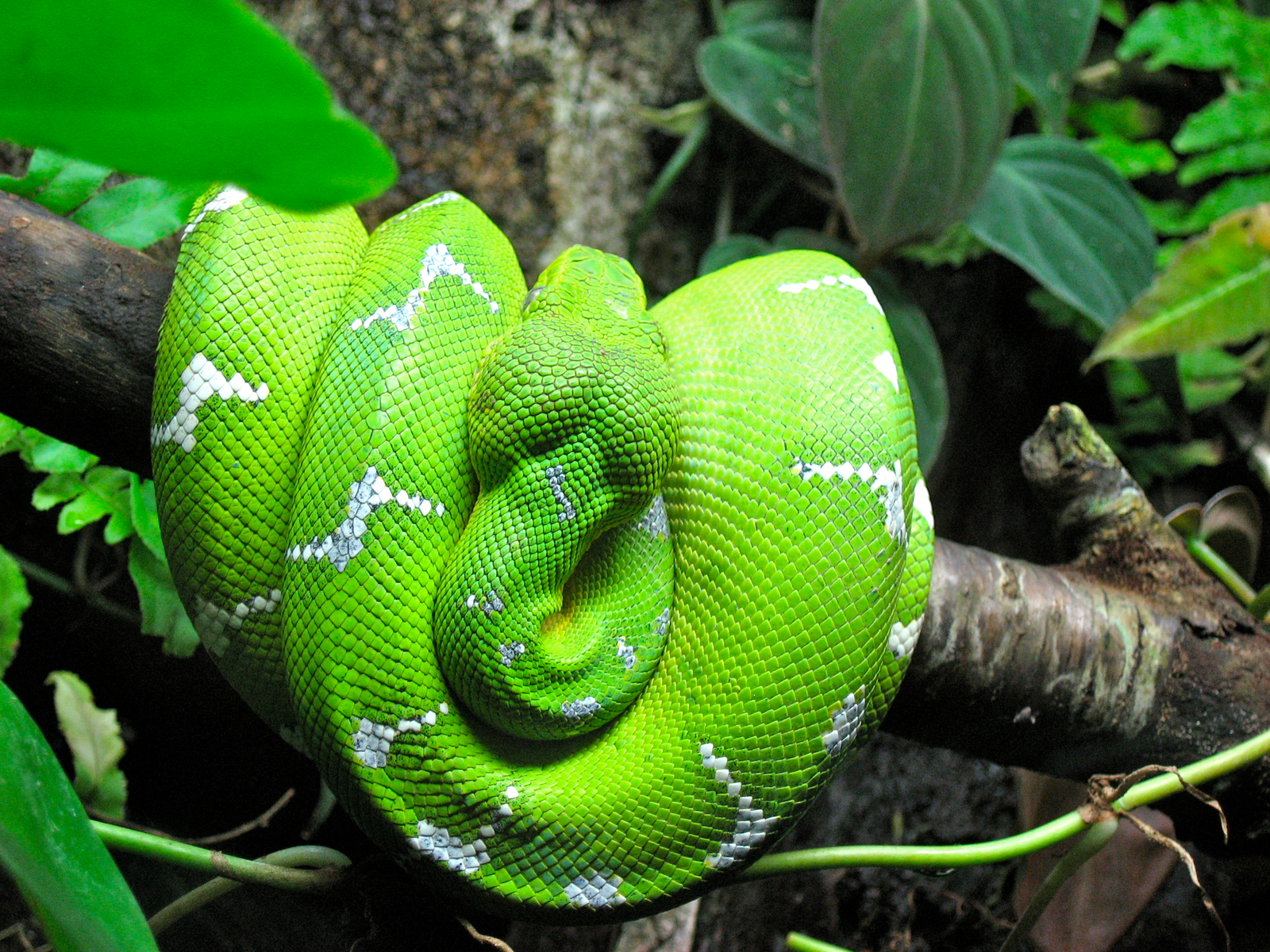
The emerald tree boa (Corallus caninus) is a vivid green Amazonian snake that coils on branches over water. Adults reach about 2 m and 1.5 kg, hunt at night, and are listed Least Concern.
Top questions about the Emerald Tree Boa
Emerald Tree Boa facts at a glance
- Weight 1.5 kg
- Length 2 m
- Top speed 8 km/h
- Lifespan 18 years
| Scientific name | Corallus caninus |
|---|---|
| Diet | Carnivore |
| Habitat | Rainforest canopy |
| Lifespan | 15–20 years |
| Weight | 1–2 kg |
| Top speed | up to 8 km/h |
| Conservation status | Least Concern (IUCN) |
| Kingdom | Animalia |
|---|---|
| Phylum | Chordata |
| Class | Reptilia |
| Order | Squamata |
| Family | Boidae |
| Genus | Corallus |
Where it lives
The emerald tree boa (Corallus caninus) is native to Amazon and Guiana Shield rainforests. — recorded across South America in this guide’s range summary.
For occurrence records, see GBIF species search and sources below.
How big is a emerald tree boa?
An adult emerald tree boa measures 2 m long — about 1.2× the height of an average adult person (1.73 m) — and weighs around 1.5 kg, about 2% of an average adult’s body weight (70 kg).
Length vs an average adult’s height (to scale)
What is a group of emerald tree boas called?
Group name (collective noun)
A group of Emerald Tree Boas is called a bed.
Baby name
A baby Emerald Tree Boa is called a neonate.
Explore more animal collective nouns and baby animal names .
Jewel of the canopy
Juveniles are red or orange before turning emerald green. White markings along the back and heat pits on the lips suit nocturnal ambush hunting.
Rodents and birds from above
Prey is struck from overhanging branches — often near water where small mammals commute. Constriction subdues victims before swallowing head-first.
Amazon and Guiana Shield
Lowland rainforest of the northern Amazon basin and Guiana region. They seldom leave trees except to move between perches.
Collectors versus wild populations
Least Concern in intact forest. Wild-caught individuals once fuelled the pet trade; captive breeding now supplies most specimens.
Explore the Emerald Tree Boa
Close relatives
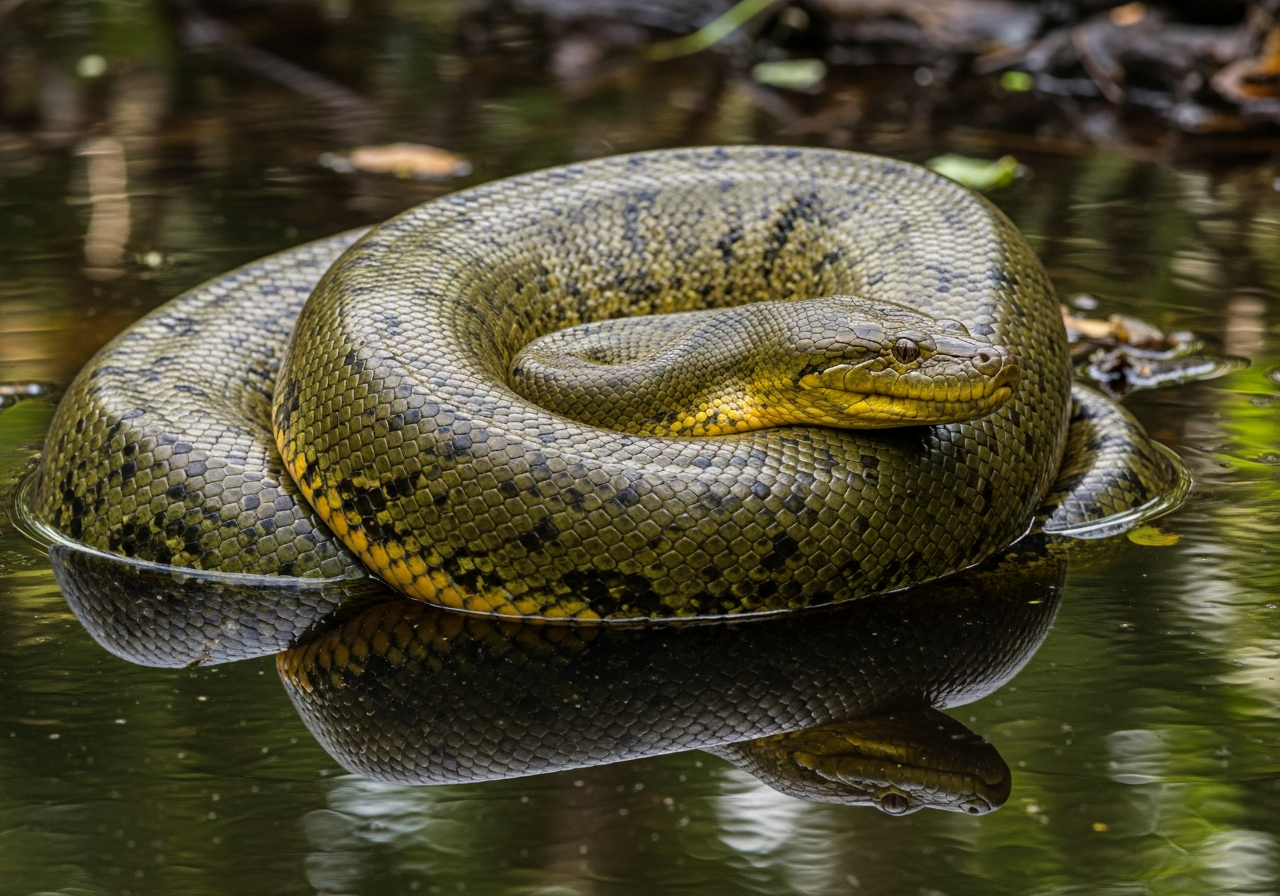
- Green Anaconda Same family
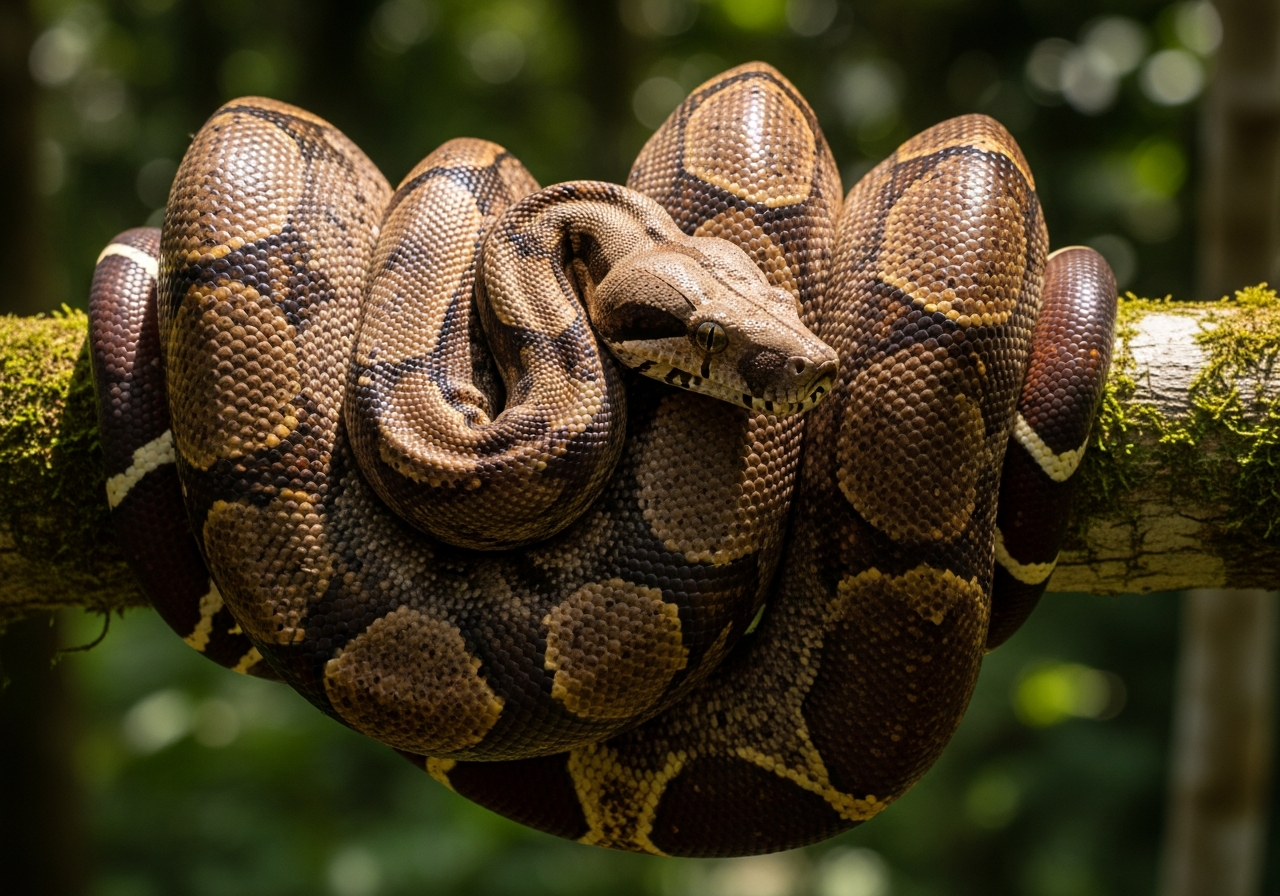
- Boa Constrictor Same family
- Black Mamba Same order
- Inland Taipan Same order
Range & geography
Conservation status of the Emerald Tree Boa
The emerald tree boa (Corallus caninus) is listed as Least Concern on the IUCN Red List. Least Concern (LC) is the IUCN's lowest-risk category, assigned to widespread, abundant species that have been evaluated and found not to be threatened. It does not mean a species faces no pressures — only that it is not currently at risk of extinction.
The emerald tree boa (Corallus caninus) is assessed on the IUCN Red List. Look up on the IUCN Red List .
Frequently asked questions about the Emerald Tree Boa
Are emerald tree boas venomous?
No — they are constrictors in the boa family, not venomous snakes.
Why are young emerald tree boas red?
Juvenile red or orange colour may mimic venomous coral snakes before shifting to adult green.
Do emerald tree boas live in water?
They stay in trees but often hunt over streams where prey travels.
How big do emerald tree boas get?
Typically about 1.5–2 m as adults — thick-bodied for an arboreal snake.
Can emerald tree boas be kept as pets?
Captive-bred individuals are kept by experienced keepers; they need high humidity and vertical space.
What is a group of emerald tree boas called?
A group of Emerald Tree Boas is called a bed.
What is a baby emerald tree boa called?
A baby Emerald Tree Boa is called a neonate.
Sources & references
This guide is compiled and reviewed against established zoological and conservation references. Key sources for the Emerald Tree Boa:
-
IUCN Red List of Threatened Species
Conservation status (Least Concern) reflects the IUCN Red List category for Corallus caninus.
-
iNaturalist — observations & photos
Search citizen-science observations and community IDs for Corallus caninus. Useful for range checks and recent sightings — not a substitute for formal Red List status.
-
GBIF — occurrence data
Global Biodiversity Information Facility species search for Corallus caninus. Explore published occurrence records used in range research.
-
Global Animal Guide editorial standards
How we research, source, review, and update every guide for accuracy.