Quick answer
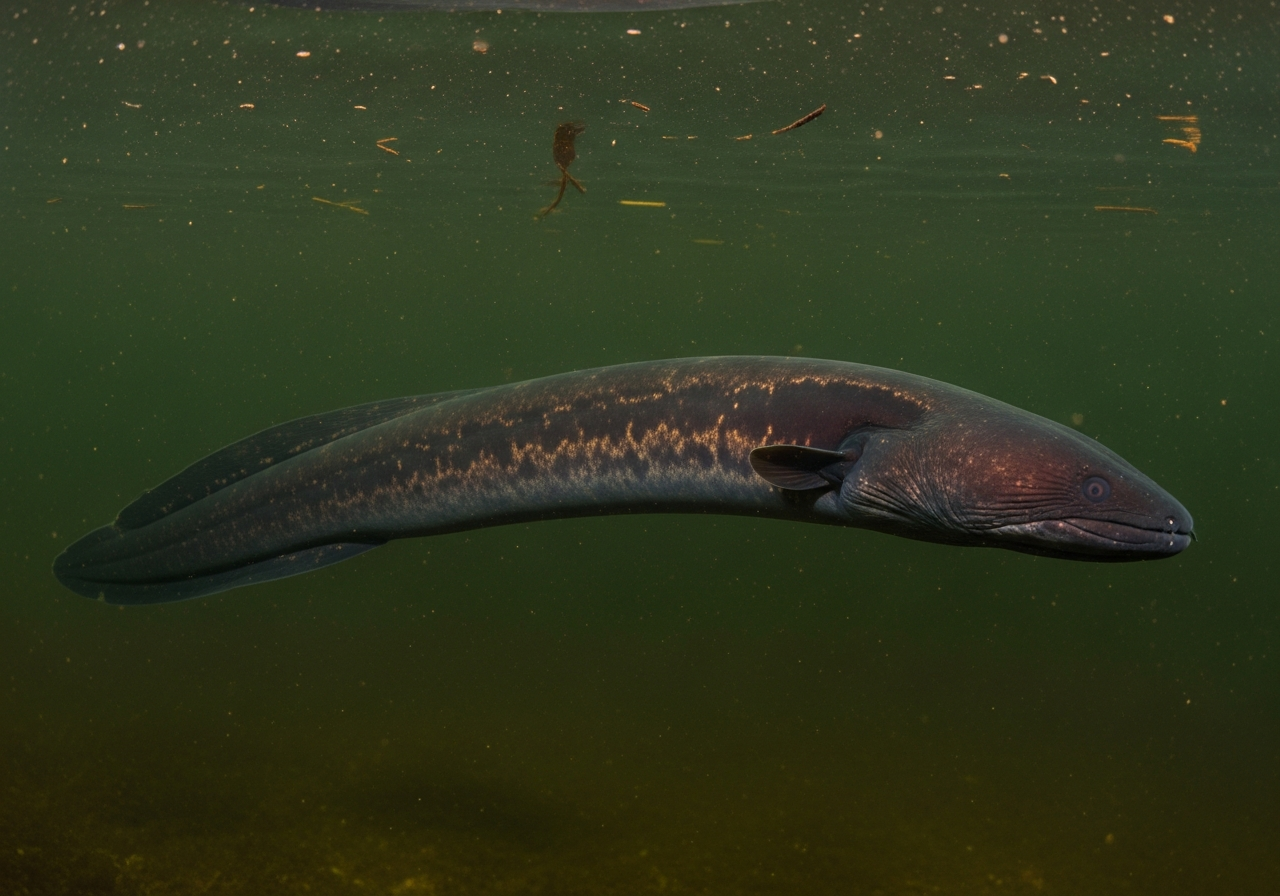
The electric eel (Electrophorus electricus) is a freshwater fish of South America famous for generating powerful electric shocks to stun prey and defend itself. Despite the name it is not a true eel but a knifefish, growing up to 2.5 m long and weighing around 20 kg. It is a slow, undulating swimmer that lives in murky streams and pools and breathes air at the surface. Electric eels live about 15 years and are listed as Least Concern.
Top questions about the Electric Eel
Electric Eel facts at a glance
- Weight 20 kg
- Length 2.5 m
- Top speed 8 km/h
- Lifespan 15 years
| Scientific name | Electrophorus electricus |
|---|---|
| Diet | Carnivore |
| Habitat | Murky freshwater streams and pools |
| Lifespan | About 15 years in the wild |
| Length | Up to 2.5 m (8 ft) |
| Top speed | Slow, undulating swimmer |
| Conservation status | Least Concern (IUCN) |
| Kingdom | Animalia |
|---|---|
| Phylum | Chordata |
| Class | Actinopterygii |
| Order | Gymnotiformes |
| Family | Gymnotidae |
| Genus | Electrophorus |
Where it lives
The electric eel (Electrophorus electricus) is native to Murky freshwater streams and pools of the Amazon and Orinoco basins in South America. — recorded across South America in this guide’s range summary.
For occurrence records, see GBIF species search and sources below.
How big is a electric eel?
An adult electric eel measures 2.5 m long — about 1.4× the height of an average adult person (1.73 m) — and weighs around 20 kg, about 29% of an average adult’s body weight (70 kg).
Length vs an average adult’s height (to scale)
What is a baby electric eel called?
Baby name
A baby Electric Eel is called a fry.
Explore more animal collective nouns and baby animal names .
Not a true eel
Despite its name, the electric eel is not a true eel at all but a type of knifefish, more closely related to catfish and carp than to the eels of the sea. It gets its name from its long, cylindrical, eel-like body, which can reach 2.5 m in length. It swims slowly by rippling a long fin that runs along the underside of its body. This undulating motion lets it move forward or backward with equal ease through cluttered water.
How it generates electricity
Most of the electric eel's body is packed with specialised cells called electrocytes, stacked like the cells in a battery. When the eel discharges, thousands of these cells fire at once, producing a jolt strong enough to stun prey or deter a predator. It also emits weaker pulses used for navigation and to sense its surroundings in murky water. This makes electricity central to both hunting and communication.
Hunting and diet
The electric eel is a carnivore that preys on fish, amphibians, and invertebrates. It hunts by releasing high-voltage discharges that stun or immobilise nearby prey, then swallows the helpless animal whole. Weak electric pulses help it locate targets it cannot see in cloudy, sediment-filled water. Because its eyesight is poor, it depends heavily on its electrical sense to find food.
Breathing air
Electric eels live in oxygen-poor waters and cannot rely on their gills alone, so they gulp air at the surface using a specialised, blood-rich lining in the mouth. They must surface every few minutes to breathe, and would drown if unable to reach the surface. This adaptation lets them survive in stagnant, muddy pools where many other fish could not. It also means they spend much of their life near the surface.
Habitat and range
Electric eels are found in the murky freshwater streams, pools, and floodplains of northern South America, including the Amazon and Orinoco basins. They prefer slow-moving, muddy water with plenty of cover. This dim, sediment-rich environment suits an animal that hunts by electricity rather than sight. They spend most of their time near the bottom, rising only to breathe.
Life and conservation
Electric eels live about 15 years in the wild. During the dry season, a male builds a nest of saliva into which the female lays her eggs, and he guards the developing young. The species is widespread across its range and is listed as Least Concern by the IUCN. Its remote, murky habitat has helped keep populations stable.
Dig deeper into the Electric Eel
- Are Electric Eels Dangerous?
Are electric eels dangerous? Realistic risk, when incidents rise, and safety basics.
- Electric Eel: Key Facts
Electric Eels (Electrophorus electricus) are fish found across South America. The fish that generates powerful electric shocks.
- How Long Do Electric Eels Live?
Electric Eel lifespan is typically About 15 years in the wild. What shortens or extends life, life stages, and status (Least Concern).
- What Do Electric Eels Eat?
What electric eels eat: Carnivore, foraging style, and seasonal shifts in Murky freshwater streams and pools.
- Where Do Electric Eels Live?
Where electric eels live: Murky freshwater streams and pools, native range cues, and human overlap. Status Least Concern.
Explore the Electric Eel
Related Fishs
Range & geography
Did you know? Electric Eel facts
- The electric eel is a long, air-breathing fish of South American rivers that can generate powerful electric discharges to stun prey and defend itself.
- An electric eel can generate strong discharges that exceed 600 volts, enough to stun prey or deter a large attacker, using specialized electric organs along its body.
- No. Despite its name and shape, the electric eel is not a true eel but a type of knifefish, more closely related to catfish and carp.
- Electric eels are carnivores that eat fish, amphibians, crustaceans, and invertebrates, often using electric shocks to stun prey before swallowing it whole.
- A single shock is rarely fatal to a healthy adult, but repeated discharges can be dangerous and may cause a person to fall or be unable to swim, risking drowning.
- Conservation: Least Concern (IUCN).
Diet & feeding
Electric Eel feeds primarily as a carnivore. The electric eel produces electricity in three specialized organs that make up most of its long body, packed with thousands of cells that act like tiny batteries stacked together. It uses weak pulses to navigate and sense its surroundings in murky water and strong discharges
Adaptations
- The electric eel produces electricity in three specialized organs that make up most of its long body, packed with thousands of cells that act like tiny batteries stacked together. It uses weak pulses to navigate and sense its surroundings in murky water and strong discharges, which can exceed 600 volts, to stun prey or deter attackers. Some have even been observed leaping from the water to press their discharge directly against a threat.
- Electric eels are carnivores that feed on fish, amphibians, crustaceans, and small invertebrates, and young eels also eat insects. They hunt at night, using high-voltage shocks to immobilize prey before swallowing it whole. Their electric pulses can also force hidden prey to twitch, revealing its location.
Behaviour & ecology
- The electric eel produces electricity in three specialized organs that make up most of its long body, packed with thousands of cells that act like tiny batteries stacked together. It uses weak pulses to navigate and sense its surroundings in murky water and strong discharges, which can exceed 600 volts, to stun prey or deter attackers. Some have even been observed leaping from the water to press their discharge directly against a threat.
- Electric eels are carnivores that feed on fish, amphibians, crustaceans, and small invertebrates, and young eels also eat insects. They hunt at night, using high-voltage shocks to immobilize prey before swallowing it whole. Their electric pulses can also force hidden prey to twitch, revealing its location.
- Electric eels live in murky, slow-moving freshwater of the Amazon and Orinoco basins in South America, including streams, swamps, and floodplain pools. Because these waters are often low in oxygen, the eel is an obligate air-breather that must rise to the surface regularly to gulp air. They prefer dark, sheltered places where they can ambush prey.
Communication
- Lateral-line and visual cues coordinate schooling, courtship, or territorial behaviour.
- Some species produce low-frequency sounds or drumming for spawning or defence.
Habitat & range
Murky freshwater streams and pools
Ecological role
Electric Eel acts as a predator that helps regulate prey populations and maintain balance in murky freshwater streams and pools.
Conservation status of the Electric Eel
The electric eel (Electrophorus electricus) is listed as Least Concern on the IUCN Red List. Least Concern (LC) is the IUCN's lowest-risk category, assigned to widespread, abundant species that have been evaluated and found not to be threatened. It does not mean a species faces no pressures — only that it is not currently at risk of extinction.
The electric eel (Electrophorus electricus) is assessed on the IUCN Red List. Look up on the IUCN Red List .
Frequently asked questions about the Electric Eel
Is an electric eel a real eel?
No. Despite its name, the electric eel is not a true eel but a knifefish, more closely related to catfish and carp. It earned the name from its long, eel-like body shape.
How does an electric eel produce electricity?
Most of its body is filled with specialised cells called electrocytes, stacked like a battery. When thousands fire together, they release a powerful electric discharge used to stun prey and defend against predators, along with weaker pulses for navigation.
What do electric eels eat?
Electric eels are carnivores that eat fish, amphibians, and invertebrates. They stun prey with high-voltage shocks and then swallow the immobilised animal whole.
How big do electric eels get?
Electric eels can grow up to 2.5 m long and weigh around 20 kg, making them large among freshwater fish. Their long, cylindrical bodies are packed with electricity-producing cells.
Do electric eels breathe air?
Yes. Electric eels live in oxygen-poor water and gulp air at the surface using a blood-rich lining in the mouth. They must surface every few minutes and would drown without access to air.
How long do electric eels live?
Electric eels live about 15 years in the wild. They are widespread across northern South America and are listed as Least Concern.
What is a baby electric eel called?
A baby Electric Eel is called a fry.
Sources & references
This guide is compiled and reviewed against established zoological and conservation references. Key sources for the Electric Eel:
-
IUCN Red List of Threatened Species
Conservation status (Least Concern) reflects the IUCN Red List category for Electrophorus electricus.
-
iNaturalist — observations & photos
Search citizen-science observations and community IDs for Electrophorus electricus. Useful for range checks and recent sightings — not a substitute for formal Red List status.
-
GBIF — occurrence data
Global Biodiversity Information Facility species search for Electrophorus electricus. Explore published occurrence records used in range research.
- IUCN Red List — Electrophorus electricus.
Conservation status (Least Concern) and population trends.
- Animal Diversity Web — Electrophorus electricus. University of Michigan Museum of Zoology.
Life history, morphology, and range.
- Wikipedia — Electric Eel.
General taxonomy and overview (cross-check primary sources).
-
Global Animal Guide editorial standards
How we research, source, review, and update every guide for accuracy.