Quick answer
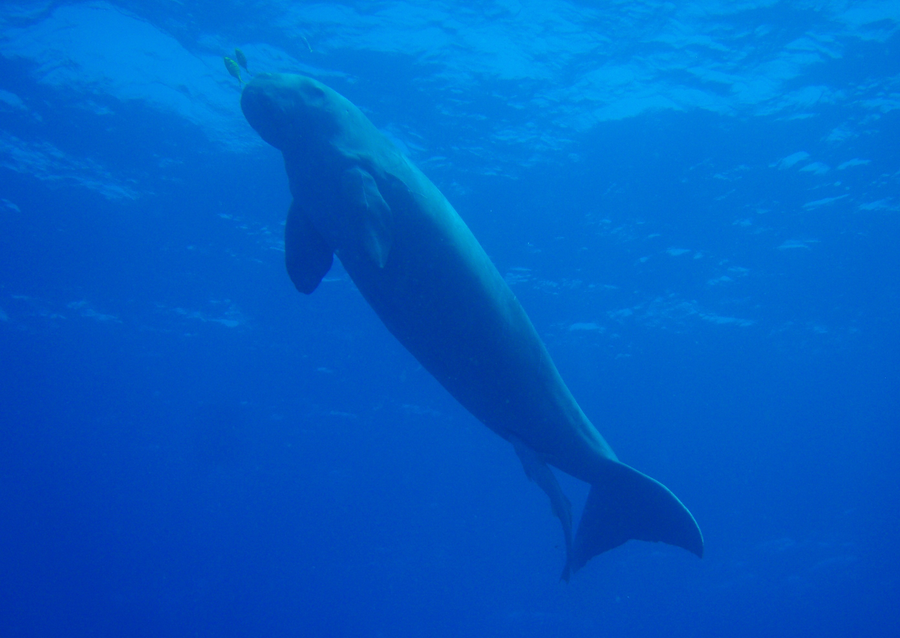
The dugong is a large marine mammal that grazes seagrass meadows in warm coastal waters from East Africa to Australia. Adults reach 2.5–3 m (8–10 ft) and 230–400 kg (500–880 lb), surface to breathe every few minutes, and are listed Vulnerable due to boat strikes, net entanglement, and seagrass loss.
Top questions about the Dugong
Dugong facts at a glance
- Weight 300 kg
- Length 2.8 m
- Top speed 10 km/h
- Lifespan 70 years
| Scientific name | Dugong dugon |
|---|---|
| Diet | Herbivore — seagrasses and algae |
| Habitat | Shallow coastal waters, bays, and seagrass meadows of the Indo-Pacific |
| Lifespan | 70+ years; slow reproduction |
| Weight | 230–400 kg (500–880 lb); males and females similar |
| Top speed | Up to 10 km/h (6 mph) swimming |
| Conservation status | Vulnerable (IUCN) |
| Kingdom | Animalia |
|---|---|
| Phylum | Chordata |
| Class | Mammalia |
| Order | Sirenia |
| Family | Dugongidae |
| Genus | Dugong |
Where it lives
The dugong (Dugong dugon) is native to Shallow coastal waters and seagrass meadows from East Africa through the Red Sea, Arabian Gulf, and Indian Ocean to Southeast Asia and northern Australia. — recorded across Africa, Asia, Oceania in this guide’s range summary.
For occurrence records, see GBIF species search and sources below.
How big is a dugong?
An adult dugong measures 2.8 m long — about 1.6× the height of an average adult person (1.73 m) — and weighs around 300 kg, about 4.3× an average adult’s body weight (70 kg).
Length vs an average adult’s height (to scale)
What is a group of dugongs called?
Group name (collective noun)
A group of Dugongs is called a herd.
Baby name
A baby Dugong is called a calf.
Explore more animal collective nouns and baby animal names .
Seagrass gardener
Dugongs crop seagrass with stiff bristled lips, preferring certain species and leaving tell-tale feeding trails across meadows. Healthy dugong populations indicate productive seagrass ecosystems that also support fish, turtles, and coastal fisheries.
Sirenian relatives
Dugongs are the only living sirenians in the Indo-Pacific; manatees occupy the Atlantic. Their closest land relatives are elephants. Females produce a single calf after a 13–14 month gestation, nursing for up to 18 months — a slow reproductive rate that limits recovery from population declines.
Cultural significance
Indigenous Australian communities and coastal peoples across the Indo-Pacific have long hunted dugongs for meat and oil, with cultural protocols in many areas. Today legal harvest, accidental drowning in fishing nets, and habitat degradation threaten remaining herds.
Conservation priorities
Listed Vulnerable, dugongs benefit from marine protected areas, speed limits for boats, and seagrass restoration. The Great Barrier Reef and Arabian Gulf hold significant populations. Entanglement in gillnets remains a leading cause of death in Southeast Asia.
Dig deeper into the Dugong
- Are Dugongs Endangered?
Are dugongs endangered? Status Vulnerable, main threats, and what protection means.
- Dugong: Key Facts
The dugong is a large marine mammal that grazes seagrass meadows in warm coastal waters from East Africa to Australia.
- How Long Do Dugongs Live?
Dugong lifespan is typically 70+ years; slow reproduction. What shortens or extends life, life stages, and status (Vulnerable).
- What Do Dugongs Eat?
What dugongs eat: Herbivore — seagrasses and algae, foraging style, and seasonal shifts in Shallow coastal waters, bays, and seagrass meadows of the Indo-Pacific.
- Where Do Dugongs Live?
Where dugongs live: Shallow coastal waters, bays, and seagrass meadows of the Indo-Pacific, native range cues, and human overlap. Status Vulnerable.
Explore the Dugong
Compare
Collections
Did you know? Dugong facts
- The dugong is a large marine mammal that grazes seagrass meadows in warm coastal waters from East Africa to Australia.
- Dugongs have fluked whale-like tails and live in the Indo-Pacific. Manatees have paddle-shaped tails and live in the Atlantic and adjacent rivers.
- Sailors' accounts of mermaids may have been inspired partly by dugongs and manatees surfacing in calm seas — though the resemblance is much debated.
- Almost exclusively seagrass, consuming up to 40 kg daily. They avoid areas where seagrass is sparse or polluted.
- Shallow waters off Australia (especially Queensland), the Red Sea, Arabian Gulf, and parts of Southeast Asia and East Africa where seagrass meadows remain healthy.
- Conservation: Vulnerable (IUCN).
Diet & feeding
Dugong feeds primarily as a herbivore — seagrasses and algae. Dugongs crop seagrass with stiff bristled lips, preferring certain species and leaving tell-tale feeding trails across meadows. Healthy dugong populations indicate productive seagrass ecosystems that also support fish, turtles, and coastal fisheries.
Adaptations
- Dugongs crop seagrass with stiff bristled lips, preferring certain species and leaving tell-tale feeding trails across meadows. Healthy dugong populations indicate productive seagrass ecosystems that also support fish, turtles, and coastal fisheries.
- Dugongs are the only living sirenians in the Indo-Pacific; manatees occupy the Atlantic. Their closest land relatives are elephants. Females produce a single calf after a 13–14 month gestation, nursing for up to 18 months — a slow reproductive rate that limits recovery from population declines.
Behaviour & ecology
- Dugongs crop seagrass with stiff bristled lips, preferring certain species and leaving tell-tale feeding trails across meadows. Healthy dugong populations indicate productive seagrass ecosystems that also support fish, turtles, and coastal fisheries.
- Dugongs are the only living sirenians in the Indo-Pacific; manatees occupy the Atlantic. Their closest land relatives are elephants. Females produce a single calf after a 13–14 month gestation, nursing for up to 18 months — a slow reproductive rate that limits recovery from population declines.
- Indigenous Australian communities and coastal peoples across the Indo-Pacific have long hunted dugongs for meat and oil, with cultural protocols in many areas. Today legal harvest, accidental drowning in fishing nets, and habitat degradation threaten remaining herds.
Communication
- Dugong uses scent, posture, and vocal signals to mark territory and coordinate social behaviour.
- Communication intensity often peaks during breeding seasons and territorial disputes.
Habitat & range
Shallow coastal waters, bays, and seagrass meadows of the Indo-Pacific
Ecological role
Dugong shapes vegetation through grazing or browsing and serves as prey for larger predators where ranges overlap.
Conservation status of the Dugong
The dugong (Dugong dugon) is listed as Vulnerable on the IUCN Red List. Vulnerable (VU) means a species faces a high risk of extinction in the medium-term future. It is the lowest-risk of the three 'threatened' IUCN categories — one step below Endangered, which is itself below Critically Endangered — and is often an early warning that a population is in trouble.
The dugong (Dugong dugon) is assessed on the IUCN Red List. Look up on the IUCN Red List .
Frequently asked questions about the Dugong
Dugong vs manatee — what is the difference?
Dugongs have fluked whale-like tails and live in the Indo-Pacific. Manatees have paddle-shaped tails and live in the Atlantic and adjacent rivers.
Are dugongs mermaids?
Sailors' accounts of mermaids may have been inspired partly by dugongs and manatees surfacing in calm seas — though the resemblance is much debated.
What do dugongs eat?
Almost exclusively seagrass, consuming up to 40 kg daily. They avoid areas where seagrass is sparse or polluted.
Where can you see dugongs?
Shallow waters off Australia (especially Queensland), the Red Sea, Arabian Gulf, and parts of Southeast Asia and East Africa where seagrass meadows remain healthy.
Are dugongs endangered?
Listed Vulnerable globally. Some regional populations are severely depleted; slow breeding makes recovery difficult.
What is a group of dugongs called?
A group of Dugongs is called a herd.
What is a baby dugong called?
A baby Dugong is called a calf.
Sources & references
This guide is compiled and reviewed against established zoological and conservation references. Key sources for the Dugong:
-
IUCN Red List of Threatened Species
Conservation status (Vulnerable) reflects the IUCN Red List category for Dugong dugon.
-
iNaturalist — observations & photos
Search citizen-science observations and community IDs for Dugong dugon. Useful for range checks and recent sightings — not a substitute for formal Red List status.
-
GBIF — occurrence data
Global Biodiversity Information Facility species search for Dugong dugon. Explore published occurrence records used in range research.
- IUCN Red List — Dugong dugon.
Conservation status (Vulnerable) and population trends.
- Animal Diversity Web — Dugong dugon. University of Michigan Museum of Zoology.
Life history, morphology, and range.
-
Global Animal Guide editorial standards
How we research, source, review, and update every guide for accuracy.