Warthog
Phacochoerus africanus
Quick answer
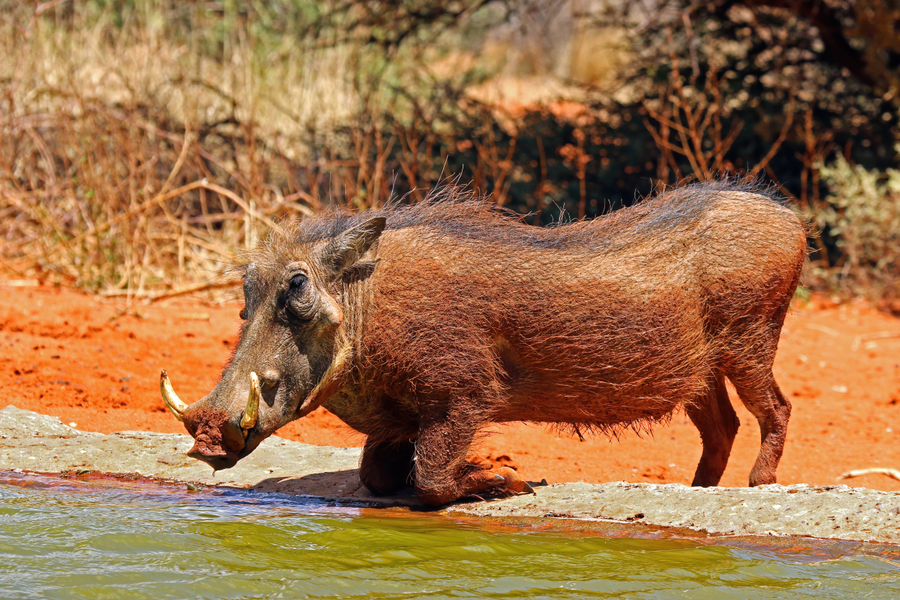
Warthogs are wild pigs of African savannas, named for the facial warts and armed with sharp tusks curving upward. They kneel on calloused front legs to graze, back into burrows for safety, and can run 48 km/h (30 mph) with tail erect like an antenna.
Warthog facts at a glance
| Scientific name | Phacochoerus africanus |
|---|---|
| Diet | Omnivore — mainly grasses, roots, and berries |
| Habitat | Savannas and open woodland in sub-Saharan Africa |
| Lifespan | 12–15 years in the wild |
| Weight | 50–150 kg (110–330 lb); males heavier |
| Top speed | Up to 48 km/h (30 mph) |
| Conservation status | Least Concern (IUCN) |
| Kingdom | Animalia |
|---|---|
| Phylum | Chordata |
| Class | Mammalia |
| Order | Artiodactyla |
| Family | Suidae |
| Genus | Phacochoerus |
Where it lives
Savannas and open woodland across sub-Saharan Africa, from the Sahel south to South Africa, absent from dense rainforest and the driest deserts.
What is a group of warthogs called?
Group name (collective noun)
A group of Warthogs is called a sounder.
Baby name
A baby Warthog is called a piglet.
Explore more animal collective nouns and baby animal names .
Tusks and defence
Upper and lower canine tusks sharpen each other and are used in fights between males and against predators. When threatened, warthogs prefer flight — running with tail straight up — but may charge if cornered. They sleep and rear young in burrows stolen from aardvarks.
Kneeling grazers
Calloused 'knees' on the front legs allow warthogs to graze low grasses comfortably. They also root for bulbs and use their snout to dig. Water holes are visited regularly when available.
Conservation
Warthogs are Least Concern with wide distribution, though local declines occur from hunting and habitat change. They are important prey for lions, leopards, and hyenas, and tolerate presence near safari tourism when not persecuted.
Dig deeper into the Warthog
- How Fast Is A Warthog
Dig deeper into warthog — how fast is a warthog.
- How Long do Warthog Live?
Dig deeper into warthog — how long do warthog live.
- Warthog Facts 5
Dig deeper into warthog — warthog facts 5.
- What do Warthog Eat
Dig deeper into warthog — what do warthog eat.
- Where do Warthog Live?
Dig deeper into warthog — where do warthog live.
Explore the Warthog
Range & geography
Did you know? Warthog facts
- Warthogs are wild pigs of African savannas, named for the facial warts and armed with sharp tusks curving upward.
- Facial warts are thick skin pads that protect the face during fights between males, especially around the eyes and tusks.
- A group of warthogs is called a sounder, usually females and offspring.
- Up to about 48 km/h (30 mph) — fast enough to outrun many predators over short distances.
- They generally flee. Wounded or cornered warthogs can charge with sharp tusks — hunters and photographers should keep distance.
- Conservation: Least Concern (IUCN).
Diet & feeding
Warthog feeds primarily as a omnivore — mainly grasses, roots, and berries. Upper and lower canine tusks sharpen each other and are used in fights between males and against predators. When threatened, warthogs prefer flight — running with tail straight up — but may charge if cornered. They sleep and rear young in burro
Adaptations
- Upper and lower canine tusks sharpen each other and are used in fights between males and against predators. When threatened, warthogs prefer flight — running with tail straight up — but may charge if cornered. They sleep and rear young in burrows stolen from aardvarks.
- Calloused 'knees' on the front legs allow warthogs to graze low grasses comfortably. They also root for bulbs and use their snout to dig. Water holes are visited regularly when available.
Behaviour & ecology
- Upper and lower canine tusks sharpen each other and are used in fights between males and against predators. When threatened, warthogs prefer flight — running with tail straight up — but may charge if cornered. They sleep and rear young in burrows stolen from aardvarks.
- Calloused 'knees' on the front legs allow warthogs to graze low grasses comfortably. They also root for bulbs and use their snout to dig. Water holes are visited regularly when available.
- Females and young form sounders, while adult males are often solitary or join groups briefly during the rut. After a gestation of about six months, sows retreat to a burrow to farrow.
Communication
- Warthog uses scent, posture, and vocal signals to mark territory and coordinate social behaviour.
- Communication intensity often peaks during breeding seasons and territorial disputes.
Habitat & range
Savannas and open woodland in sub-Saharan Africa
Ecological role
Warthog plays a recognised ecological role in savannas and open woodland in sub-saharan africa.
Frequently asked questions about the Warthog
Why do warthogs have warts?
Facial warts are thick skin pads that protect the face during fights between males, especially around the eyes and tusks.
What is a group of warthogs called?
A group of warthogs is called a sounder, usually females and offspring.
How fast can a warthog run?
Up to about 48 km/h (30 mph) — fast enough to outrun many predators over short distances.
Do warthogs attack humans?
They generally flee. Wounded or cornered warthogs can charge with sharp tusks — hunters and photographers should keep distance.
Where do warthogs live?
Open savannas and woodland across sub-Saharan Africa, absent from dense rainforest and deserts without water.
What is a baby warthog called?
A baby Warthog is called a piglet.
Sources & references
This guide is compiled and reviewed against established zoological and conservation references. Key sources for the Warthog:
-
IUCN Red List of Threatened Species
Conservation status (Least Concern) reflects the IUCN Red List category for Phacochoerus africanus.
- IUCN Red List — Phacochoerus africanus.
Conservation status (Least Concern) and population trends.
- Animal Diversity Web — Phacochoerus africanus. University of Michigan Museum of Zoology.
Life history, morphology, and range.
-
Global Animal Guide editorial standards
How we research, source, review, and update every guide for accuracy.

Social groups
Females and young form sounders, while adult males are often solitary or join groups briefly during the rut. After a gestation of about six months, sows retreat to a burrow to farrow.