Image sourcing: see credits & licences
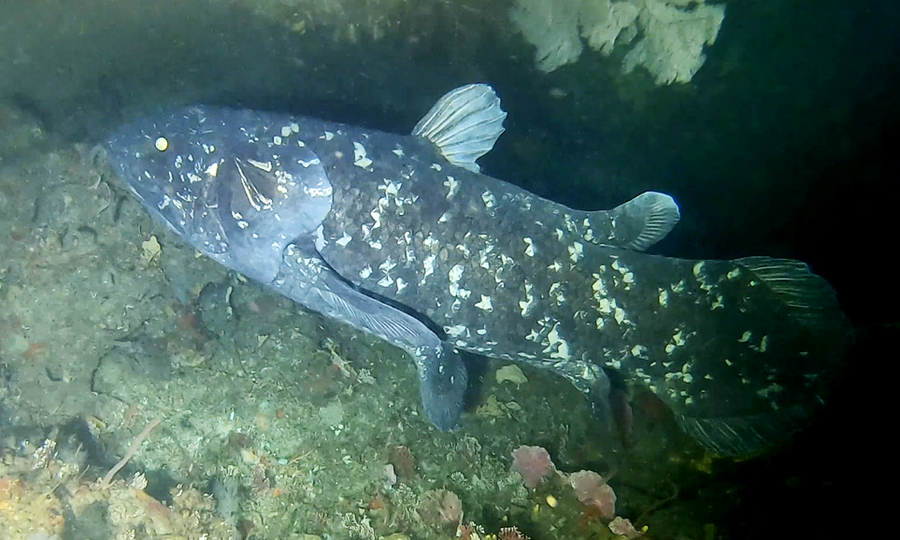
The coelacanth (Latimeria chalumnae) is a ray-finned fish of the family Latimeriidae, in the order Coelacanthiformes.
Quick answer
The coelacanth (Latimeria chalumnae) is a lobe-finned "living fossil" fish of deep rocky reefs off the Comoro Islands and South Africa's KwaZulu-Natal coast. Adults weigh around 80 kg, hunt smaller fish and squid at night, and are Critically Endangered because of tiny, slow-breeding populations.
Top questions about the Coelacanth
Also available in Español (Celacanto)
Coelacanth facts at a glance
- Weight 80 kg
- Length 1.8 m
- Top speed 10 km/h
- Lifespan 60 years
| Scientific name | Latimeria chalumnae |
|---|---|
| Diet | Carnivore |
| Habitat | Deep rocky reefs and submarine caves |
| Lifespan | Around 60 years in the wild (varies by population and captivity). |
| Weight | About 80 kg typical adult mass (sex and region vary). |
| Top speed | Up to roughly 10 km/h when moving at speed. |
| Conservation status | Critically Endangered (IUCN) |
| Kingdom | Animalia |
|---|---|
| Phylum | Chordata |
| Class | Actinopterygii |
| Order | Coelacanthiformes |
| Family | Latimeriidae |
| Genus | Latimeria |
Where it lives
The coelacanth (Latimeria chalumnae) is native to Deep waters off the Comoro Islands and South Africa's KwaZulu-Natal coast. — recorded across Africa in this guide’s range summary.
For occurrence records, see GBIF species search and sources below.
How big is a coelacanth?
An adult coelacanth measures 1.8 m long — about 1.0× the height of an average adult person (1.73 m) — and weighs around 80 kg, about 1.1× an average adult’s body weight (70 kg).
Length vs an average adult’s height (to scale)
What is a group of coelacanths called?
Group name (collective noun)
A group of Coelacanths is called a school.
Baby name
A baby Coelacanth is called a pup.
Explore more animal collective nouns and baby animal names .
Lobe fins and an intracranial joint
Fleshy, limb-like fins move in a walking-like pattern underwater. An intracranial joint lets the snout lift while feeding. Once known only from fossils, Latimeria stunned science when rediscovered in 1938 off South Africa.
Nocturnal deep-reef hunter
By day they shelter in submarine caves; at night they drift-hunt fish and cephalopods. They do not chase at high speed. Across its range it is tied to deep rocky reefs and submarine caves, and field accounts emphasise this species’ distinctive ecology rather than generic habitat labels.
Comoros and Maputaland depths
Deep rocky reefs and caves off the Comoro Islands and the KwaZulu-Natal / Maputaland coast of South Africa, typically hundreds of metres down.
Critically Endangered relic
Very small populations, late maturity, and bycatch in deep-set fisheries keep Latimeria chalumnae Critically Endangered. A second species lives off Indonesia.
Explore the Coelacanth
Close relatives
- Great White Shark Same class
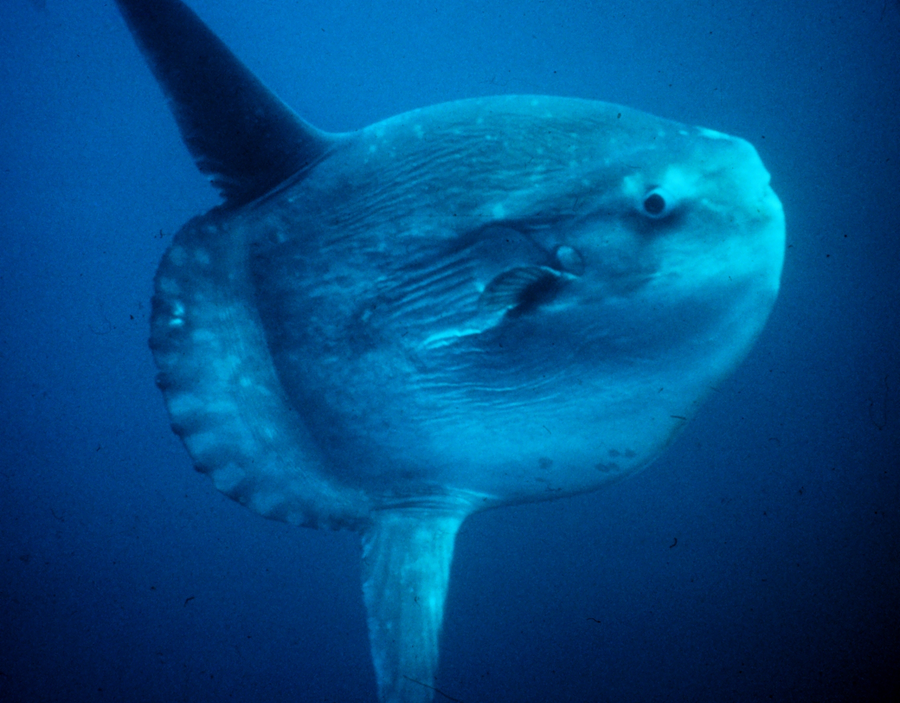
- Ocean Sunfish Same class
- Rainbow Trout Same class
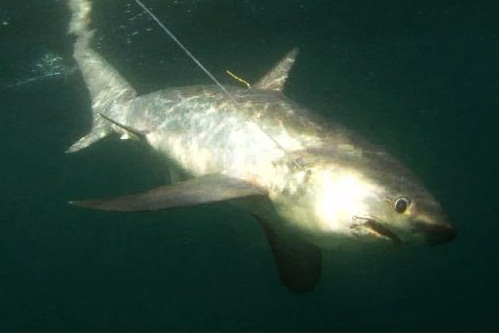
- Thresher Shark Same class
Collections
Range & geography
Conservation status of the Coelacanth
The coelacanth (Latimeria chalumnae) is listed as Critically Endangered on the IUCN Red List. Critically Endangered (CR) is the highest-risk category the IUCN Red List assigns to a wild species before Extinct in the Wild. It means a species faces an extremely high probability of extinction — usually because its population has collapsed, its range has shrunk drastically, or very few mature individuals remain. Species at this level typically depend on active conservation to survive.
Main threats to the coelacanth
- Incidental capture in deep-water fishing gear
- Habitat disturbance from deep-sea mining interest
- Very slow reproduction and long generation time
- Small, fragmented populations
Coelacanth (Latimeria chalumnae) was most recently assessed for the IUCN Red List in 2019. Look up on the IUCN Red List .
Frequently asked questions about the Coelacanth
Are coelacanths really living fossils?
They retain ancient lobe-finned features known from fossils, but modern Latimeria has also evolved — the phrase is popular shorthand, not a claim of zero change.
When was the coelacanth rediscovered?
In 1938, when a specimen was brought ashore in South Africa; Comoran populations became known later.
How deep do coelacanths live?
Often between roughly 100 and 400 m on rocky slopes and caves. Native range summary: Deep waters off the Comoro Islands and South Africa's KwaZulu-Natal coast.
Why are coelacanths Critically Endangered?
Tiny range, low numbers, slow reproduction, and fishery bycatch risk.
Do coelacanths live in Indonesia too?
A separate species, Latimeria menadoensis, lives in Indonesian waters; L. chalumnae is the African species.
What is a group of coelacanths called?
A group of Coelacanths is called a school.
What is a baby coelacanth called?
A baby Coelacanth is called a pup.
Sources & references
This guide is compiled and reviewed against established zoological and conservation references. Key sources for the Coelacanth:
-
IUCN Red List of Threatened Species
Conservation status (Critically Endangered) reflects the IUCN Red List category for Latimeria chalumnae, most recently assessed in 2019.
-
iNaturalist — observations & photos
Search citizen-science observations and community IDs for Latimeria chalumnae. Useful for range checks and recent sightings — not a substitute for formal Red List status.
-
GBIF — occurrence data
Global Biodiversity Information Facility species search for Latimeria chalumnae. Explore published occurrence records used in range research.
-
Global Animal Guide editorial standards
How we research, source, review, and update every guide for accuracy.