Image sourcing: see credits & licences
The red abalone (Haliotis rufescens) is a gastropod mollusc of the family Haliotidae, in the order Lepetellida.
Quick answer
Red abalone (Haliotis rufescens) is a large marine snail prized for its mother-of-pearl shell along the California coast. Adults reach 25 cm and 1 kg, graze kelp, and are listed Critically Endangered.
Top questions about the Red Abalone
Red Abalone facts at a glance
- Weight 1 kg
- Length 25 cm
- Top speed 5 km/h
- Lifespan 35 years
| Scientific name | Haliotis rufescens |
|---|---|
| Diet | Herbivore (kelp) |
| Habitat | Rocky subtidal reefs |
| Lifespan | 30–40 years |
| Weight | 0.5–1.5 kg |
| Top speed | up to 5 km/h |
| Conservation status | Critically Endangered (IUCN) |
| Kingdom | Animalia |
|---|---|
| Phylum | Mollusca |
| Class | Gastropoda |
| Order | Lepetellida |
| Family | Haliotidae |
| Genus | Haliotis |
Where it lives
The red abalone (Haliotis rufescens) is native to Pacific coasts of California and Baja California. — recorded across North America in this guide’s range summary.
For occurrence records, see GBIF species search and sources below.
How big is a red abalone?
An adult red abalone measures 25 cm long — about 14% of the height of an average adult person (1.73 m) — and weighs around 1.0 kg, about 1% of an average adult’s body weight (70 kg).
Length vs an average adult’s height (to scale)
What is a group of red abalones called?
Group name (collective noun)
A group of Red Abalones is called a bed.
Baby name
A baby Red Abalone is called a larva.
Explore more animal collective nouns and baby animal names .
Ear-shaped kelp grazer
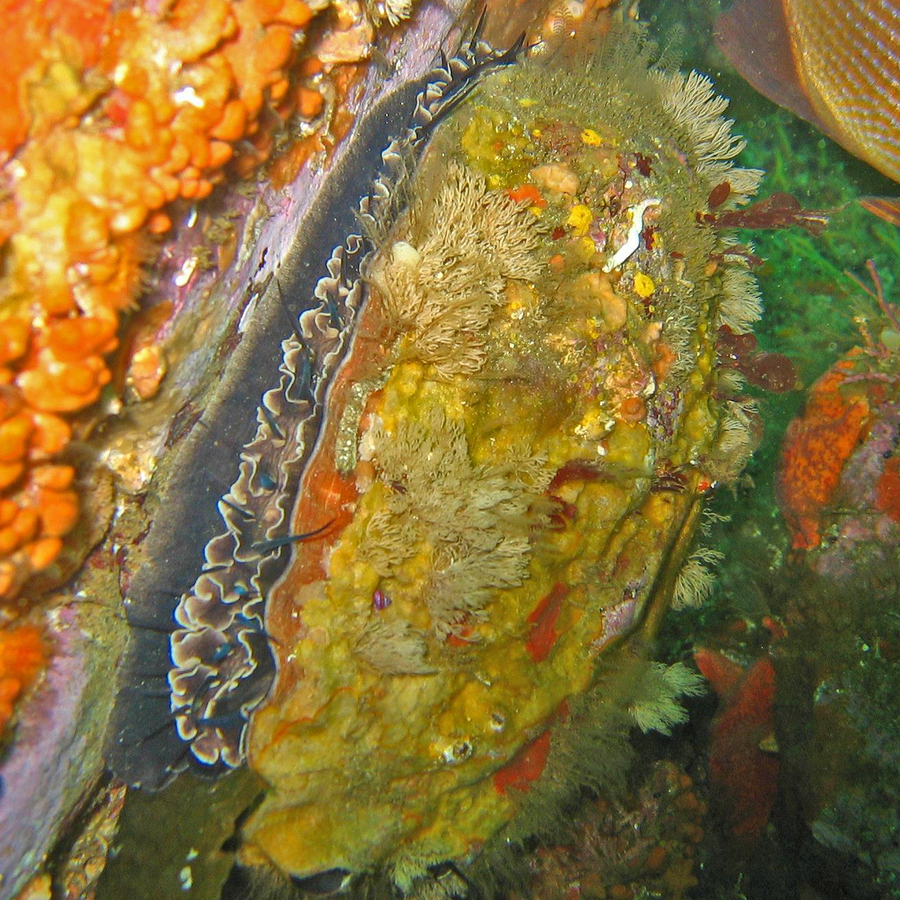
The shell bears a row of respiratory pores and iridescent nacre inside. A broad foot clamps to rocks while the head grazes drift kelp and algae.
Kelp forest lawnmower
Adults feed mainly on giant kelp and other macroalgae. Slow growth and late maturity make populations vulnerable to overharvest.
Pacific California to Baja
Rocky subtidal reefs from southern Oregon through California to Baja. Cold upwelling and kelp beds define prime habitat.
Critically Endangered after collapse
IUCN lists red abalone Critically Endangered. Withering foot disease, poaching, and kelp loss crashed fisheries closed since the 1990s.
Explore the Red Abalone
Close relatives
- Octopus Same class
- Black Widow Same class
- Jellyfish Same class
- Tarantula Same class
Collections
Range & geography
Conservation status of the Red Abalone
The red abalone (Haliotis rufescens) is listed as Critically Endangered on the IUCN Red List. Critically Endangered (CR) is the highest-risk category the IUCN Red List assigns to a wild species before Extinct in the Wild. It means a species faces an extremely high probability of extinction — usually because its population has collapsed, its range has shrunk drastically, or very few mature individuals remain. Species at this level typically depend on active conservation to survive.
Main threats to the red abalone
- Overfishing and illegal harvest
- Warming seas and harmful algal blooms
- Withering syndrome and disease
- Ocean acidification weakening shells
Red Abalone (Haliotis rufescens) was most recently assessed for the IUCN Red List in 2016. Look up on the IUCN Red List .
Frequently asked questions about the Red Abalone
What are the holes in an abalone shell?
Respiratory pores that release water after gills extract oxygen — a hallmark of abalones.
Why is red abalone Critically Endangered?
Disease, illegal harvest, and kelp forest decline devastated California populations.
What do abalones eat?
Mainly kelp and other macroalgae scraped with a rasping radula.
Is abalone shell mother-of-pearl?
Yes — the inner shell layer is iridescent nacre used in jewellery and inlay.
Can you legally harvest red abalone?
California fisheries are largely closed; check current state regulations before any collection.
What is a group of red abalones called?
A group of Red Abalones is called a bed.
What is a baby red abalone called?
A baby Red Abalone is called a larva.
Sources & references
This guide is compiled and reviewed against established zoological and conservation references. Key sources for the Red Abalone:
-
IUCN Red List of Threatened Species
Conservation status (Critically Endangered) reflects the IUCN Red List category for Haliotis rufescens, most recently assessed in 2016.
-
iNaturalist — observations & photos
Search citizen-science observations and community IDs for Haliotis rufescens. Useful for range checks and recent sightings — not a substitute for formal Red List status.
-
GBIF — occurrence data
Global Biodiversity Information Facility species search for Haliotis rufescens. Explore published occurrence records used in range research.
-
Global Animal Guide editorial standards
How we research, source, review, and update every guide for accuracy.