Image sourcing: see credits & licences
The gulper eel (Eurypharynx pelecanoides) is a ray-finned fish of the family Eurypharyngidae, in the order Saccopharyngiformes.
Quick answer
The gulper eel (Eurypharynx pelecanoides) is a bathypelagic fish with a pelican-like expandable mouth and whip-thin tail. Adults reach 1 m and are Least Concern.
Top questions about the Gulper Eel
Gulper Eel facts at a glance
- Weight 700 g
- Length 1 m
- Top speed 5 km/h
- Lifespan 12 years
| Scientific name | Eurypharynx pelecanoides |
|---|---|
| Diet | Carnivore |
| Habitat | Bathypelagic zone |
| Lifespan | 10–15 years |
| Weight | 0.5–1 kg |
| Top speed | up to 5 km/h |
| Conservation status | Least Concern (IUCN) |
| Kingdom | Animalia |
|---|---|
| Phylum | Chordata |
| Class | Actinopterygii |
| Order | Saccopharyngiformes |
| Family | Eurypharyngidae |
| Genus | Eurypharynx |
Where it lives
The gulper eel (Eurypharynx pelecanoides) is native to Deep oceans worldwide. — recorded across North America, Europe, Asia, Africa, Oceania in this guide’s range summary.
For occurrence records, see GBIF species search and sources below.
How big is a gulper eel?
An adult gulper eel measures 1 m long — about 58% of the height of an average adult person (1.73 m) — and weighs around 700 g, about 1% of an average adult’s body weight (70 kg).
Length vs an average adult’s height (to scale)
What is a group of gulper eels called?
Group name (collective noun)
A group of Gulper Eels is called a shoal.
Baby name
A baby Gulper Eel is called a larva.
Explore more animal collective nouns and baby animal names .
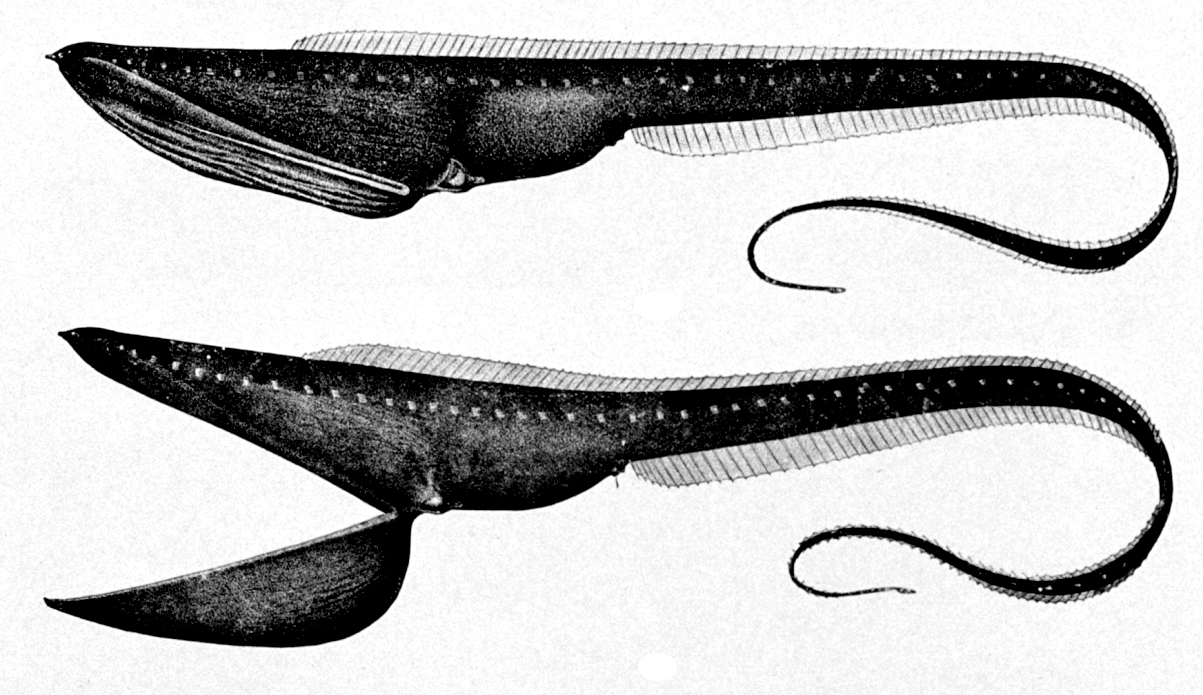
Pelican mouth in the abyss
The head can balloon enormously to engulf squid and fish whole. A whip-like tail tip glows with photophores — possibly a lure. Body is black, fragile, and ribbon-thin.
Squid and deep fish
Opportunistic gulps of whatever fits the expandable jaws. Metabolism is slow; meals may be infrequent in food-sparse depths.
Global bathypelagic zone
Found roughly 500–3000 m deep in tropical and temperate oceans worldwide. Larvae look very different — transparent and ribbon-like near surface.
Rarely seen, widely distributed
Least Concern despite few observations. Deep trawls and ROV footage confirm a broad range with no targeted harvest.
Explore the Gulper Eel
Close relatives
- Great White Shark Same class
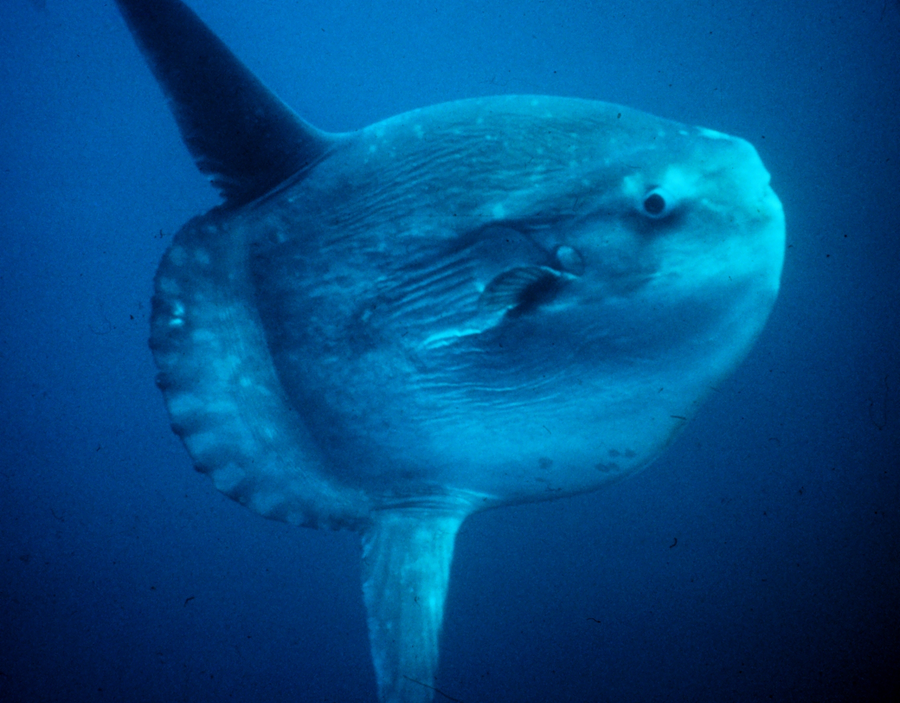
- Ocean Sunfish Same class
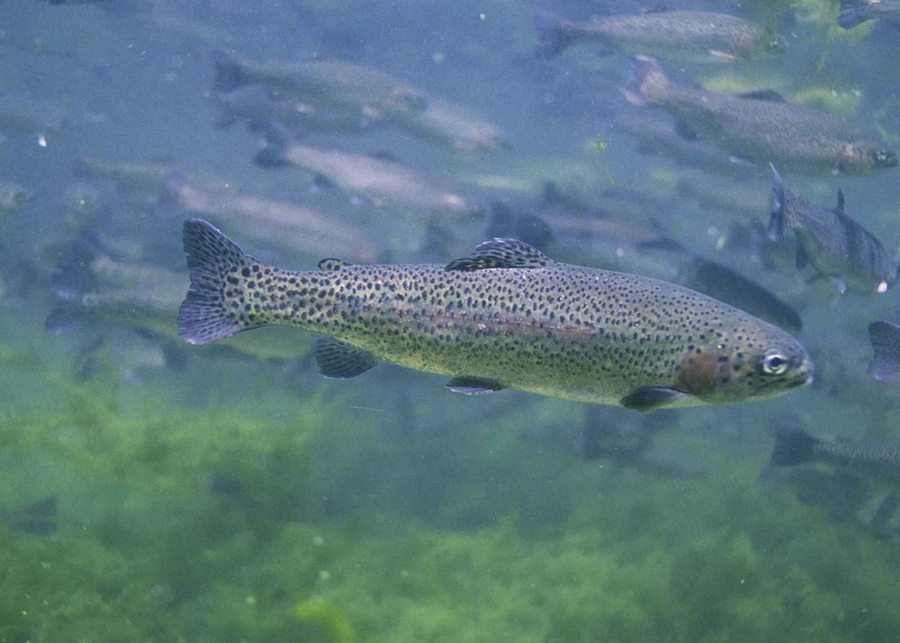
- Rainbow Trout Same class
- Thresher Shark Same class
Conservation status of the Gulper Eel
The gulper eel (Eurypharynx pelecanoides) is listed as Least Concern on the IUCN Red List. Least Concern (LC) is the IUCN's lowest-risk category, assigned to widespread, abundant species that have been evaluated and found not to be threatened. It does not mean a species faces no pressures — only that it is not currently at risk of extinction.
The gulper eel (Eurypharynx pelecanoides) is assessed on the IUCN Red List. Look up on the IUCN Red List .
Frequently asked questions about the Gulper Eel
Why is it called a gulper eel?
Its huge loosely hinged jaws can open wide like a pelican pouch to swallow large prey.
Is a gulper eel a true eel?
It is a deep-sea fish in its own family — eel-like but not a typical anguillid eel.
What is the glowing tail tip?
A photophore at the tail end may lure prey close to the mouth in darkness.
How deep do gulper eels live?
Mainly bathypelagic depths from about 500 m to nearly 3000 m.
How big is a gulper eel mouth?
The head can expand to many times the body width when feeding.
What is a group of gulper eels called?
A group of Gulper Eels is called a shoal.
What is a baby gulper eel called?
A baby Gulper Eel is called a larva.
Sources & references
This guide is compiled and reviewed against established zoological and conservation references. Key sources for the Gulper Eel:
-
IUCN Red List of Threatened Species
Conservation status (Least Concern) reflects the IUCN Red List category for Eurypharynx pelecanoides.
-
iNaturalist — observations & photos
Search citizen-science observations and community IDs for Eurypharynx pelecanoides. Useful for range checks and recent sightings — not a substitute for formal Red List status.
-
GBIF — occurrence data
Global Biodiversity Information Facility species search for Eurypharynx pelecanoides. Explore published occurrence records used in range research.
-
Global Animal Guide editorial standards
How we research, source, review, and update every guide for accuracy.