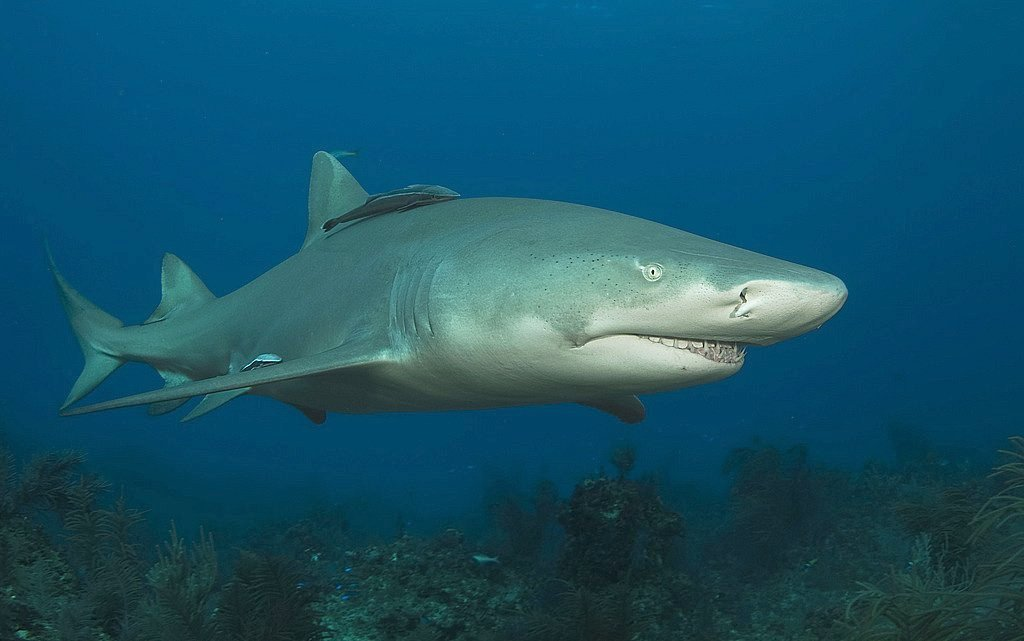
Image sourcing: see credits & licences
The lemon shark (Negaprion brevirostris) is a cartilaginous fish of the family Carcharhinidae, in the order Carcharhiniformes.
Quick answer
The lemon shark (Negaprion brevirostris) is a yellow-tinted coastal shark of tropical Atlantic and eastern Pacific mangroves. Adults reach 3 m and 180 kg, form social groups, and are listed Vulnerable.
Top questions about the Lemon Shark
Lemon Shark facts at a glance
- Weight 150 kg
- Length 3 m
- Top speed 35 km/h
- Lifespan 27 years
| Scientific name | Negaprion brevirostris |
|---|---|
| Diet | Carnivore |
| Habitat | Mangroves, reefs, and lagoons |
| Lifespan | 25–30 years |
| Weight | 80–180 kg |
| Top speed | up to 35 km/h |
| Conservation status | Vulnerable (IUCN) |
| Kingdom | Animalia |
|---|---|
| Phylum | Chordata |
| Class | Chondrichthyes |
| Order | Carcharhiniformes |
| Family | Carcharhinidae |
| Genus | Negaprion |
Where it lives
The lemon shark (Negaprion brevirostris) is native to Tropical western Atlantic and eastern Pacific coastal waters. — recorded across North America, South America, Africa in this guide’s range summary.
For occurrence records, see GBIF species search and sources below.
How big is a lemon shark?
An adult lemon shark measures 3 m long — about 1.7× the height of an average adult person (1.73 m) — and weighs around 150 kg, about 2.1× an average adult’s body weight (70 kg).
Length vs an average adult’s height (to scale)
What is a group of lemon sharks called?
Group name (collective noun)
A group of Lemon Sharks is called a shiver.
Baby name
A baby Lemon Shark is called a pup.
Explore more animal collective nouns and baby animal names .
Fish, crustaceans, and rays
Young sharks eat small fish and crustaceans in shallows; adults take larger fish and stingrays. Pups stay years in protected lagoons.
Western Atlantic and eastern Pacific
Florida, Bahamas, Caribbean, and West African coasts plus Pacific Mexico and Ecuador mangroves. Nursery fidelity makes local populations vulnerable.
Vulnerable to coastal fishing
IUCN lists lemon shark Vulnerable. Slow growth and site fidelity expose them to gillnets, fin trade, and mangrove loss.
Explore the Lemon Shark
Close relatives
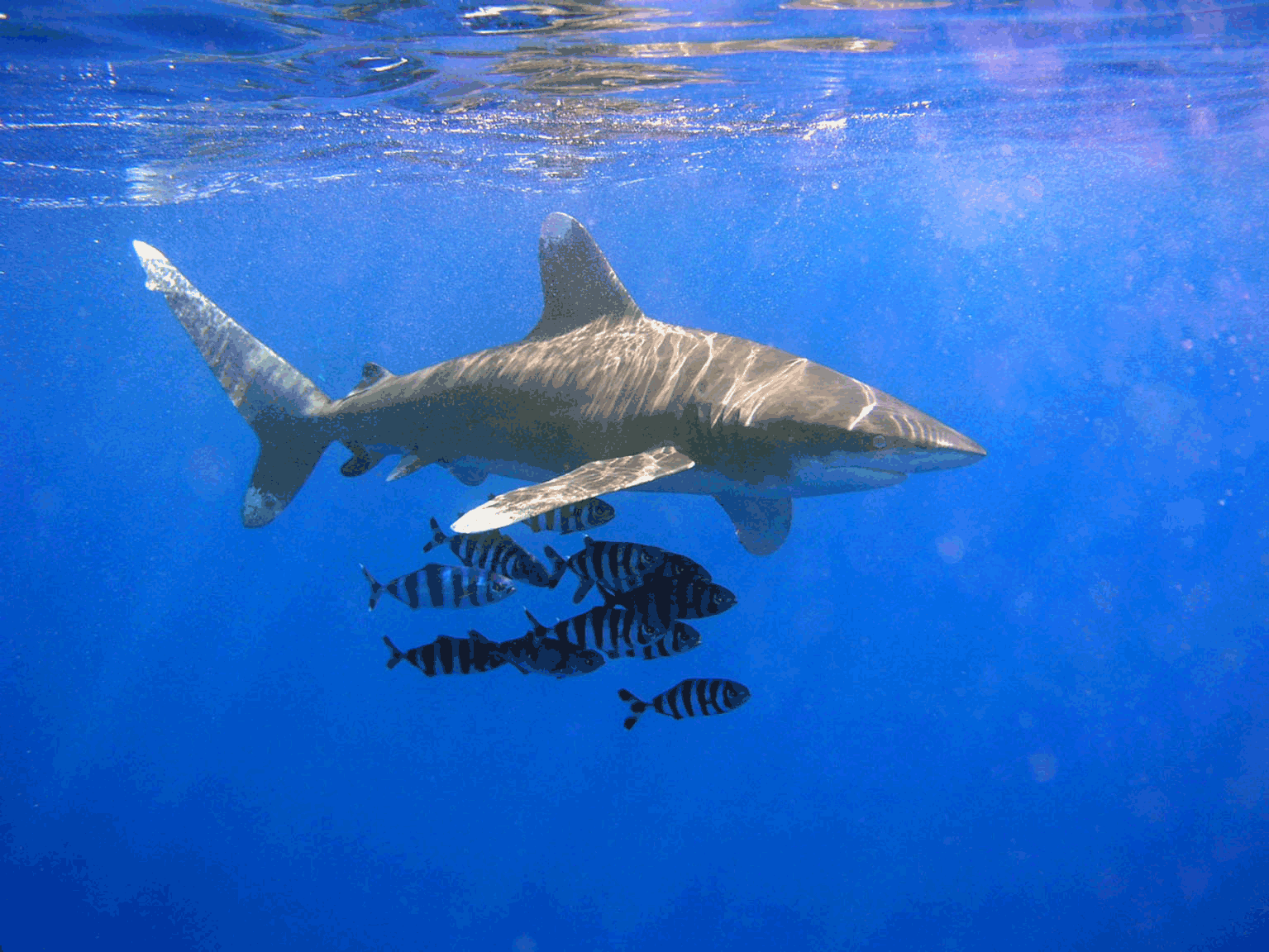
- Oceanic Whitetip Shark Same family
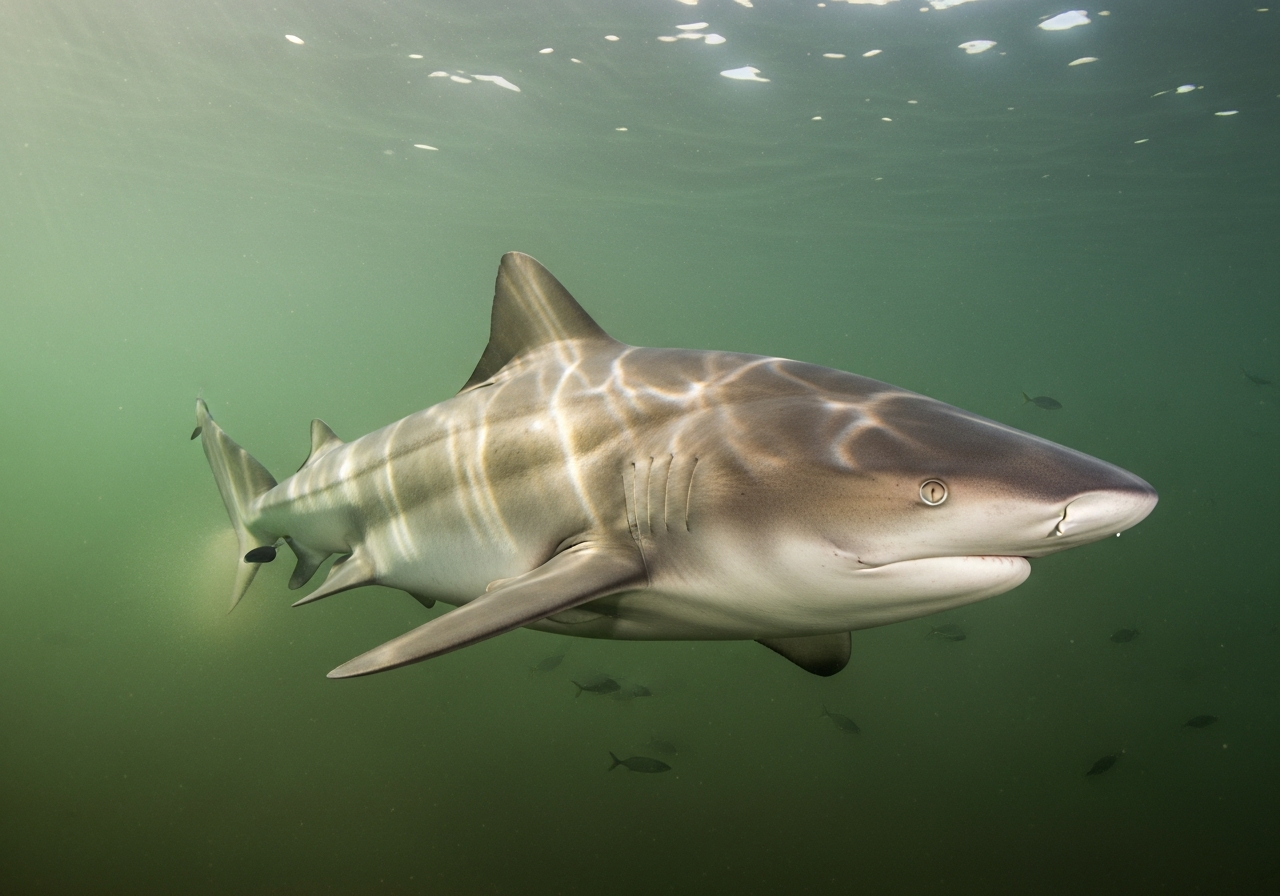
- Bull Shark Same family
- Hammerhead Shark Same order
- Tiger Shark Same order
Collections
Range & geography
Conservation status of the Lemon Shark
The lemon shark (Negaprion brevirostris) is listed as Vulnerable on the IUCN Red List. Vulnerable (VU) means a species faces a high risk of extinction in the medium-term future. It is the lowest-risk of the three 'threatened' IUCN categories — one step below Endangered, which is itself below Critically Endangered — and is often an early warning that a population is in trouble.
Main threats to the lemon shark
- Targeted and incidental capture in coastal fisheries
- Demand for fins and meat
- Mangrove and nursery habitat loss
- Slow growth and late maturity
Lemon Shark (Negaprion brevirostris) was most recently assessed for the IUCN Red List in 2020. Look up on the IUCN Red List .
Frequently asked questions about the Lemon Shark
Why is it called a lemon shark?
Pale yellow-brown colouring on the sides resembles a lemon in clear coastal water.
Do lemon sharks live in groups?
Yes — they form loose social groups and show learned migration routes between nurseries.
Are lemon sharks dangerous to swimmers?
Bites are rare; they are coastal and curious but not a primary human attacker.
Where do lemon shark pups grow up?
In mangrove and lagoon nurseries with shallow, predator-reduced water.
Why is the lemon shark Vulnerable?
Coastal fishing, finning, and mangrove destruction hit slow-reproducing nursery populations.
What is a group of lemon sharks called?
A group of Lemon Sharks is called a shiver.
What is a baby lemon shark called?
A baby Lemon Shark is called a pup.
Sources & references
This guide is compiled and reviewed against established zoological and conservation references. Key sources for the Lemon Shark:
-
IUCN Red List of Threatened Species
Conservation status (Vulnerable) reflects the IUCN Red List category for Negaprion brevirostris, most recently assessed in 2020.
-
iNaturalist — observations & photos
Search citizen-science observations and community IDs for Negaprion brevirostris. Useful for range checks and recent sightings — not a substitute for formal Red List status.
-
GBIF — occurrence data
Global Biodiversity Information Facility species search for Negaprion brevirostris. Explore published occurrence records used in range research.
-
Global Animal Guide editorial standards
How we research, source, review, and update every guide for accuracy.
Social coastal navigator
Lemon sharks use magnetic fields and learned routes between mangrove nurseries and reef edges. Pale yellow sides camouflage against sandy bottoms.