The blue marlin (Makaira nigricans) is a ray-finned fish of the family Istiophoridae, in the order Istiophoriformes.
Quick answer
The blue marlin (Makaira nigricans) is a huge, fast-swimming billfish of tropical and warm-temperate oceans. Most adults are 2–3 m long and weigh 126–181 kg, but the largest reach 4.5 m and 748 kg, and females grow larger than males. It is an apex predator that slashes through schools of fish with its bill. It is listed as Vulnerable on the IUCN Red List (assessed 2010), with a decreasing population.
Top questions about the Blue Marlin
Blue Marlin facts at a glance
- Weight 150 kg
- Length 2.5 m
- Lifespan 25 years
| Scientific name | Makaira nigricans |
|---|---|
| Diet | Fish and invertebrates, mostly near the surface |
| Habitat | Open ocean, usually far from land |
| Length | Usually 2–3 m; maximum 4.56 m |
| Weight | Usually 126–181 kg; maximum 748 kg |
| Lifespan | Females at least 27 years; males about 18 |
| Range | Tropical and temperate Atlantic, Pacific and Indian Oceans |
| Conservation status | Vulnerable (IUCN Red List, assessed 2010) |
| Kingdom | Animalia |
|---|---|
| Phylum | Chordata |
| Class | Actinopterygii |
| Order | Istiophoriformes |
| Family | Istiophoridae |
| Genus | Makaira |
Where it lives
The blue marlin (Makaira nigricans) is native to Tropical and warm-temperate waters of the Atlantic, Pacific and Indian Oceans. — recorded across Oceans in this guide’s range summary.
For occurrence records, see GBIF species search and sources below.
How big is a blue marlin?
An adult blue marlin measures 2.5 m long — about 1.4× the height of an average adult person (1.73 m) — and weighs around 150 kg, about 2.1× an average adult’s body weight (70 kg).
Length vs an average adult’s height (to scale)
The bill
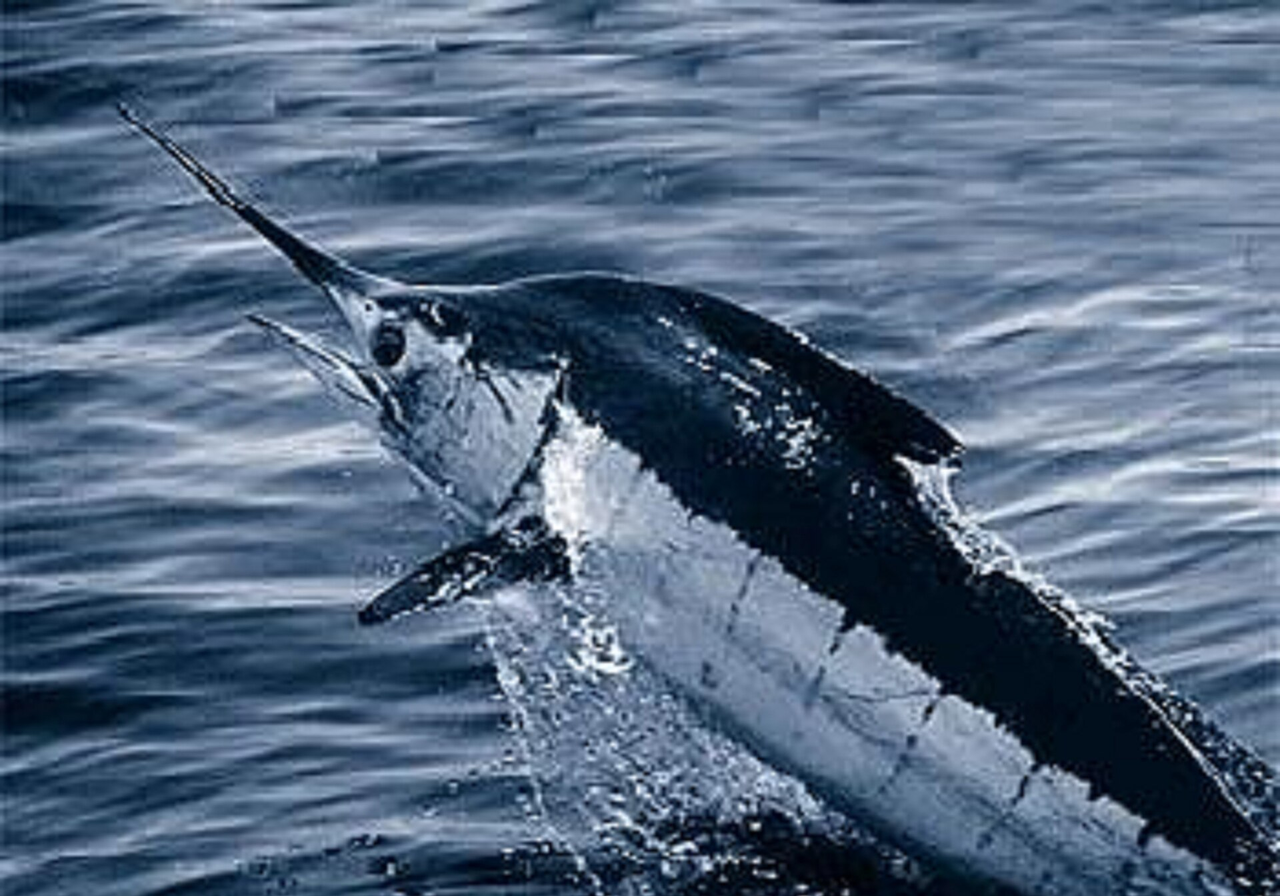
The marlin's long bill is stout and round in cross-section. It approaches a school of fish at full speed, slashes through it with the bill and returns to eat the stunned or dead prey.
A fish of the open ocean
It is the most tropical and the most oceanic of the billfishes, usually staying far from land. It is mostly solitary and highly migratory, and tagged fish have crossed the Atlantic and the equator.
Size
Females are larger than males and live longer: at least 27 years against about 18 for males.
Why blue marlin are declining
Animal Diversity Web reports that the Atlantic stock has been overfished, with catches above the level it can sustain. The IUCN Red List classes the species as Vulnerable with a decreasing population.
Explore the Blue Marlin
Close relatives
- Great Barracuda Same order
- Swordfish Same order
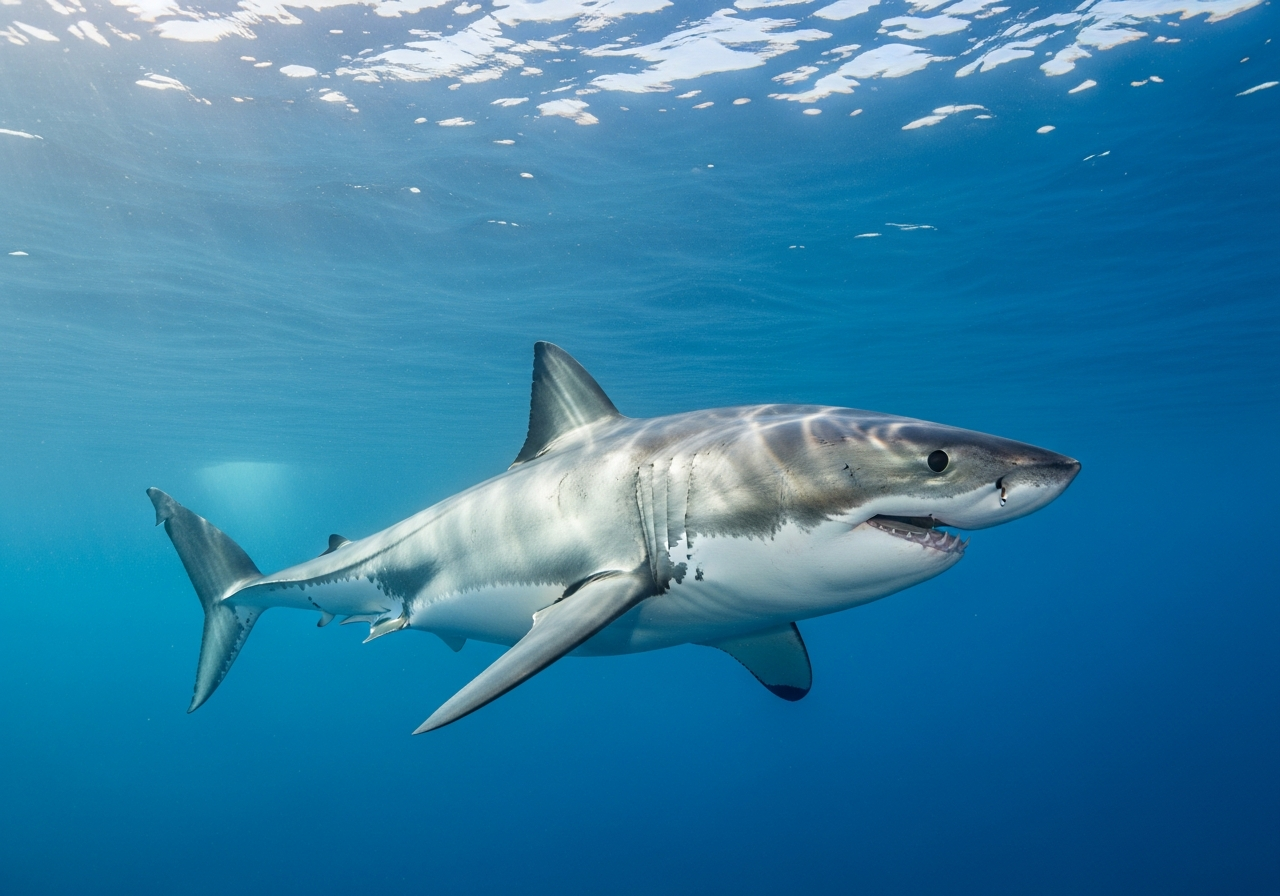
- Great White Shark Same class
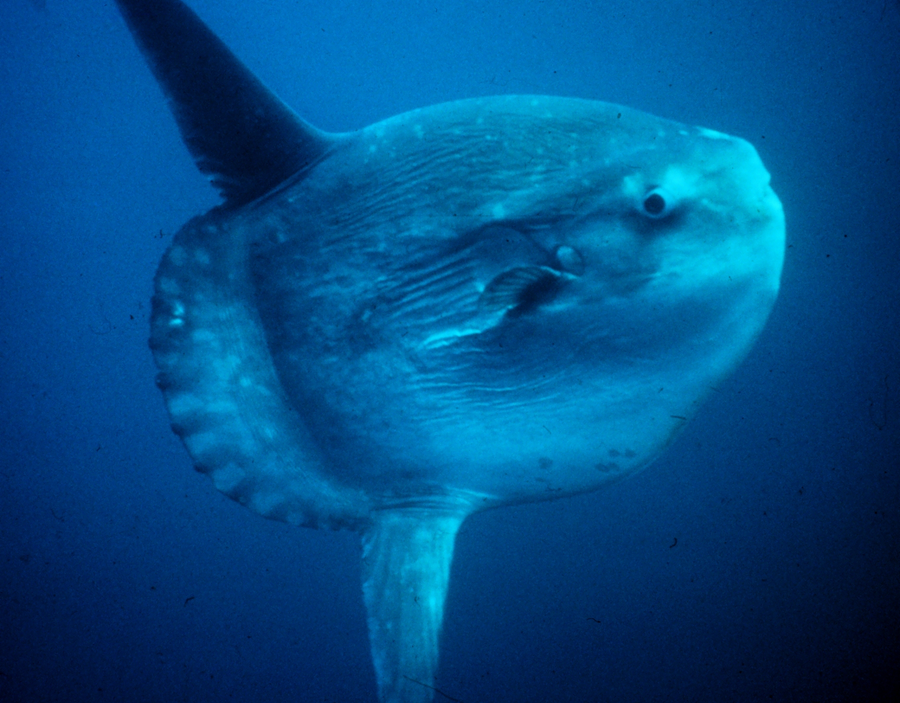
- Ocean Sunfish Same class
Collections
Range & geography
Did you know? Blue Marlin facts
- Tagged blue marlin have crossed the Atlantic and the equator.
- Female blue marlin grow larger and live longer than males.
Conservation status of the Blue Marlin
The blue marlin (Makaira nigricans) is listed as Vulnerable on the IUCN Red List. Vulnerable (VU) means a species faces a high risk of extinction in the medium-term future. It is the lowest-risk of the three 'threatened' IUCN categories — one step below Endangered, which is itself below Critically Endangered — and is often an early warning that a population is in trouble.
Main threats to the blue marlin
- Overfishing, including bycatch
Blue Marlin (Makaira nigricans) was most recently assessed for the IUCN Red List in 2010. View the full IUCN assessment .
Frequently asked questions about the Blue Marlin
How big do blue marlin get?
Most adults are 2–3 m long and 126–181 kg. The largest reach about 4.5 m and 748 kg.
What do blue marlin eat?
Fish and invertebrates, mostly near the surface, which they stun by slashing with the bill.
Are blue marlin endangered?
They are listed as Vulnerable on the IUCN Red List (assessed 2010), and the population is decreasing.
Sources & references
This guide is compiled and reviewed against established zoological and conservation references. Key sources for the Blue Marlin:
-
IUCN Red List of Threatened Species
Conservation status (Vulnerable) reflects the IUCN Red List category for Makaira nigricans, most recently assessed in 2010.
-
iNaturalist — observations & photos
Search citizen-science observations and community IDs for Makaira nigricans. Useful for range checks and recent sightings — not a substitute for formal Red List status.
-
GBIF — occurrence data
Global Biodiversity Information Facility species search for Makaira nigricans. Explore published occurrence records used in range research.
- IUCN Red List of Threatened Species: Makaira nigricans (assessed 2010). Checked 16 November 2026.
IUCN Red List category Vulnerable, assessed 2010; population trend decreasing; native range.
- Animal Diversity Web: Makaira nigricans. University of Michigan Museum of Zoology.
Size, lifespan, range, diet and behaviour.
-
Global Animal Guide editorial standards
How we research, source, review, and update every guide for accuracy.