Image sourcing: see credits & licences
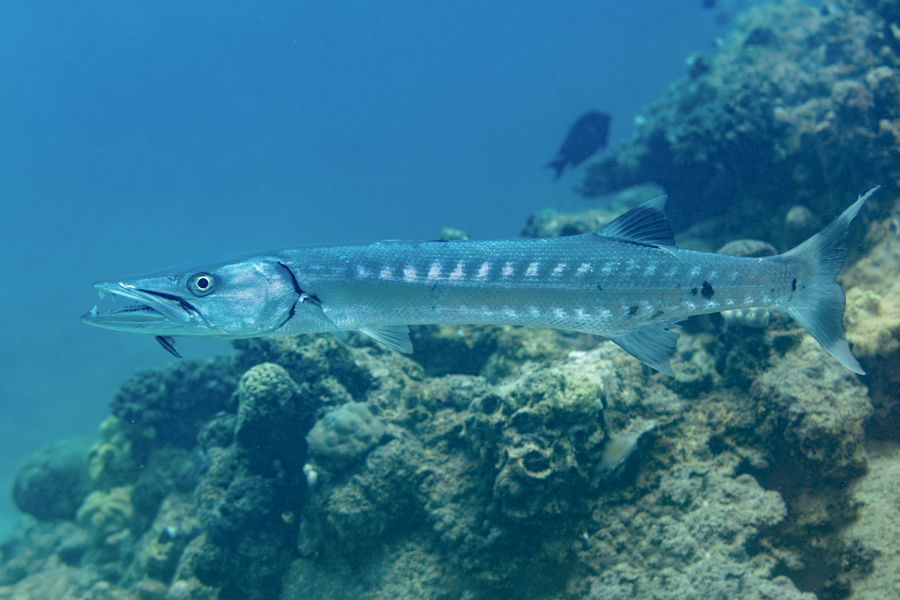
The great barracuda (Sphyraena barracuda) is a ray-finned fish of the family Sphyraenidae, in the order Istiophoriformes.
Quick answer
The great barracuda (Sphyraena barracuda) is a torpedo-shaped reef predator that ambushes fish on tropical coasts from Florida and the Caribbean to the Red Sea and Indo-Pacific. Adults often reach 1.5 m and about 23 kg, sprint near 60 km/h in short bursts, and are listed Least Concern, though large individuals can carry ciguatera toxin.
Top questions about the Great Barracuda
Also available in Español (Barracuda grande)
Great Barracuda facts at a glance
- Weight 23 kg
- Length 1.5 m
- Top speed 60 km/h
- Lifespan 14 years
| Scientific name | Sphyraena barracuda |
|---|---|
| Diet | Carnivore (fish) |
| Habitat | Coral reefs, seagrass beds, and coastal waters |
| Lifespan | Around 14 years in the wild (varies by population and captivity). |
| Weight | About 23 kg typical adult mass (sex and region vary). |
| Top speed | Up to roughly 60 km/h when moving at speed. |
| Conservation status | Least Concern (IUCN) |
| Kingdom | Animalia |
|---|---|
| Phylum | Chordata |
| Class | Actinopterygii |
| Order | Istiophoriformes |
| Family | Sphyraenidae |
| Genus | Sphyraena |
Where it lives
The great barracuda (Sphyraena barracuda) is native to Tropical oceans worldwide including Florida, the Caribbean, Red Sea, and Indo-Pacific reefs. — recorded across North America, South America, Africa, Asia, Oceania in this guide’s range summary.
For occurrence records, see GBIF species search and sources below.
How big is a great barracuda?
An adult great barracuda measures 1.5 m long — about 87% of the height of an average adult person (1.73 m) — and weighs around 23 kg, about 33% of an average adult’s body weight (70 kg).
Length vs an average adult’s height (to scale)
What is a group of great barracudas called?
Group name (collective noun)
A group of Great Barracudas is called a battery.
Baby name
A baby Great Barracuda is called a pup.
Explore more animal collective nouns and baby animal names .
Ambush torpedo of the reef
A long, streamlined body, jutting lower jaw, and dagger-like teeth suit sudden dashes from cover. Barracudas often hang motionless near drop-offs, then explode forward. Young fish may school; large adults are usually solitary.
Fish-eating pursuit hunter
Diet is almost entirely other fish — jacks, grunts, anchovies, and reef species caught in open water or along edges. They slash prey with shearing bites rather than crushing shells.
Tropical seas worldwide
Found in coral reefs, seagrass beds, and coastal waters of warm oceans, including Florida, the Caribbean, Red Sea, and Indo-Pacific reefs. Juveniles often use mangroves and seagrass as nurseries.
Ciguatera and spearfishing caution
The species is Least Concern, but large reef predators can bioaccumulate ciguatera toxin, so some regions advise against eating big barracuda. Spearfishing pressure is local rather than a global extinction driver.
Explore the Great Barracuda
Close relatives
- Swordfish Same order
- Great White Shark Same class
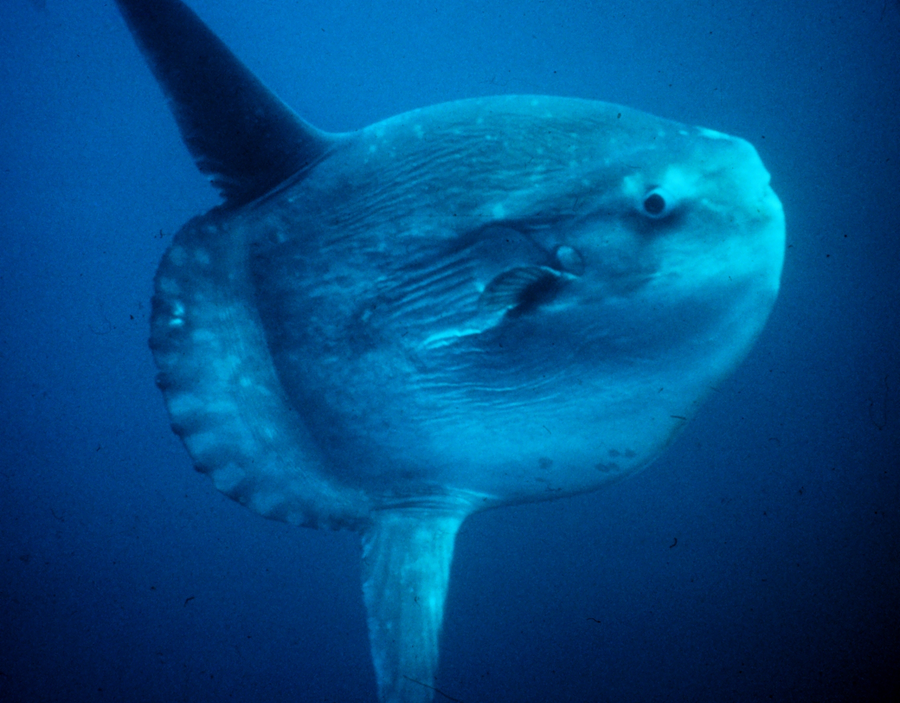
- Ocean Sunfish Same class
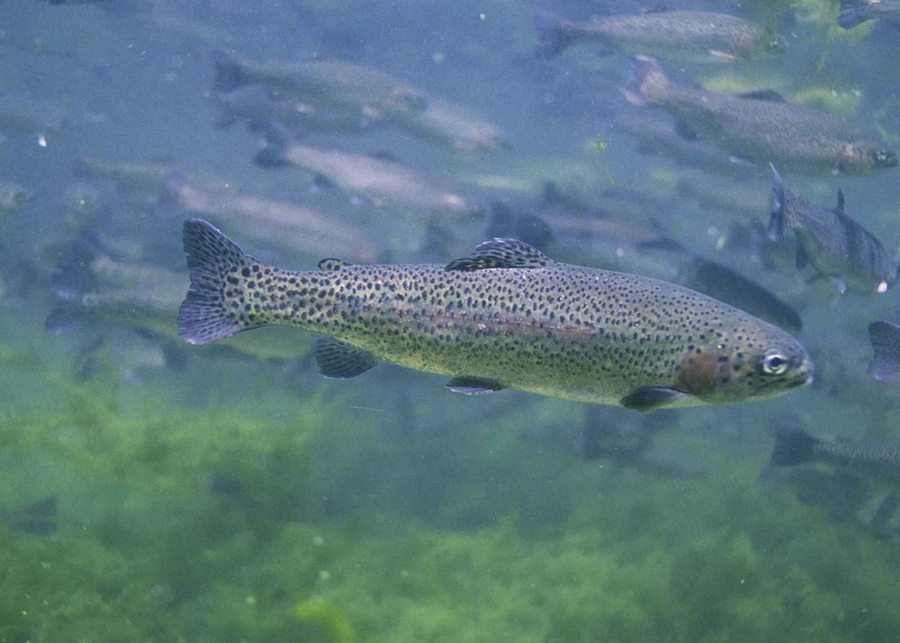
- Rainbow Trout Same class
Conservation status of the Great Barracuda
The great barracuda (Sphyraena barracuda) is listed as Least Concern on the IUCN Red List. Least Concern (LC) is the IUCN's lowest-risk category, assigned to widespread, abundant species that have been evaluated and found not to be threatened. It does not mean a species faces no pressures — only that it is not currently at risk of extinction.
The great barracuda (Sphyraena barracuda) is assessed on the IUCN Red List. Look up on the IUCN Red List .
Frequently asked questions about the Great Barracuda
Are great barracuda dangerous to divers?
Unprovoked attacks are rare; most incidents involve speared fish or shiny objects mistaken for prey. They are curious but not typically aggressive toward people.
Why shouldn't you eat large barracuda?
Large reef fish can carry ciguatera toxin from algae in the food web, causing serious food poisoning in humans.
How fast is a barracuda?
Short hunting bursts can approach roughly 60 km/h.
Do barracuda school?
Juveniles and smaller adults often school; very large individuals usually hunt alone.
Where do great barracuda live?
Tropical coastal waters worldwide, including Florida, the Caribbean, Red Sea, and Indo-Pacific reefs.
What is a group of great barracudas called?
A group of Great Barracudas is called a battery.
What is a baby great barracuda called?
A baby Great Barracuda is called a pup.
Sources & references
This guide is compiled and reviewed against established zoological and conservation references. Key sources for the Great Barracuda:
-
IUCN Red List of Threatened Species
Conservation status (Least Concern) reflects the IUCN Red List category for Sphyraena barracuda.
-
iNaturalist — observations & photos
Search citizen-science observations and community IDs for Sphyraena barracuda. Useful for range checks and recent sightings — not a substitute for formal Red List status.
-
GBIF — occurrence data
Global Biodiversity Information Facility species search for Sphyraena barracuda. Explore published occurrence records used in range research.
-
Global Animal Guide editorial standards
How we research, source, review, and update every guide for accuracy.