Image sourcing: see credits & licences
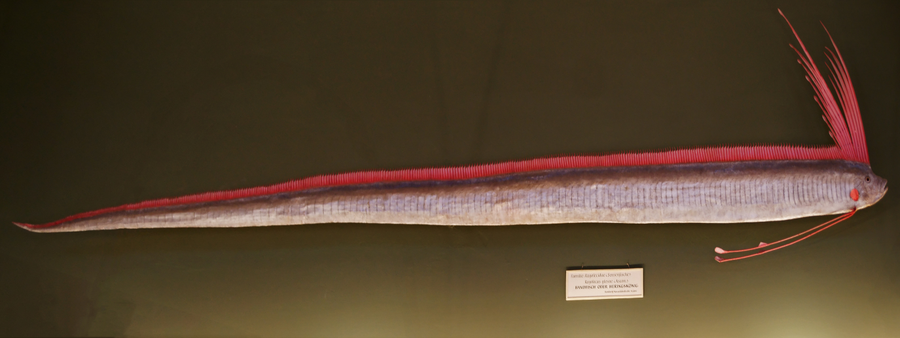
The oarfish (Regalecus glesne) is a ray-finned fish of the family Regalecidae, in the order Lampriformes.
Quick answer
The oarfish (Regalecus glesne) is the world's longest bony fish, a ribbon-shaped mesopelagic wanderer that can exceed 8 m. It eats krill and small fish, occasionally strands after storms, and likely inspired some sea-serpent folklore. Listed Least Concern because it lives across the deep open oceans.
Top questions about the Oarfish
Oarfish facts at a glance
- Weight 150 kg
- Length 8 m
- Top speed 10 km/h
- Lifespan 20 years
| Scientific name | Regalecus glesne |
|---|---|
| Diet | Carnivore (krill and small fish) |
| Habitat | Open ocean mesopelagic zone |
| Lifespan | Around 20 years in the wild (varies by population and captivity). |
| Weight | About 150 kg typical adult mass (sex and region vary). |
| Top speed | Up to roughly 10 km/h when moving at speed. |
| Conservation status | Least Concern (IUCN) |
| Kingdom | Animalia |
|---|---|
| Phylum | Chordata |
| Class | Actinopterygii |
| Order | Lampriformes |
| Family | Regalecidae |
| Genus | Regalecus |
Where it lives
The oarfish (Regalecus glesne) is native to Deep open oceans worldwide; occasionally washes ashore after storms. — recorded across North America, Europe, Asia, Oceania, Africa in this guide’s range summary.
For occurrence records, see GBIF species search and sources below.
How big is a oarfish?
An adult oarfish measures 8 m long — about 4.6× the height of an average adult person (1.73 m) — and weighs around 150 kg, about 2.1× an average adult’s body weight (70 kg).
Length vs an average adult’s height (to scale)
What is a group of oarfish called?
Group name (collective noun)
A group of Oarfish is called a school.
Baby name
A baby Oarfish is called a fry.
Explore more animal collective nouns and baby animal names .
Ribbon of the twilight zone
Extremely elongated, laterally flattened bodies with a bright red dorsal fin crest give a serpentine silhouette. They often hang vertically in the water column. No caudal fin in the usual sense — the body tapers.
Krill in the mesopelagic
Diet centres on krill, other planktonic crustaceans, and small fish sifted in open water far from shore. Across its range it is tied to open ocean mesopelagic zone, and field accounts emphasise this species’ distinctive ecology rather than generic habitat labels.
Worldwide deep oceans
Mesopelagic zones of oceans worldwide; living animals are rarely seen except by ROVs or when sick individuals wander into shallows and strand.
Folklore made flesh
Least Concern with a vast pelagic range. Strandings after storms fuel sea-serpent stories; there is no evidence they attack ships or divers.
Explore the Oarfish
Close relatives
- Great White Shark Same class
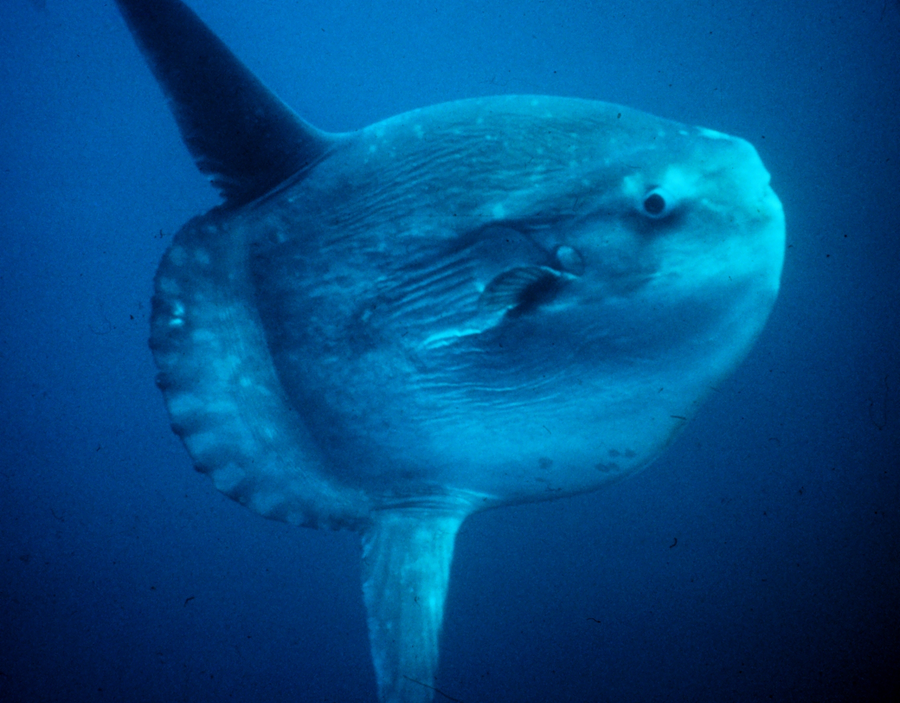
- Ocean Sunfish Same class
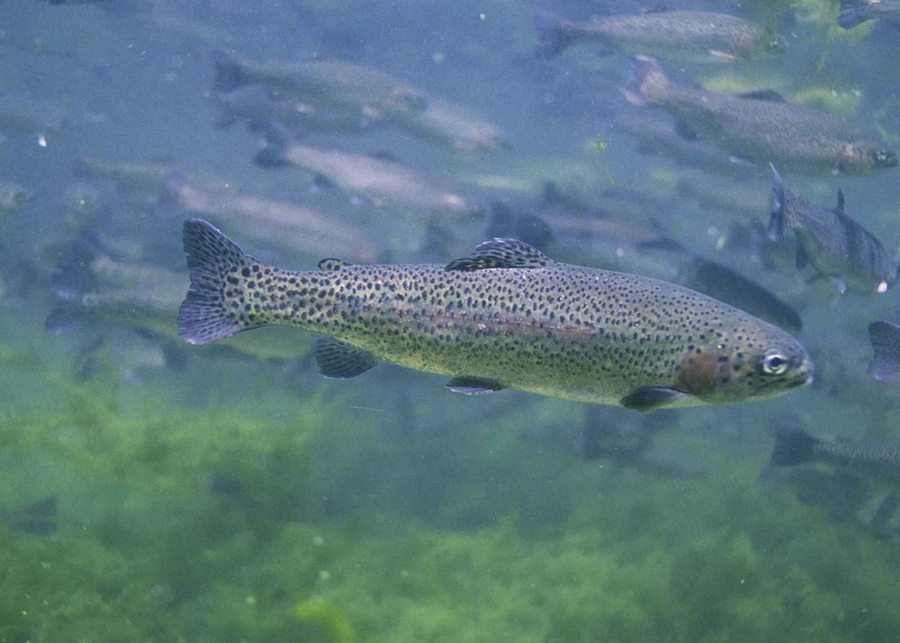
- Rainbow Trout Same class
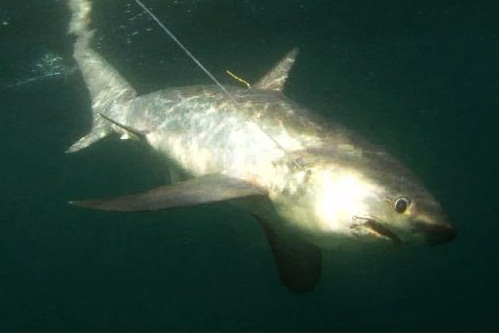
- Thresher Shark Same class
Conservation status of the Oarfish
The oarfish (Regalecus glesne) is listed as Least Concern on the IUCN Red List. Least Concern (LC) is the IUCN's lowest-risk category, assigned to widespread, abundant species that have been evaluated and found not to be threatened. It does not mean a species faces no pressures — only that it is not currently at risk of extinction.
The oarfish (Regalecus glesne) is assessed on the IUCN Red List. Look up on the IUCN Red List .
Frequently asked questions about the Oarfish
What is the longest bony fish?
The oarfish Regalecus glesne, with reliable lengths beyond 8 m.
Do oarfish attack boats?
No — they are gentle pelagic filter-feeders of small prey; serpent myths are misidentification.
Why do oarfish beach themselves?
Illness, storms, or navigational errors in shallow water; healthy fish normally stay offshore at depth.
What do oarfish eat?
Krill, small crustaceans, and small fish.
Where do oarfish live?
Deep open oceans worldwide in the mesopelagic zone. Native range summary: Deep open oceans worldwide; occasionally washes ashore after storms.
What is a group of oarfish called?
A group of Oarfish is called a school.
What is a baby oarfish called?
A baby Oarfish is called a fry.
Sources & references
This guide is compiled and reviewed against established zoological and conservation references. Key sources for the Oarfish:
-
IUCN Red List of Threatened Species
Conservation status (Least Concern) reflects the IUCN Red List category for Regalecus glesne.
-
iNaturalist — observations & photos
Search citizen-science observations and community IDs for Regalecus glesne. Useful for range checks and recent sightings — not a substitute for formal Red List status.
-
GBIF — occurrence data
Global Biodiversity Information Facility species search for Regalecus glesne. Explore published occurrence records used in range research.
-
Global Animal Guide editorial standards
How we research, source, review, and update every guide for accuracy.