Quick answer
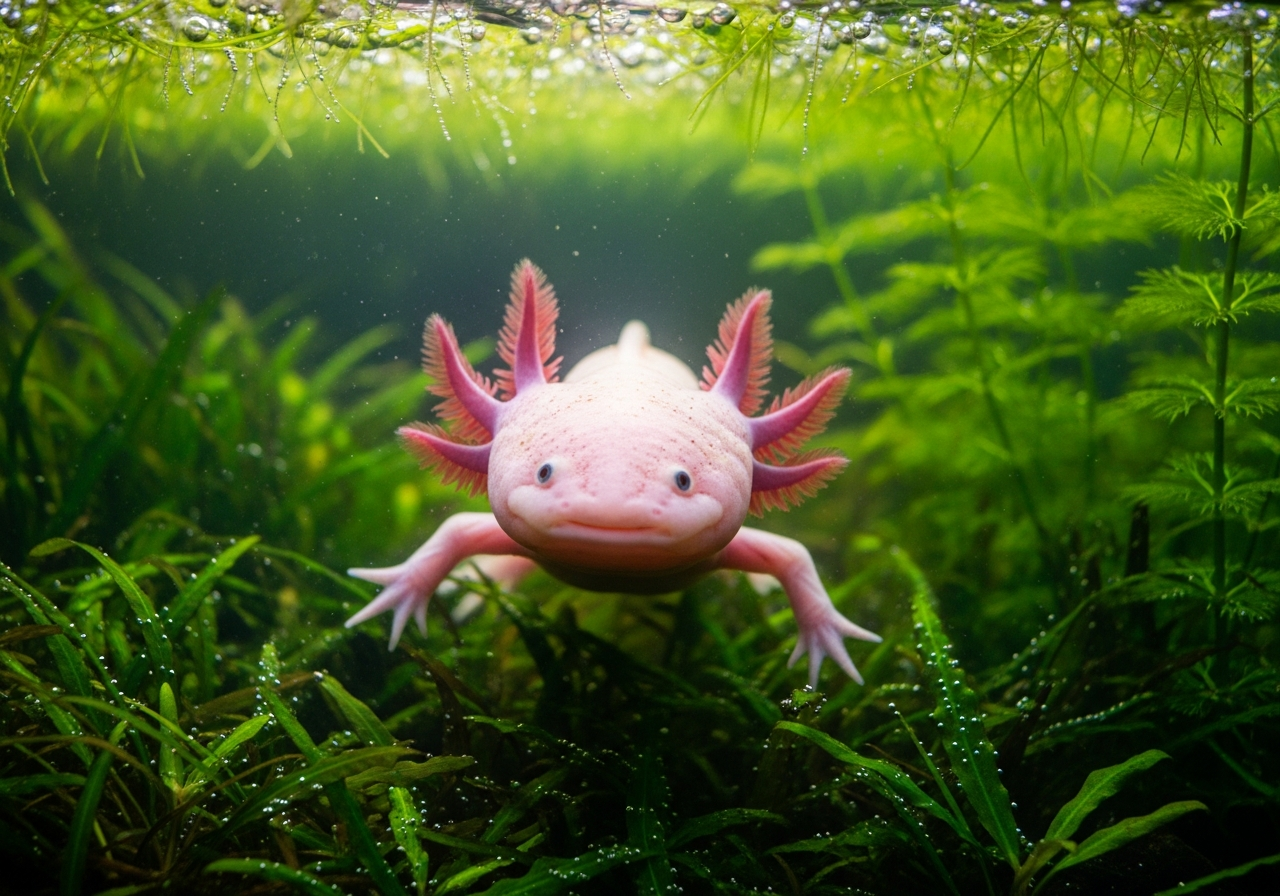
The axolotl is a salamander from Mexico that keeps its larval features for life, including feathery external gills, and lives permanently in water instead of moving onto land. It is famous for its extraordinary ability to regrow limbs, parts of organs, and even portions of its brain. Critically endangered in the wild, it survives mainly in captivity and labs. Axolotls can live 10 to 15 years.
Key takeaway
The axolotl is a salamander from Mexico that keeps its larval features for life, including feathery external gills, and lives permanently in water instead of moving onto land. It is famous for its extraordinary ability to regrow limbs, parts of organs, and even portions of its brain. Critically endangered in the wild, it survives mainly in captivity and labs. Axolotls can live 10 to 15 years.
Axolotl overview
Axolotl (Ambystoma mexicanum) is an amphibian listed here as Critically Endangered. Typical weight about 0.25 kg; lifespan around 10–15 years.
Axolotl ecology
Diet: Carnivore (worms, insects, small fish). Habitat: Freshwater lakes and canals of Mexico City. Movement and social systems reflect those pressures across the native range.
Axolotls and people
Learn before you travel or keep related pets. Wild axolotls are not toys; captive care needs species-specific husbandry.
Status and further reading
Conservation label in our guides: Critically Endangered. See the full Axolotl profile for taxonomy, FAQs, and related topic guides on this site.
Neoteny: the salamander that stays young
Most salamanders transform from water-living larvae into land-living adults, but the axolotl keeps its juvenile form for life, a phenomenon called neoteny. It retains its feathery external gills and stays fully aquatic, breeding while still in what looks like a larval body.
Regeneration
The axolotl is one of the most studied animals in regenerative biology. It can regrow lost limbs, tail, parts of the heart and other organs, and even sections of its brain and spinal cord, often with little or no scarring. Scientists study it to understand how regeneration works and whether similar processes might help in human medicine.
Sources
Axolotl FAQs
What are key facts about axolotls?
The axolotl is a salamander from Mexico that keeps its larval features for life, including feathery external gills, and lives permanently in water instead of moving onto land. It is famous for its extraordinary ability to regrow limbs, parts of organs, and even portions of its brain. Critically endangered in the wild, it survives mainly in captivity and labs. Axolotls can live 10 to 15 years.
What is the scientific name of the axolotl?
Ambystoma mexicanum — used in research and conservation listings for axolotls.
What do axolotls eat?
Axolotls eat worms, insects and small fish, with seasonal and regional variation in Freshwater lakes and canals of Mexico City.
Where do axolotls live?
They are associated with Freshwater lakes and canals of Mexico City. Local presence depends on food, cover, and human land use.
What is the conservation status of axolotls?
Listed in our guides as Critically Endangered. Check the IUCN Red List and national assessments for the latest formal category.